Custom Marathon Medals Guide: Size, Ribbon, Finish and Factory QC Tips
The short answer: a good race medal should make the event name, distance, year and achievement easy to read. It also has to pass a less glamorous test: can the factory reproduce the same finish, ribbon assembly and packaging across the full order before race day?
This guide is for race organizers, running clubs, schools, charity events and promotional product buyers comparing custom medals or custom race medals before requesting a quote. It focuses on the decisions that usually affect quotation accuracy, approval speed and shipment inspection.
Quick Answer: What Makes a Good Marathon Medal?
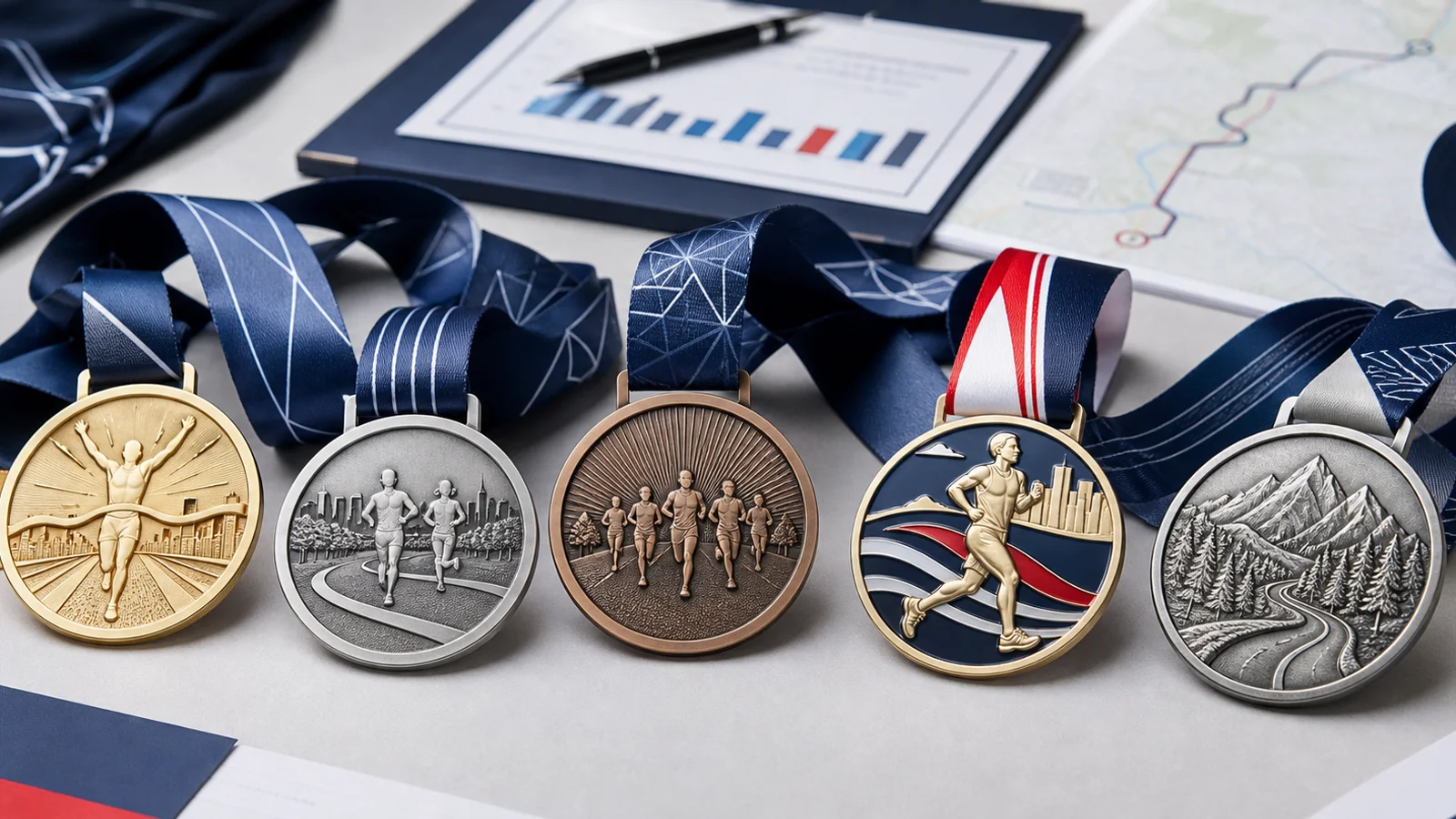
In most race medal projects we review, the design works better when the event name, distance, year and main symbol are readable without enlarging the proof. For 5K, 10K, half marathon and marathon events, buyers should confirm medal size, thickness, material, plating finish, enamel color, ribbon design, packaging and shipment schedule before production begins.
The issues we see most often are simple: sponsor marks too close to the edge, letters below a workable size, thin metal lines around enamel color, or ribbon artwork approved after the medal proof. These details can delay mold making or assembly. This is where many medal projects become messy: the medal body looks approved, but distance categories and packing labels are still undecided.
Why Marathon Medals Matter to Runners and Organizers
Runners keep medals because each one represents a specific effort: a first 5K, a personal best, a charity challenge, a city marathon or a difficult trail race. The medal records training time and the finish-line moment in physical form.
For organizers, that emotional value also has marketing value. Race medals appear in finish-line photos, social media posts, display racks and recap videos. If the medal feels generic, the event loses an easy chance to be remembered. If it carries the race story well, it can support repeat registration and sponsor visibility.
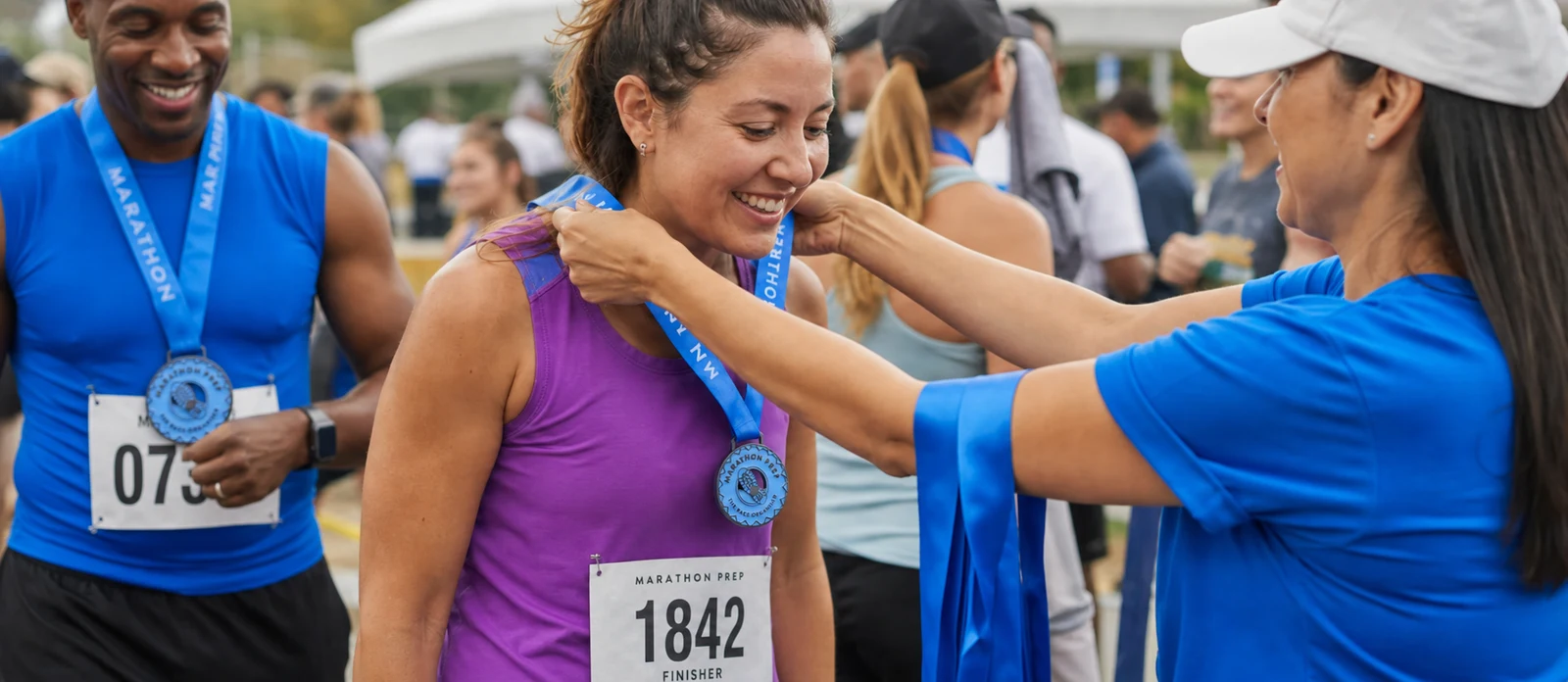
Useful custom running medals connect achievement, event identity and the receiving moment. Distance, logo, city, route, ribbon, finish and packaging should work together. A medal can look good in a proof and still fail during event distribution if categories are hard to separate or ribbons are packed in the wrong direction.
Match Medal Design to Race Type
Before choosing shape or finish, define the event type. A school 5K and a city marathon should not follow the same medal brief. Recipient group, quantity and distribution method all affect the design choice.
5K and 10K Events
5K and 10K medals need a balance of cost, visibility and easy distribution. These events may include families, schools, company teams and community runners, so a clean layout is stronger than a crowded design. For bulk race medals, a bold distance mark, event logo and year usually do more work than small text.
For large quantities, one medal body with different ribbon colors can separate categories while controlling mold cost. This works well when a buyer needs 5K, 10K and volunteer versions without creating too many separate medal designs.
Half Marathon and Full Marathon Events
Half marathon and full marathon medals carry more emotional weight because runners train longer and expect a more substantial keepsake. These medals can support larger sizes, antique plating, layered relief or a detailed city feature.
If the race has a recognizable bridge, skyline, waterfront, route shape or mountain background, that element can make the medal specific to the event. A generic runner icon is easy to produce, but it rarely carries the same memory.
Charity Runs
For charity runs, the medal should connect the participant with the cause. Campaign colors, awareness symbols and short messages can work well, but sponsor marks should be handled carefully. They should support the event, not overpower the runner's achievement or the charity message.
If fundraising tiers are used, different ribbon prints, back-side engraving or packaging labels can separate recognition levels without requiring several different molds.
Trail and Ultra Running Events
Trail and ultra medals benefit from outdoor imagery. Mountains, trees, elevation lines, trail markers, antique finishes and deeper relief can communicate endurance better than a flat round medal. For these events, edge detail, weight and display value may matter more than the lowest unit price.
Themed and Fun Runs
Holiday runs, Halloween runs, color runs, beer runs and costume races can use playful custom shapes. A snowflake, pumpkin, bottle, mascot or glow effect can become part of the event experience. Bright enamel, glitter color, printing or moving attachments can make the medal more shareable.
Choose Size, Material and Finish
Medal size affects artwork clarity, perceived value, ribbon comfort and shipping cost. A larger medal gives more room for detail, but it also increases weight and packaging requirements. Match size to race level, artwork and distribution plan.
| Event Type | Practical Starting Size | Buyer Note |
|---|---|---|
| School race or 5K | 50-60 mm | Suitable for simple logos and large participant quantities |
| 10K or charity run | 60-70 mm | Balanced for event branding, cause colors and cost control |
| Half marathon | 70-80 mm | More room for distance, year and city elements |
| Full marathon | 80-90 mm | Good for premium finisher medals and stronger relief |
| Ultra or collector medal | 90 mm and above | Best for complex artwork, series medals or display value |
These ranges are starting points, not strict standards. Custom outlines, cutouts, 3D relief and fitted packaging may change the recommendation. For irregular custom race medals, ask the supplier to mark width and height on the proof, not just one overall size.
Common medal materials include zinc alloy, iron and brass. Zinc alloy is widely used for custom shapes, cutouts and 3D details. Iron may suit simpler budget-sensitive orders. Brass can create a more traditional or heavier feel. For quotation, ask the supplier to state the material, size, thickness and estimated unit weight because these details affect both price and shipping cost.
Common finishes include shiny gold, silver, bronze, antique plating, black nickel, dual plating, soft enamel, printing, translucent color, glitter effect and laser engraving. If the medal uses both enamel and printing, check which areas are molded metal, which areas are color filled and which areas are surface printed.
2D or 3D Medal Design?
Choose 2D when the design depends on clean logos, readable text, race distance marks and sponsor graphics. Choose 3D when the design includes a sculpted runner, landmark, mountain, animal, portrait or flowing route scene. Many good marathon medals use both: 2D for wording and logos, 3D for the central visual.
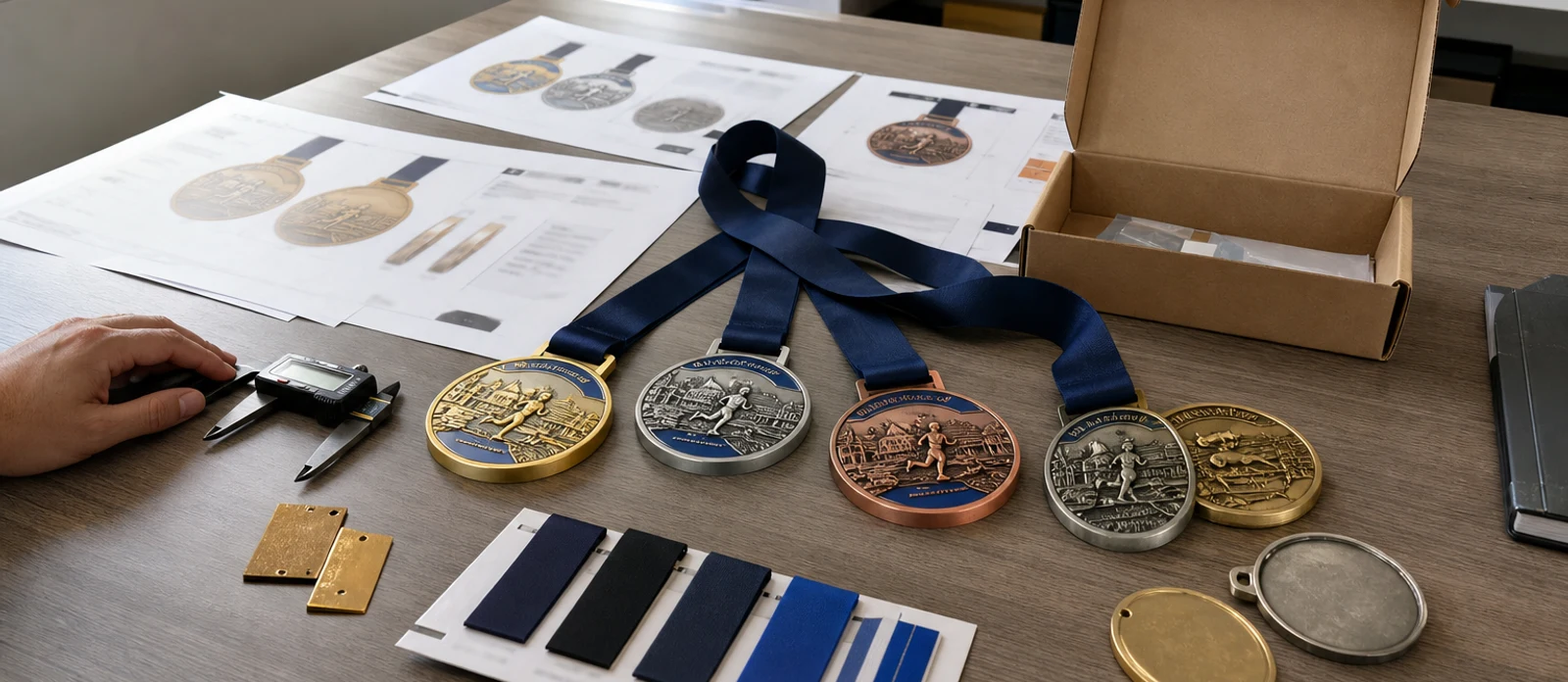
If the artwork includes very small text, thin outlines or gradients, ask for a production review before approving the mold. Some details may need to be enlarged, simplified or converted to printing.
Need a Production Review Before Quotation?
Send your medal artwork, race date, quantity, delivery country and ribbon idea. We can check medal size, finish, ribbon attachment fit and possible production risks before tooling.
Plan the Ribbon and Packaging Early
The ribbon is not just an accessory. It is a second branding surface. A printed ribbon can carry the race name, year, sponsor logo, event color or short phrase. Buyers should confirm width, length, material, print method and attachment style before production.
For events with several distances, ribbon variation can simplify distribution. One medal body with different colors can cover 5K, 10K, half marathon and full marathon categories while keeping the medal family consistent. In production review, check whether the ribbon is flat, V-folded, sewn, attached through two holes, connected with a ring, chain or cord, and whether the printed direction is correct when the medal is worn.
Packaging should match delivery method. Finish-line distribution usually needs simple bags or organized trays. Virtual race shipping may require stronger protection. VIP awards, sponsor gifts or podium medals may use pouches or gift boxes. Before choosing a box, confirm medal diameter, thickness, folded ribbon size and whether each distance needs a separate label.
Factory Testing and Shipment Inspection
For custom marathon medals, factory testing is not only about making one attractive sample. The medal and ribbon should be checked together. A 90 mm medal may look good in the proof, but if the ribbon is too narrow or the loop is weak, the finished award can feel unbalanced when runners wear it.
Before mass production, the factory should review mold detail, small text, enamel areas, plating finish, attachment strength, back-side engraving or printing and packaging fit. During production, random checks should compare actual race medals with the approved sample because replacement time is limited for overseas shipments. These routine checks often prevent the problems that appear only on race day.
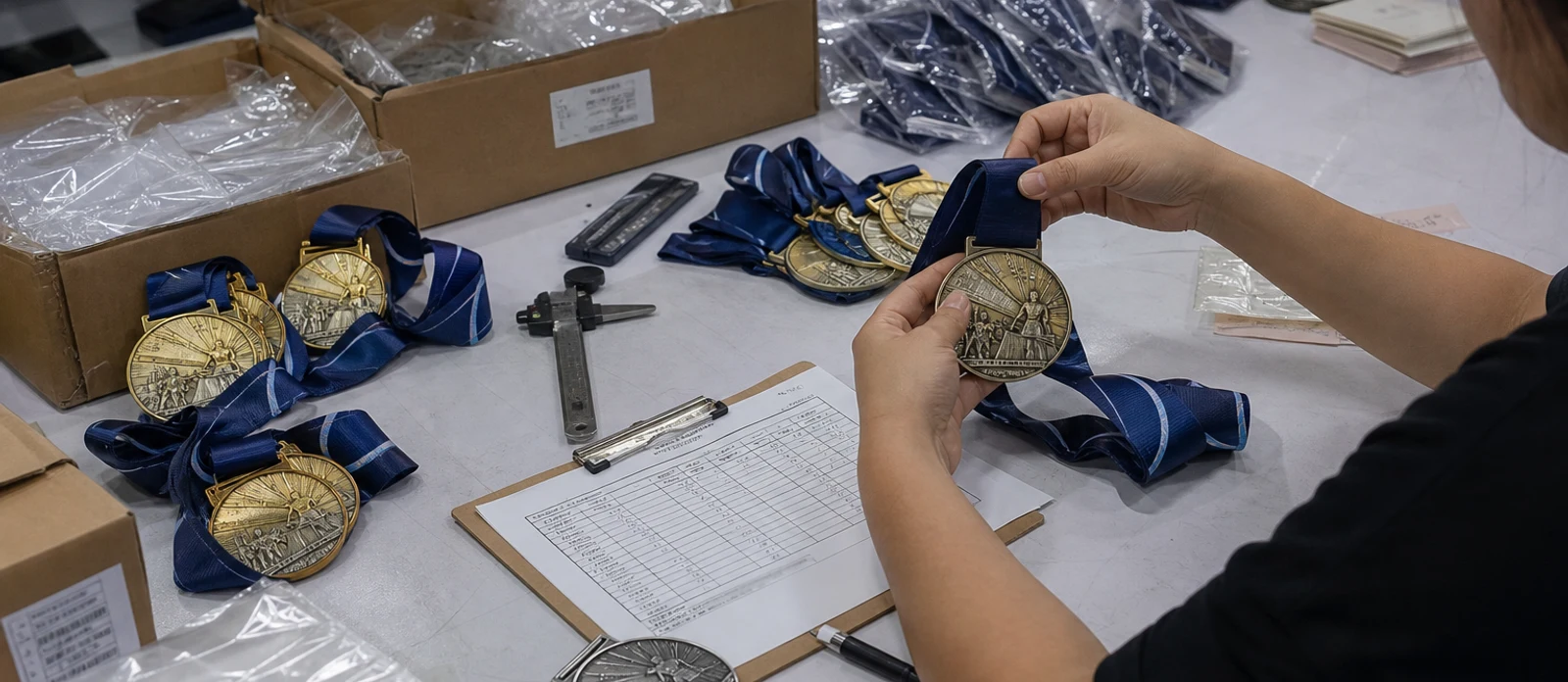
Before shipment, inspect medal size, thickness, surface defects, plating color, enamel overflow, ribbon print direction, quantity by category, packaging condition and carton labels. For large races, count by distance and award type. Missing one category can create problems during distribution even if the total carton quantity looks correct.
How Long Does It Take to Make Custom Marathon Medals?
Lead time depends on artwork approval, sample requirements, medal size, finish, ribbon printing, packaging and shipping method. For many overseas race medal orders, a planning window of 4 to 7 weeks after final proof approval is more realistic than trying to compress proofing, production and freight into the last few weeks.
The safest schedule separates four steps: artwork proofing, sample or pre-production approval, mass production, and final inspection before export. If the race date is fixed, share the required in-hands date, not only the event date. A supplier can then judge whether air freight, sea freight or split shipment is realistic.
For a recent multi-distance style of order, the same medal body could be used across categories, but ribbons and carton labels still had to be checked by distance. That small detail is easy to miss in quotation, and it matters when volunteers unpack medals before the finish-line handout.
What to Send When Requesting a Quote
A clear quote request helps the supplier review the project instead of guessing. When requesting custom running medals or custom race medals, send:
- Event type and race distance
- Event logo or reference artwork
- Quantity for each distance or award level
- Preferred medal size and thickness
- 2D or 3D design preference
- Plating and enamel color requirements
- Ribbon design, width and length
- Packaging requirement
- Delivery country, race date and required in-hands date
- Sponsor logo or personalization details
If the design is not final, send the event story and reference images first. A factory can suggest whether the medal should be round, custom-shaped, antique plated, color-filled, printed or made with 3D relief.
For buyers comparing recognition products, our custom medals vs challenge coins guide explains when medals fit ceremony awards and when coins fit sponsor gifts or collectible recognition. If you are still building the product plan, the custom metal crafts guide may also help.
Frequently Asked Questions
What size should custom marathon medals be?
Many full marathon medals start around 80 to 90 mm, while 50 to 70 mm can work for 5K, 10K and community races. The right size depends on artwork detail, medal weight, ribbon comfort, budget and packaging.
What information should be on a race medal?
A race medal usually includes the event name, distance, year and main visual identity. It may also include the city, route shape, sponsor mark, charity symbol or finisher wording.
Are 2D or 3D medals better for running events?
2D medals are better for clean logos, text and race distance marks. 3D medals are better for sculpted landmarks, runners, mountains and premium depth. Many custom marathon medals combine both methods.
How early should I order custom running medals?
Order as early as possible and allow time for artwork proofing, sample approval, production, shipment inspection, international shipping and local distribution before race day.
What affects the production time for custom marathon medals?
Artwork changes, custom shapes, 3D relief, enamel colors, ribbon printing, packaging and shipping method can all affect the schedule. Share the required in-hands date so the factory can plan proofing, production and inspection backward from race day.
Can one medal design be used for different race distances?
Yes. Many buyers use the same medal body with different ribbon colors, back printing, inserts or packaging labels for 5K, 10K, half marathon and full marathon categories.
Conclusion
Custom marathon medals should reflect the runner's achievement and the organizer's production requirements. A good medal is clear, manufacturable and delivered on time. It does not need every special effect available. It needs to carry the race identity and match the way medals will be worn, packed and distributed.
For buyers, the safest process is to define the race type, confirm the artwork, choose a suitable size and finish, design the ribbon early and leave time for factory testing and shipment inspection. When these details are handled before production, the final medal becomes easier to approve, pack and deliver, and the event team has fewer surprises when cartons arrive.
Start Your Custom Running Medal Project
Tell us your race type, quantity, artwork status, ribbon requirement, delivery country and in-hands date. Our team will help prepare a production-ready medal plan for your event.