One Logo, Three Custom Wooden Medal Designs
 By Sunny Huang
You already have an event logo and are considering custom wooden medals for your next race or charity run. Should you choose engraving, full-color printing or a layered design? And will the finished medal feel too light or thin to mark the achievement?
The choice depends on which parts of your logo must remain recognizable and what participants expect from the award. Front views help compare artwork and color; side views show construction. A complete physical sample lets you judge the feel before committing to a design.
Table of Contents
What Changes When Your Logo Goes on Wood?
Wooden medals use wood or wood-based board as their body. The surface tone and grain can influence how the logo appears, particularly where wood remains exposed.
We offer engraving, full-color printing, layered construction and cutouts. These methods can also be combined: a layered medal may include printed colors, engraved lettering or selected openings.
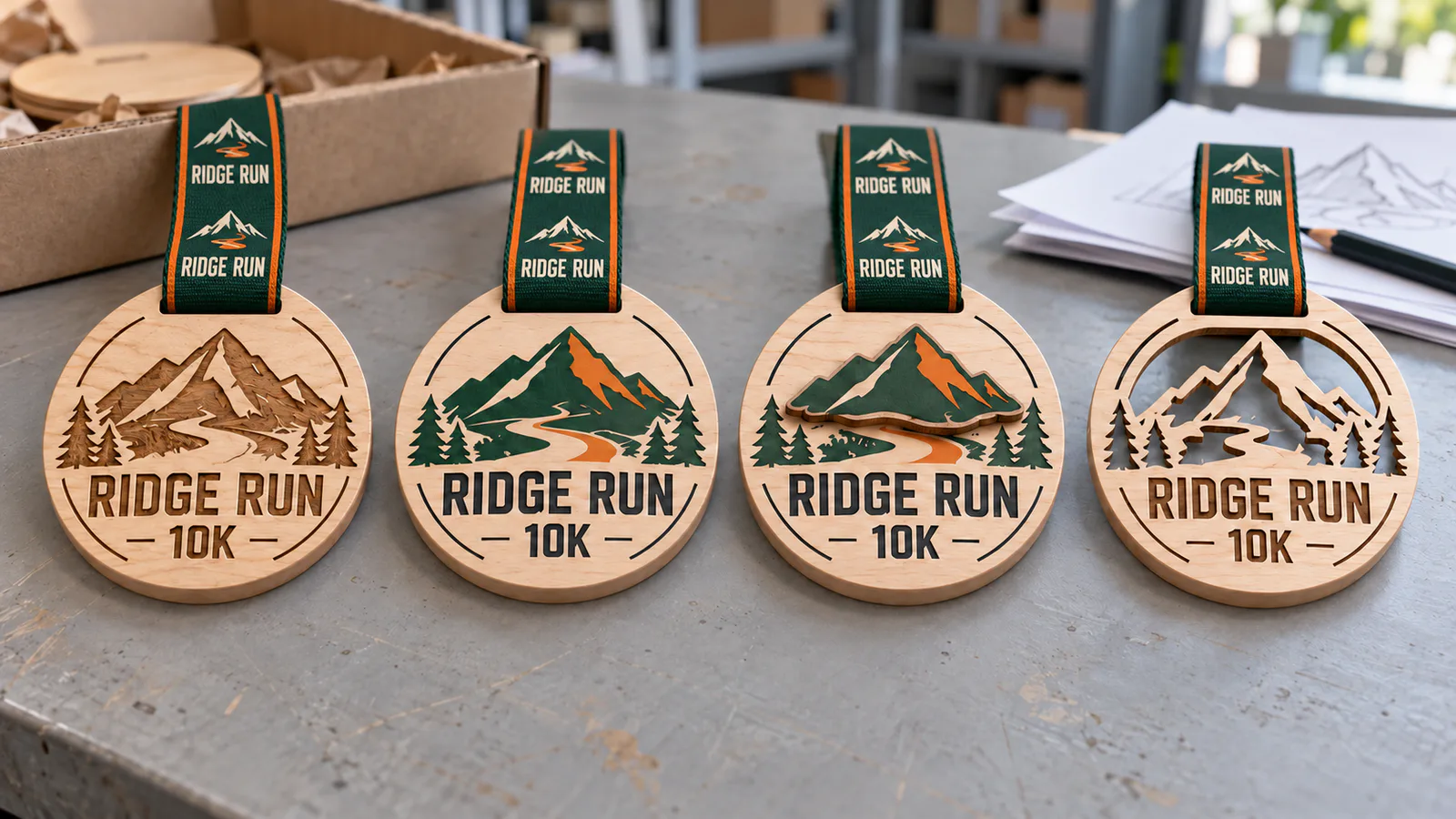
For comparison, this article uses an illustrative trail-race logo with a mountain graphic, event name and distance. It is a design example, rather than a documented production case. Each approach retains the same essential information while changing how it is presented.
Before comparing wooden medal designs, identify what must survive any adaptation: the mountain silhouette, the event name, the brand colors—or all three.
Engraved Wooden Medals: Let the Shape and Lettering Lead
If your logo is recognizable in black and white, engraving is a practical starting point. Clear outlines, short names and distinct symbols work well as the basis for an engraving-only design. Areas distinguished solely by color may need separate outlines or a different arrangement.
For the trail-race example, keep the mountain silhouette, event name and distance. Fine landscape textures or shading can be simplified where they compete with the main graphic. The question is whether removing a detail changes the event’s identity or simply makes the artwork easier to read.
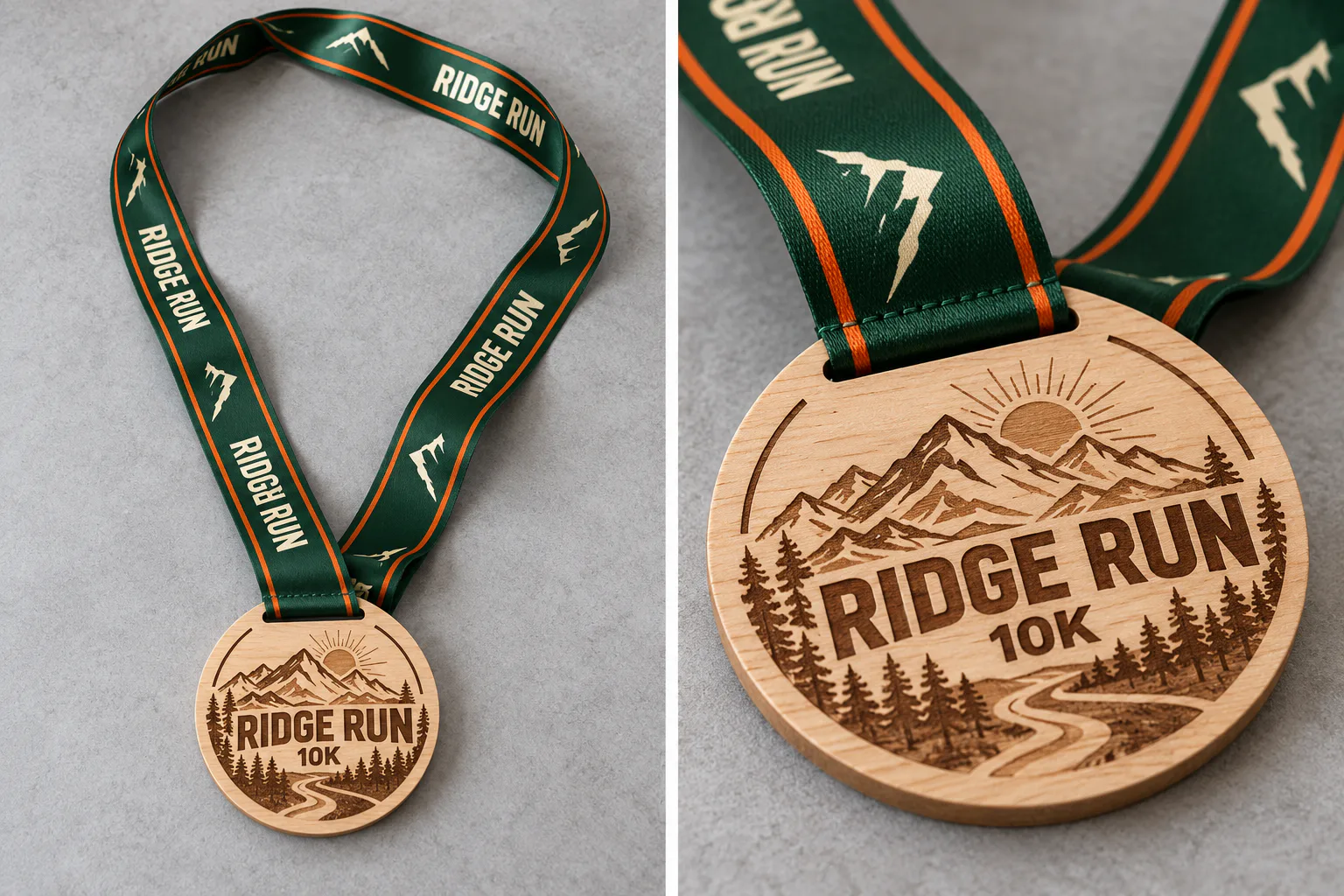
Engraved wooden medals depend on contrast between the engraved marks and surrounding wood. Wood tone, grain and processing settings can affect that contrast. Review lettering and fine lines at the intended medal size: an enlarged screen preview may conceal crowded spacing or unreadable text. Our medal artwork review guide provides broader checks for wording and layout.
Look for balanced spacing, clear engraving, finished edges and a clean surface. Choose engraving when the essential logo remains clear without its original colors.
Full-Color Wooden Medals: Keep the Colors That Identify Your Event
When an event or charity logo depends on specific colors, printing can preserve distinctions that engraving alone would lose. In the trail-race example, the mountain retains its original colors while the event name and distance remain clearly separated.
Decide where you want the wood to show. Printing selected areas leaves grain visible around the artwork; adding a printed background creates a more uniform colored area. Ask whether the proposed printing method uses a white underbase and how that affects the visible grain and final colors.
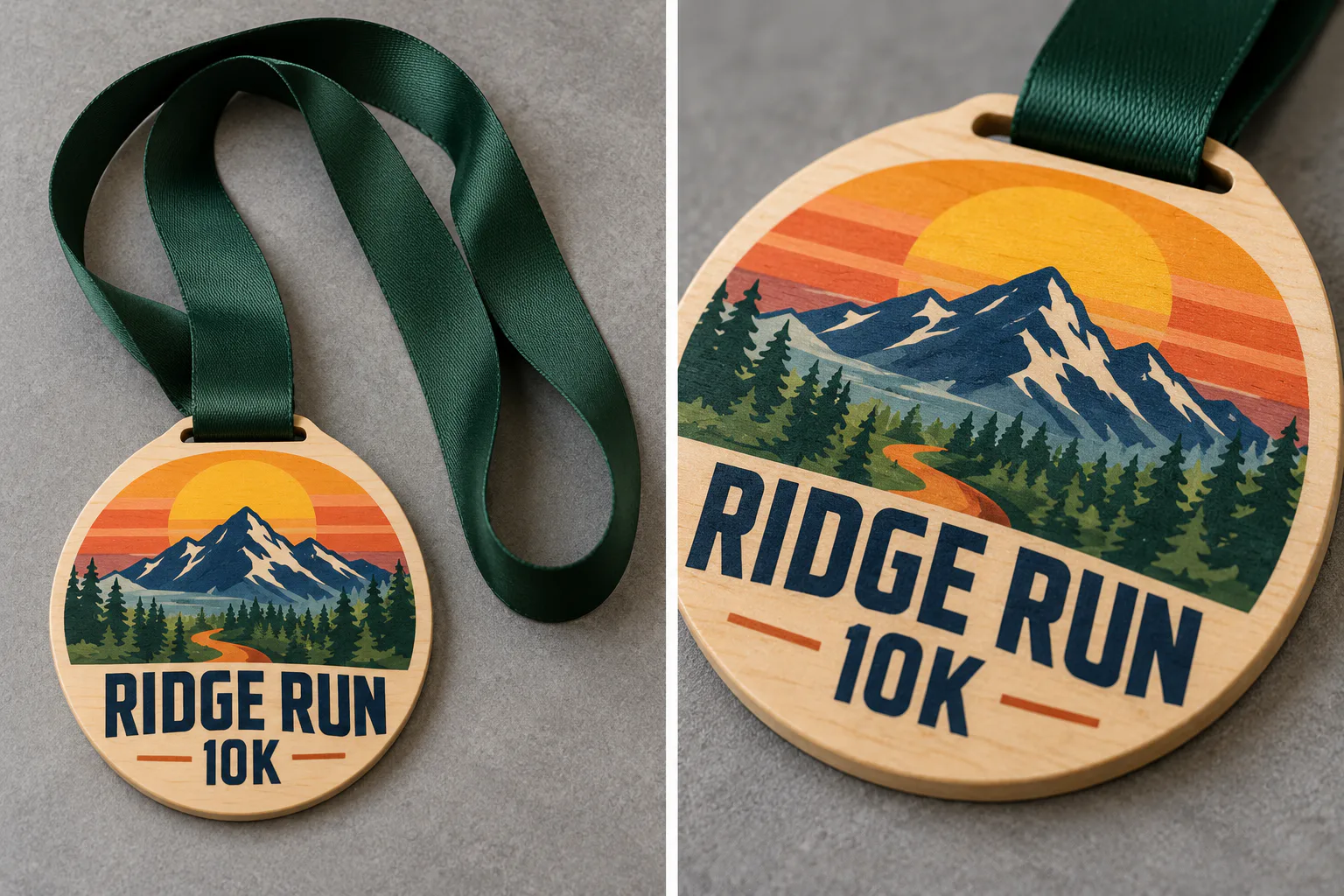
Full-color wooden medals still require artwork suited to the available space. Small sponsor names, fine lettering and closely packed graphics may need adjustment. The ability to print several colors does not mean every detail will remain readable. Where brand colors matter, review a physical sample instead of treating the screen preview as a color guarantee.
Choose printing when color contributes to recognition, then agree which areas should remain visibly wooden. Printing primarily changes the surface appearance; it does not provide the structural depth of an added wooden layer.
Layered Wooden Medals: Give the Main Graphic More Depth
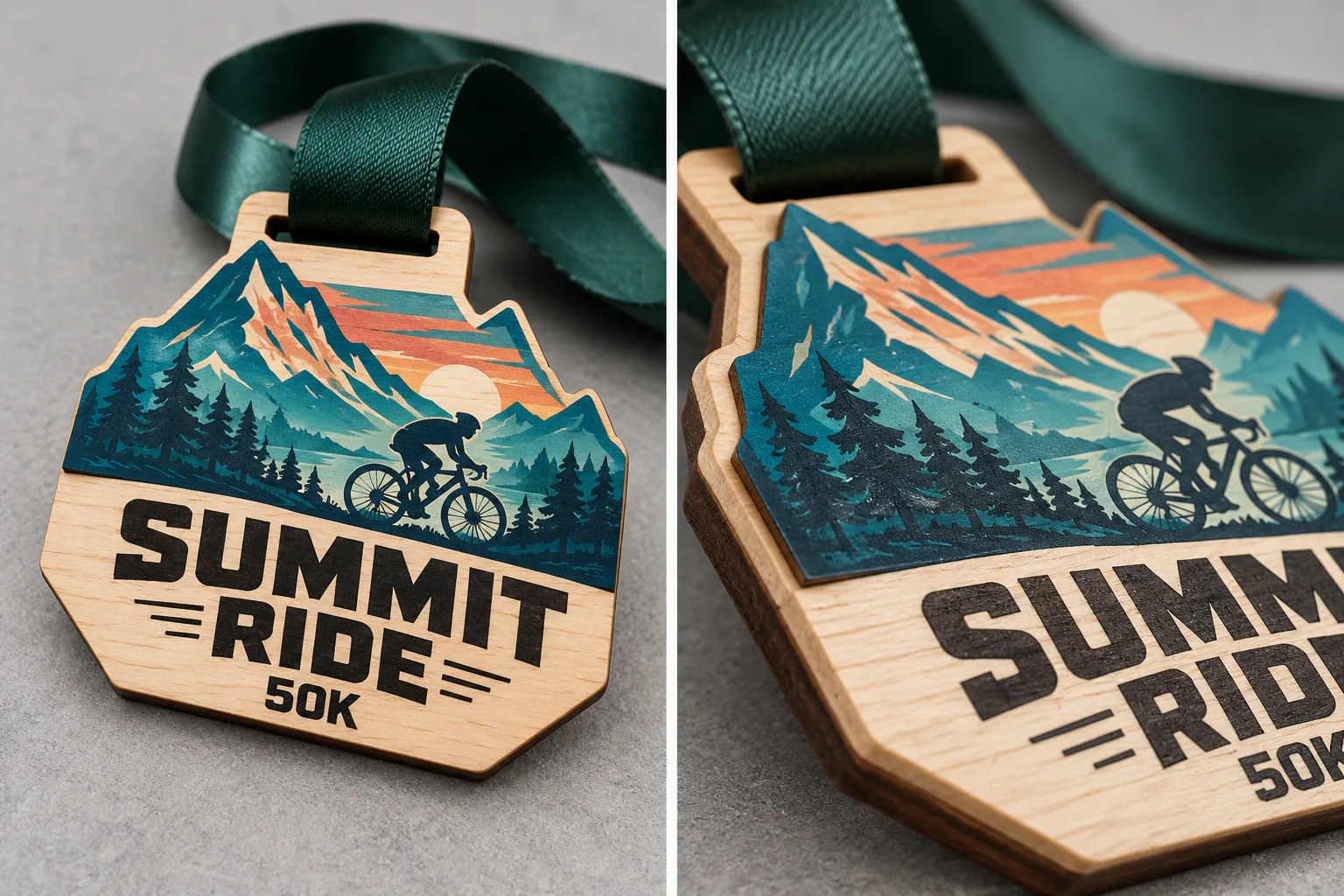
Start by choosing one element to raise. For the trail-race logo, the mountain can sit on an upper layer while the event name and distance remain on the base. This makes the main graphic more prominent without obscuring the information participants need to read.
Layered wooden medals do not require every element to be raised. Keeping smaller details on the base leaves space around the main symbol and avoids unnecessary assembly. If the logo already reads clearly on one surface, additional layers should contribute a visible benefit.
We also offer cutouts where open space supports the design. Check the remaining material around openings, narrow connections and the ribbon attachment before approving the layout. Cutouts and layers can work together, but their placement needs to suit the proposed construction.
An angled side view shows how the layers meet and where their edges sit. Each layer adds cutting, alignment, bonding and assembly. Check that the layers are aligned and securely bonded, with no visible adhesive outside the intended bonding areas. More structure does not automatically produce a better-looking award.
Will the Finished Medal Feel Too Light or Thin?
Some participants associate a race achievement with a substantial metal medal. If that expectation matters to your event, assess a wooden sample before committing. A lighter award may suit the project, but its feel should be an informed choice.
Weight, thickness and visual depth are different qualities. A raised mountain can appear substantial in a photograph without making the medal heavy. Conversely, a simple design may have the clean edges and balanced proportions you want. There is no single thickness or layer count that guarantees the right impression.
Ask the supplier to identify the proposed wood or wood-based board, overall dimensions, base thickness and total assembled thickness. When weight matters, request the measured weight of the complete medal with its ribbon. Compare samples using the same size and ribbon configuration.
Ask for side and back photographs showing the surface, edges and assembled structure. A video can show how the medal hangs from its ribbon. Our medal ribbon guide explains how the ribbon and attachment contribute to the complete award.
Handle a complete sample to assess weight, rigidity and wearing comfort. If a heavier feel is essential, compare wooden race medals with a metal medal option before choosing the material.
Which Design Best Represents Your Event?
Use your logo’s most important features to narrow the options. The three approaches below are starting points; printing, engraving and layers can be combined where the artwork benefits.
| Design | Best starting point | Main limitation | Sample detail to review |
|---|---|---|---|
| Engraved | The logo works without color | Color-dependent details need adaptation | Engraving contrast and lettering |
| Full-color printed | Brand colors carry meaning | Wood tone and printing method affect appearance | Color and small text |
| Layered | One graphic benefits from raised structure | More alignment and assembly work | Side profile and bonded areas |
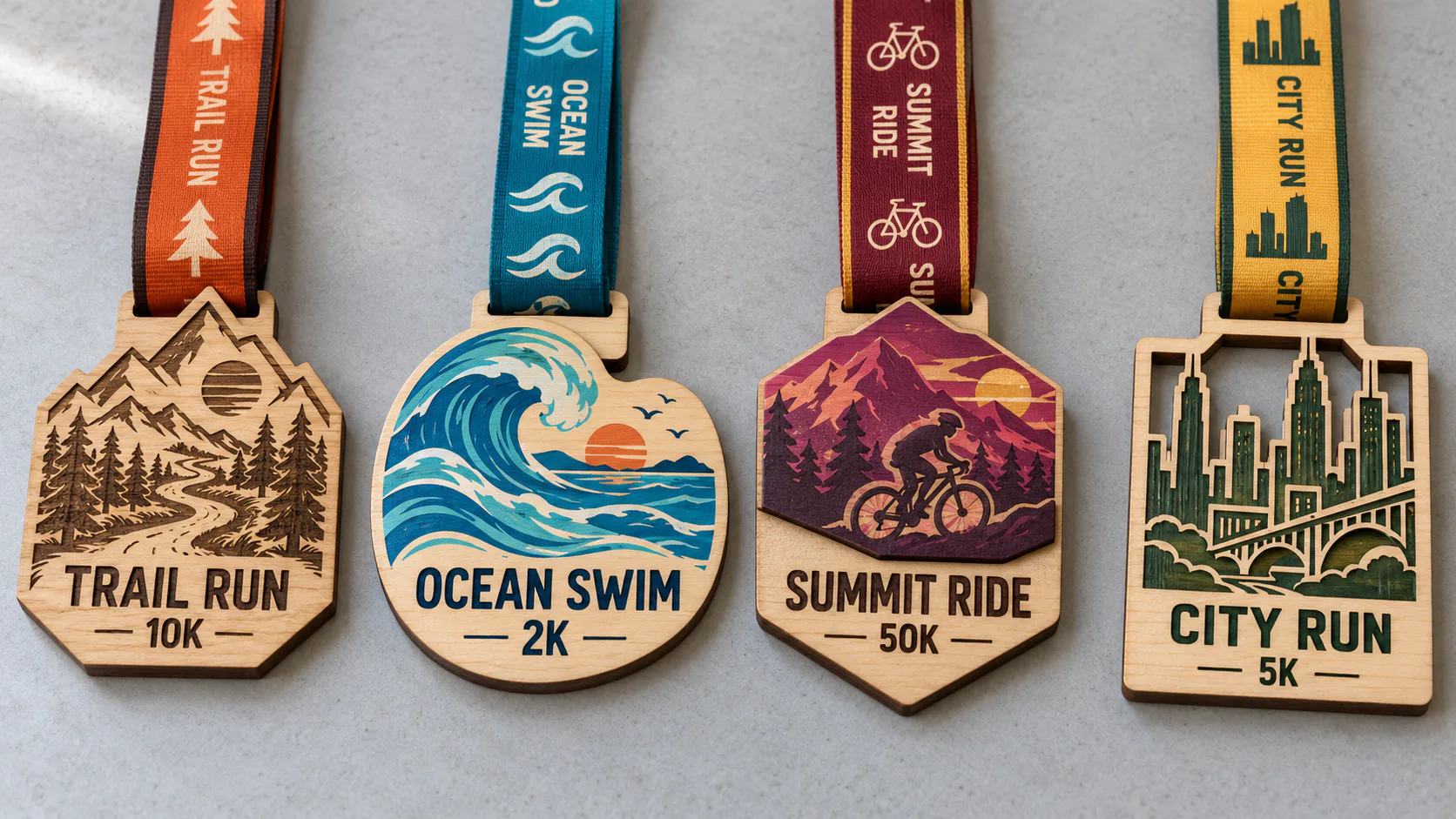
For a trail race with a distinctive mountain silhouette, compare engraving with layering. Does the raised mountain make the event more recognizable, or does the engraved version already communicate it clearly? Keep the event name readable in either option.
For a charity run, preserving the organization’s colors may take priority. Start with a printed design, then consider whether a raised element adds enough visual emphasis to justify the extra construction. Sponsor marks should remain legible without overwhelming the event logo.
A medal’s value can come from recognizable artwork, clear achievement information and neatly finished details—not complexity alone. Compare costs using the same quantity, overall size, ribbon and packaging requirements.
Frequently Asked Questions
Can printing and engraving be combined with a layered wooden medal?
Yes. A layered design can include printed colors and engraved details. The combination depends on the artwork, available space and proposed construction, so identify which elements need color, engraving or raised placement.
Will adding layers make a wooden medal feel heavier?
Additional layers can increase thickness and weight, while cutouts remove material. The finished feel depends on the materials, dimensions and construction. Assess a complete sample if weight is an important requirement.
Can I review a sample before placing a bulk order?
We can discuss existing samples or a sample made with your logo. Physical-product photographs and videos are also available for discussion. Sample availability, costs and arrangements are confirmed for each project.
See How Your Logo Could Work on a Wooden Medal
Send your logo, estimated quantity and required arrival date. Tell us which colors must stay and whether you are concerned about thickness or weight. You do not need to select a process first.
We can discuss existing samples, samples made with your logo, and photographs or videos of physical products. Sample availability, costs and arrangements are confirmed for each project.