Custom Medal Design: What to Check Before Approving Your Proof
 By Sunny Huang
Before approving a custom medal design, check the dimensions, wording, front and back layouts, decoration methods, finish, and ribbon details. Read the artwork alongside the quotation, where the base metal may already be agreed. Resolve any unclear detail before confirming the drawing and authorizing mold making.
A proof brings several decisions into one drawing. A medal can look convincing on screen while a small line of text, the reverse design, or a ribbon measurement still needs attention.
At Unique Pin, we carefully check details such as small text, event years, and ribbon text direction. Customers also need to confirm information specific to their event. This guide uses an approved medal proof and an original product photograph to explain that review.
In This Guide
1. Read the artwork together with the quotation
Start by separating what the drawing shows from what has already been agreed elsewhere. We confirm the base metal during quotation. Its absence from the artwork does not mean the material is undecided; check the quotation if you need to verify it.
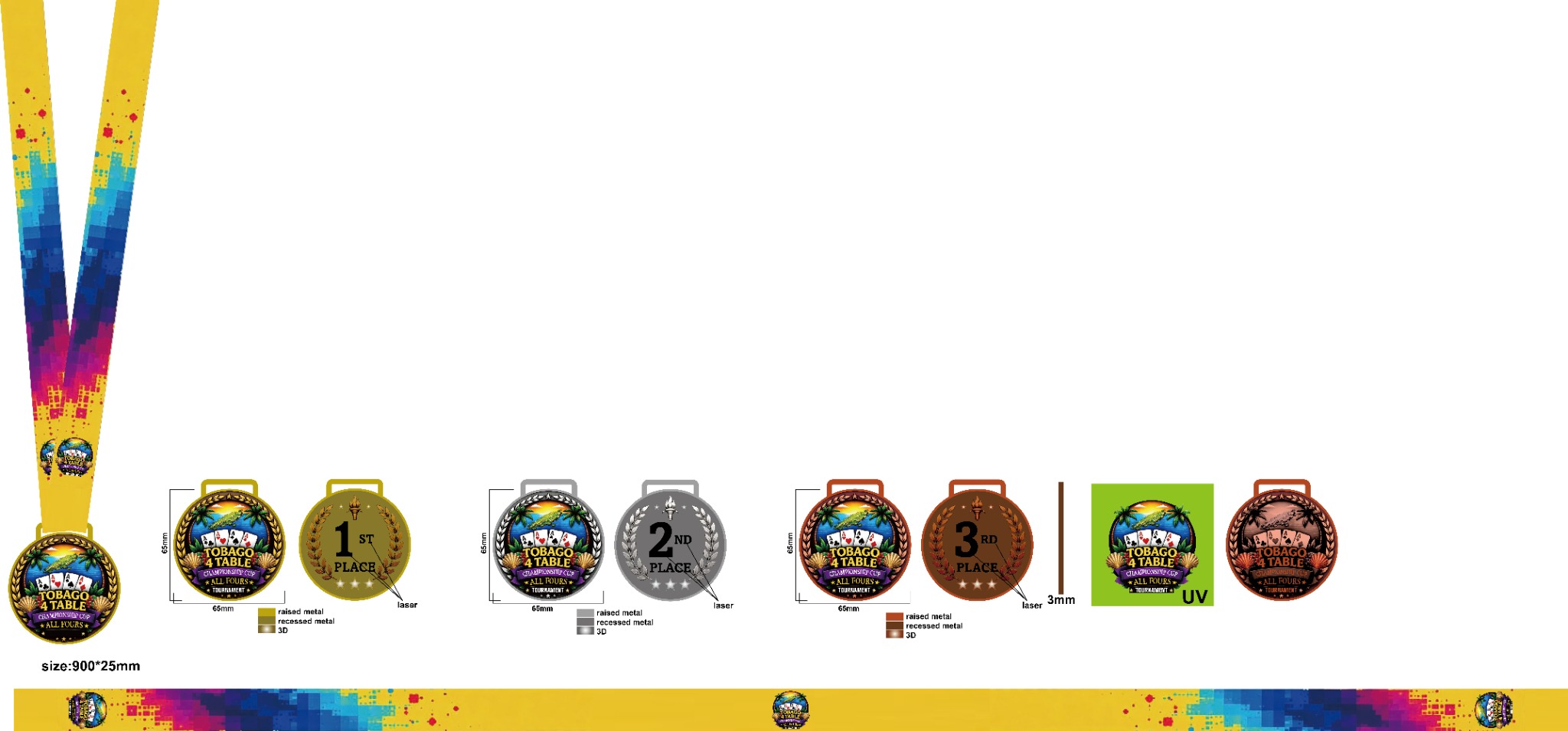
The example proof specifies a width and height of 65 mm and a thickness of 3 mm. Read the dimension arrows as well as the numbers. If it is unclear whether a measurement includes an attachment, ask before approving.
Gold, silver, or bronze coloring on a proof describes an appearance; it does not establish the underlying metal or precious-metal content. Confirm the agreed finish separately. For broader choices before the proof stage, see our custom marathon medals guide.
Do not estimate thickness from a shaded front view. Use the stated measurement and any side view provided. If the written specification and the illustration seem inconsistent, flag the difference so it can be resolved before approval.
2. Check wording and layout at the intended size
Read every word on both faces, including the event name, year where applicable, placement, and sponsor wording. Check the ribbon separately. A correct event name on the medal does not confirm that it is also correct on the ribbon.
Our example includes first-, second-, and third-place versions. Review each reverse rather than approving the set after looking only at first place. Keep the intended wording beside the artwork so you can compare it directly.
Zooming in helps find spelling errors, but it can hide how small the lettering will be. If you print a paper reference, measure it with a ruler to check the scale. Ask us to review any text that seems crowded or difficult to read at the intended medal size.
For text-heavy designs, decide which wording people should notice first. An event name, award category, and sponsor line do not necessarily need equal prominence. If space becomes tight, agree which wording can be shortened rather than making every line smaller.
3. Separate printing, laser work, and metal relief
A colorful image does not tell you how every detail will be made. Read the process notes instead of assuming that all colored areas are enamel or that all lettering is raised metal.
On the supplied proof, the colored front artwork is marked for UV printing. The reverse placement wording is marked for laser processing. Raised metal, recessed metal, and 3D details are also identified. These labels describe different aspects of the design: surface decoration and the form of the metal itself.
Check that each note points to the intended area. If you expect a logo to stand above the background, confirm that requirement explicitly. A printed logo and a raised metal logo may depict the same artwork, but they are different production instructions.
Raised and recessed areas sit at different levels relative to the surrounding surface. A 3D note indicates modeled relief, but the shading on a flat preview cannot fully communicate its depth. Ask about any contour that is central to your design.
4. Understand what the color preview can show
Use the proof to review color placement and the overall relationship between artwork and metal finish. Do not treat a screen image as an exact physical color reference. Adobe's color-proofing guidance explains that even managed screen previews depend on factors including the display, color profiles, and lighting.
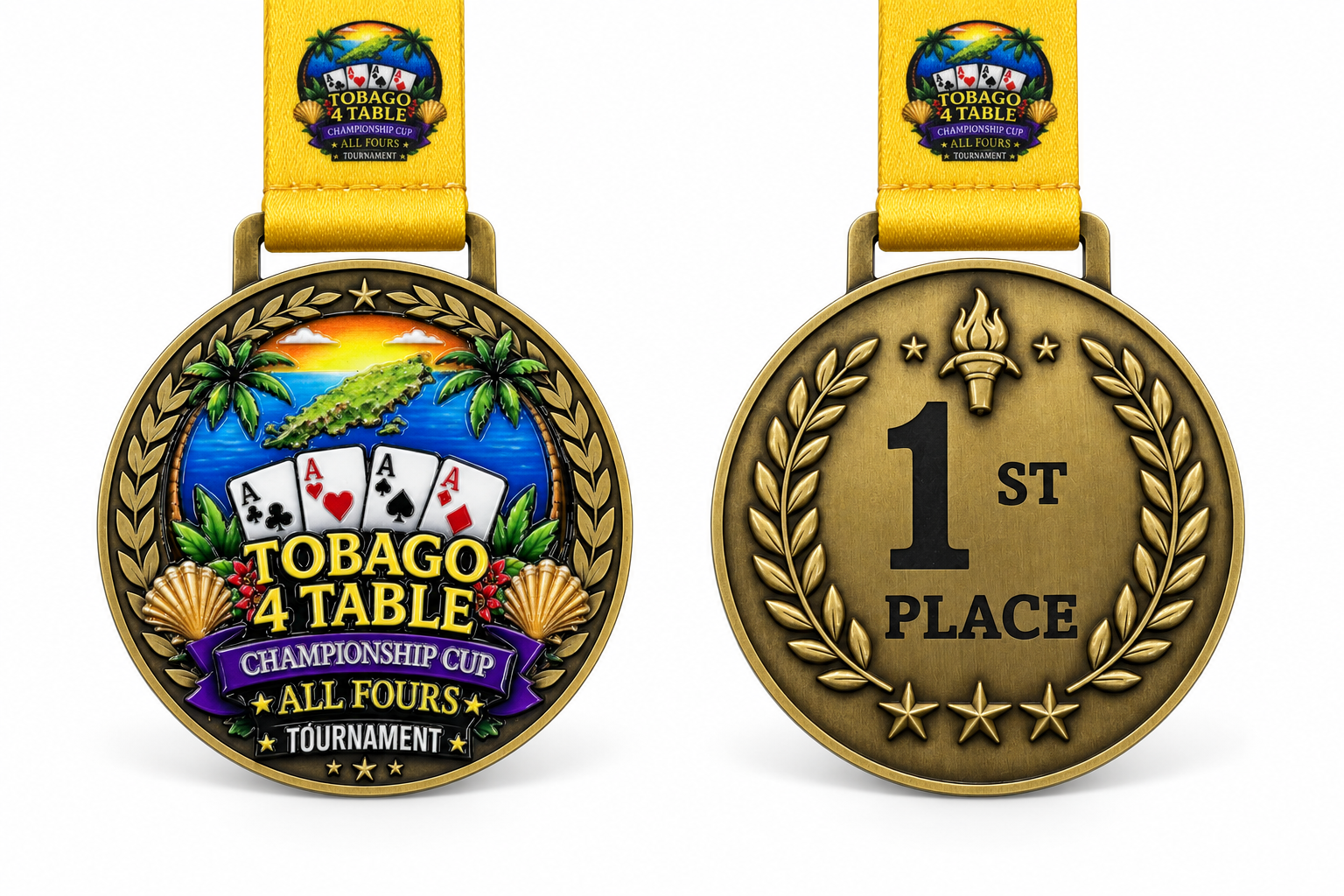
Metal reflections and surface texture also change how a medal looks when you turn it in your hand. The photograph accompanying this guide shows the finished first-place medal from this design. It is an original product photograph, while the drawing records the approved design details.
If a particular color or surface appearance is essential, raise that requirement before approval and discuss how it should be checked.
5. Review the full ribbon and its attachment
The ribbon in this example is specified as 900 mm in total unfolded length and 25 mm in width. The 900 mm figure is not the length hanging down from the wearer's neck. Keeping that distinction clear avoids approving a measurement you have interpreted differently.
Look at the complete ribbon layout, including repeated wording, logos, and their direction. Then check the view showing the ribbon attached to the medal. Text that reads correctly on a flat strip still needs to face the intended way when worn.
Confirm the attachment shown and how the ribbon meets the medal. If you cannot tell which side faces outward or where a logo sits near the attachment, ask for clarification before approving the layout.
6. Decide whether you need a physical sample
We arrange physical sampling according to customer requirements; it is not an automatic step for every order. When a sample is made, customers may approve the sample through photographs, video, or examination of the physical sample after receiving it.
Choose the review method around the question you need answered. A close photograph can help you examine wording and placement. Video can show the medal from different angles. A physical sample lets you assess weight, touch, and the ribbon directly.
Tell us which details need attention when requesting a sample. General approval is less useful than confirming the specific feature you were uncertain about.
For example, a front-facing photograph will not answer a question about reverse lettering. Request the relevant view. If your concern is the feel of an edge, explain that too; another screen image cannot provide the same information as handling the item.
7. Send a clear approval and explain any later changes
Customers usually confirm our artwork by email or WhatsApp. Mold making begins after the customer has confirmed the drawing. When several images appear in a conversation, replying to or attaching the exact drawing helps make the approval clear.
Before sending that message, make sure outstanding questions have been answered. If something still needs changing, describe it specifically instead of combining an approval with an unresolved request.
For this medal, the change involving the missing star is a minor change that does not require reassessing tooling, cost, or lead time. That example is specific to this product; it does not establish a rule for every star or artwork change.
For major changes, the factory first assesses the effect on existing tooling, work already completed, cost, and lead time. We then confirm the proposed solution with the customer. Describe the requested change so the team can determine how it should be handled.
Final artwork approval checklist
Use this checklist with the actual drawing and quotation open side by side.
| Check | Confirm before approval |
|---|---|
| Dimensions | Width, height, thickness, and the scope of the dimension arrows |
| Material and finish | Consistency with the quotation and agreed appearance |
| Wording | Names, dates where used, spelling, placement, and every variant |
| Production notes | Which areas are printed, laser processed, raised, recessed, or 3D |
| Ribbon | Total unfolded length, width, text direction, and attachment layout |
| Sampling | Whether a sample is requested and how it will be reviewed |
| Approval | The exact drawing being confirmed and no unanswered change requests |
Frequently asked questions
Does the artwork need a revision number to be approved?
Our artwork sheets do not carry a drawing number, revision label, or date. Identify the exact drawing in your approval message rather than referring vaguely to “the latest design.”
Does a digital proof replace a physical sample?
It serves a different purpose. The proof communicates the proposed design and specifications. A physical sample allows direct examination of a manufactured item. Whether to request one depends on what you need to verify.
Once the details are clear, you can approve the proof with a shared understanding of the medal to be made. For a new project, explore our custom medals and send the event artwork and requirements to begin the discussion.