How to Choose the Right Ribbon for Custom Medals
 By Sunny Huang
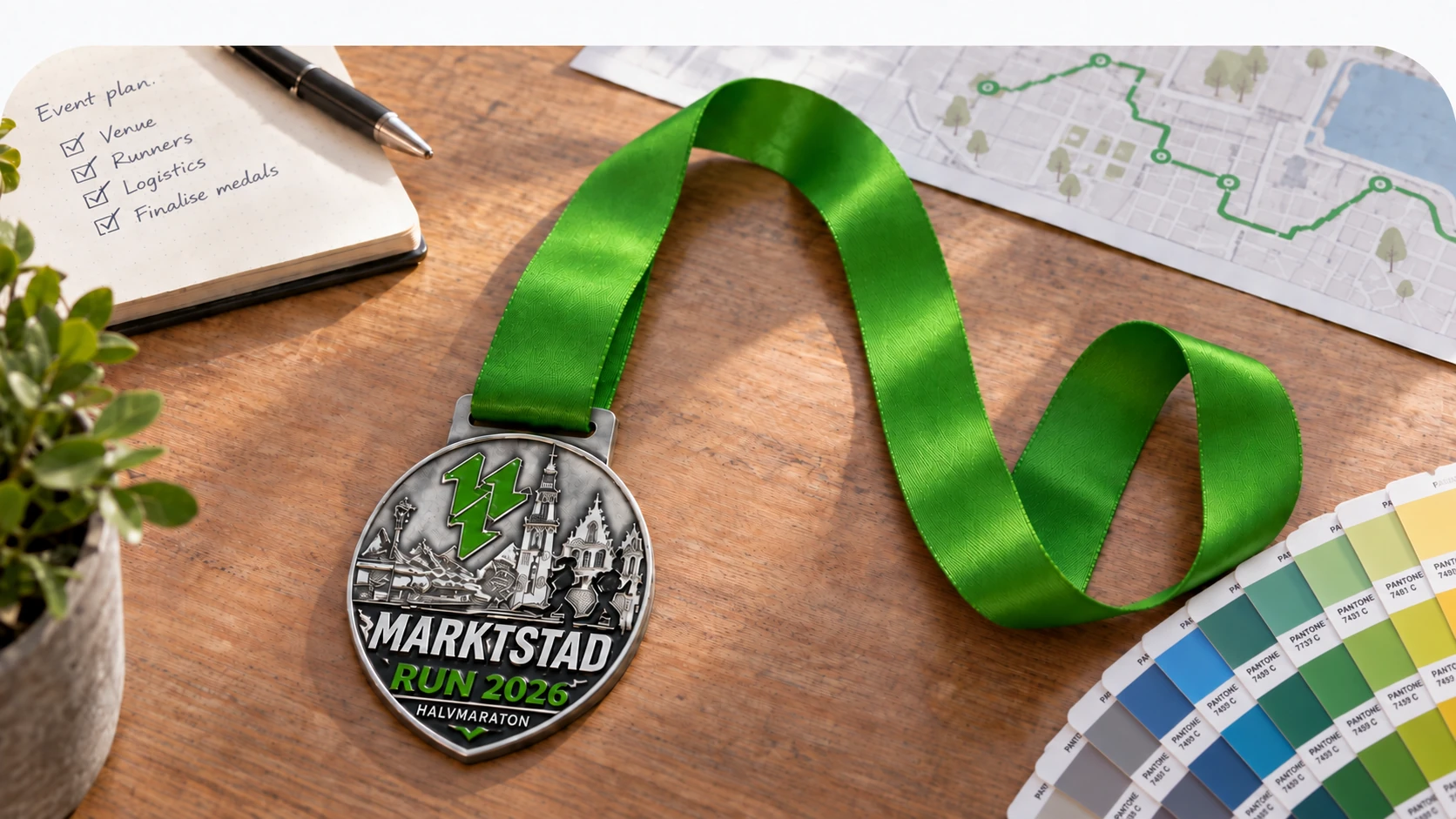
A medal ribbon does more than hold the medal. A race organizer may want it to display an event name or sponsor logo. A school may need to distinguish award groups, while an institution may have colors that the finished award must follow. For an importer, the challenge may be selecting a ribbon that suits a customer’s medal design without making the artwork difficult to read.
The first question is what the ribbon needs to do alongside the medal. Its colors, artwork, width and connection should work as one finished award. This guide explains how to choose between the ribbon options Unique Pin offers and what to confirm before ordering custom medals and ribbons together.
Quick answer: Choose a plain ribbon when the medal carries the main artwork and the ribbon only needs one color. Choose heat-transfer printing when the ribbon needs logos, text or multiple colors. Unique Pin commonly compares 25 mm and 30 mm widths, but the final choice should be checked with the medal’s artwork, weight and attachment.
Table of Contents
Which Ribbon Is Right for Your Custom Medal?
Look first at what is already visible on the medal. If it clearly shows the event name and award category, the ribbon may only need to provide color. If the medal has limited space for a race distance, date or sponsor, the ribbon can carry some of that information instead. Decide which surface has which job before adding artwork to both.
Then consider how recipients and staff will identify each version. If one race uses the same medal for participants and volunteers, changing ribbon color may help, but visible wording can make the distinction clearer. For an institutional award, approved colors or marks may determine the ribbon design before a supplier suggests alternatives.
An importer managing several customer designs should record each medal-and-ribbon combination separately. Choose by message, recipient and version first; the appropriate ribbon treatment follows from those decisions. You can view custom medal examples while considering how the ribbon will appear with the metal design.
Compare Plain and Heat-Transfer Printed Medal Ribbons
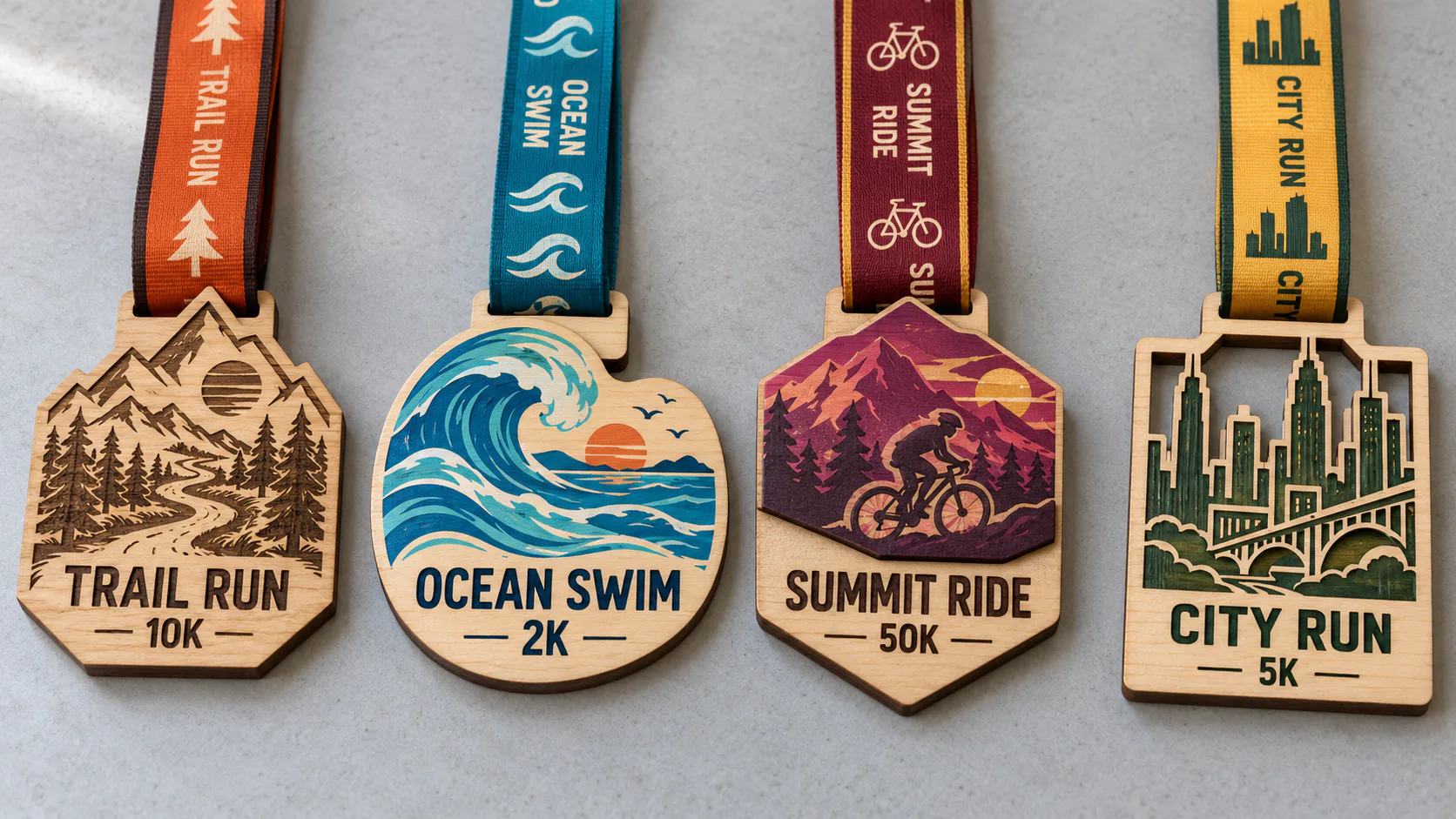
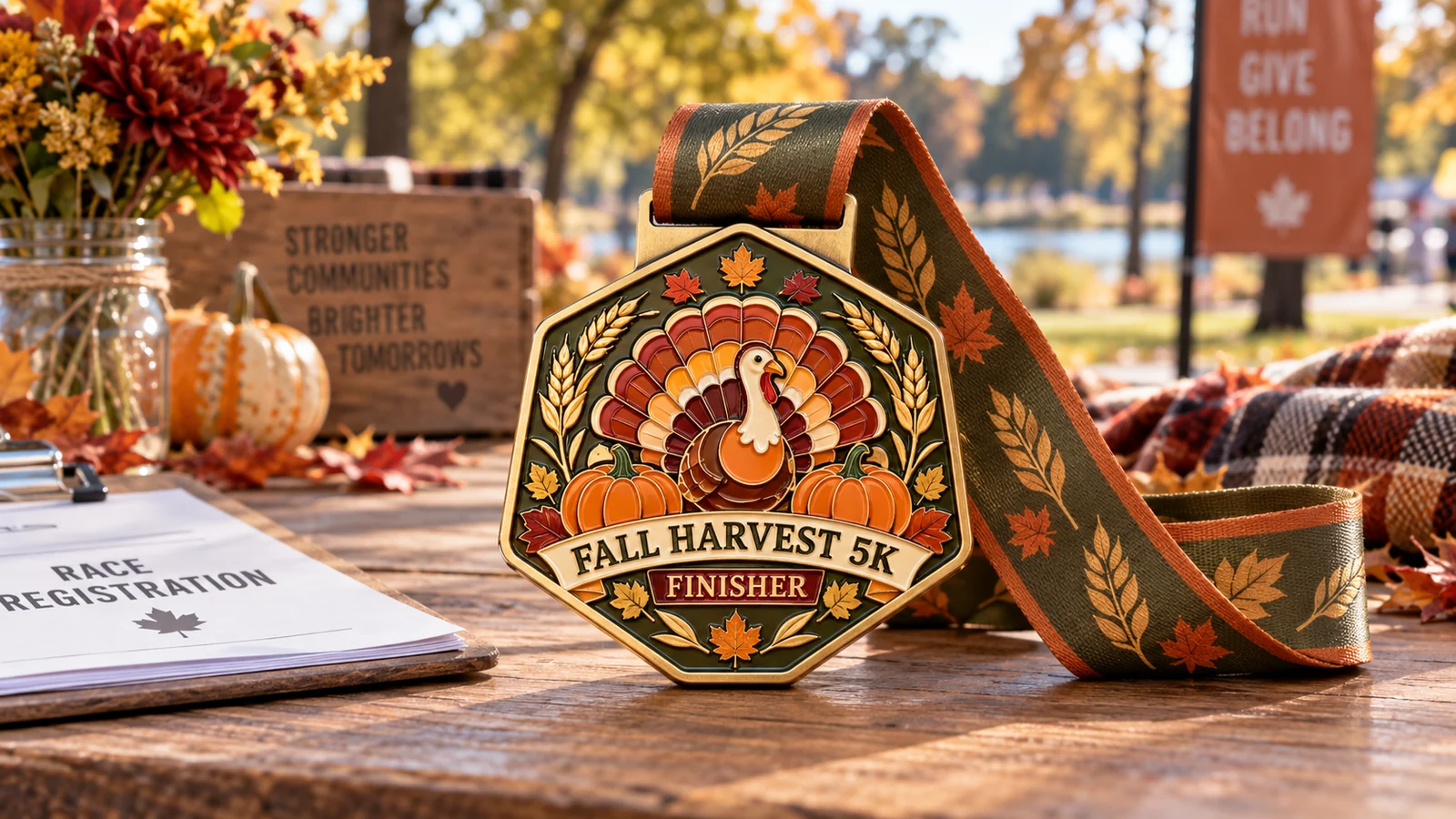
Unique Pin offers two ribbon directions for these projects: a smooth, single-color plain lanyard ribbon and a smooth, heat-transfer printed ribbon. For two- or three-color ribbon designs, we generally recommend discussing the heat-transfer option. The choice depends on what must appear on the ribbon, not on which process sounds more elaborate.
| Option | Consider it when | Check before ordering |
|---|---|---|
| Single-color plain ribbon | The medal carries the main artwork and the ribbon only needs to supply a color. | Does the color work with the medal and clearly identify the intended version? |
| Heat-transfer printed ribbon | The ribbon needs two or three colors, an event name, logo or a more detailed design. | Are the artwork, repeated elements and small text clear at the proposed width? |
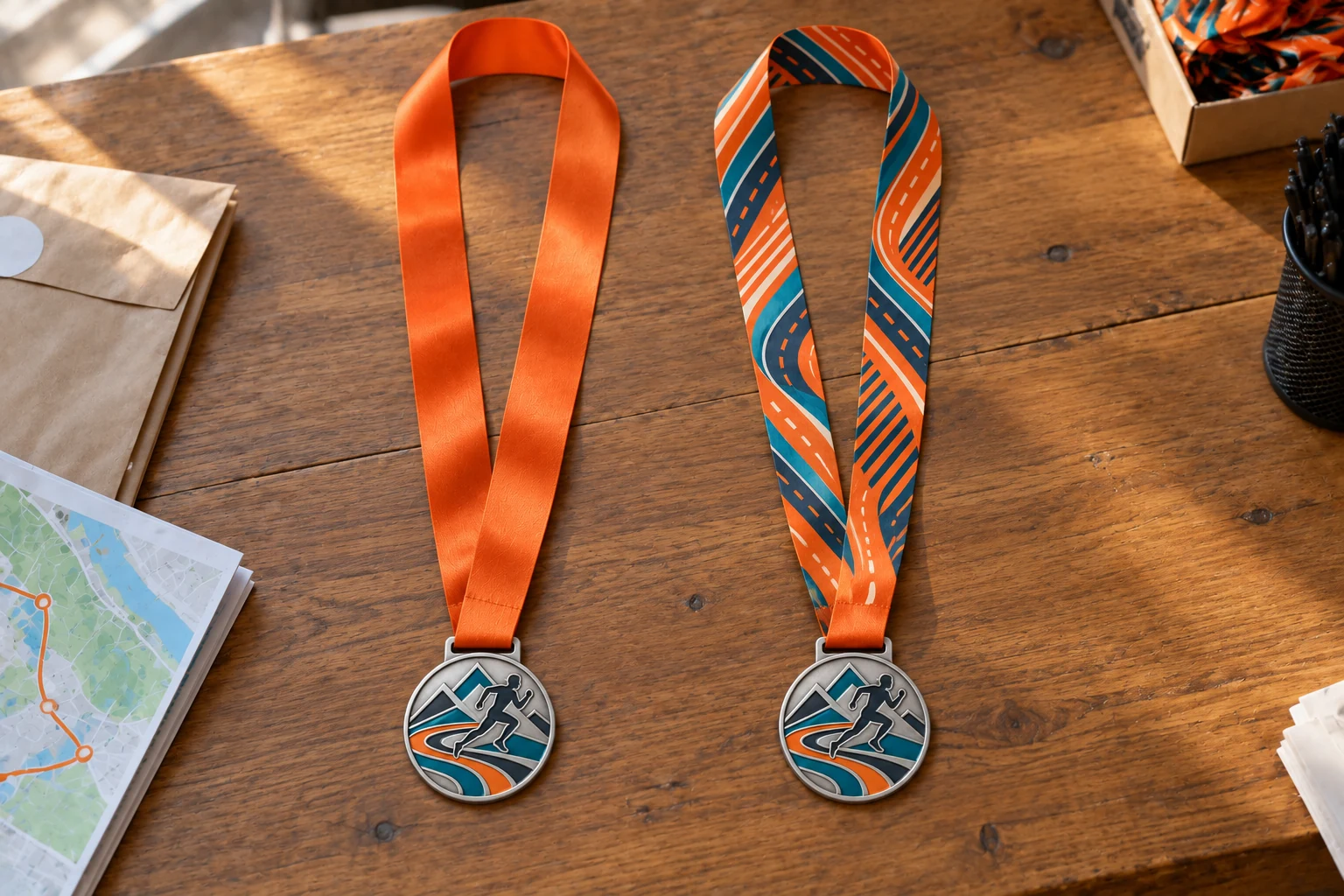
For example, a school medal that already displays the school name and achievement may work with a plain ribbon in its chosen color. A race medal that needs its distance and sponsor mark on the ribbon calls for an artwork review; a heat-transfer ribbon may be the better starting point.
A useful comparison is to place two ribbon samples beside the same medal. With the medal unchanged, the buyer can see whether the plain ribbon lets the metal design lead, or whether printed artwork adds information the award needs. The final choice should follow the actual design, available color references and approved sample.
How Should You Put Logos, Text and Gradients on the Ribbon?
Decide which information must be readable when the medal is worn. A short event name or one sponsor logo may have enough space. A long sponsor list can make every mark too small, especially on a narrower ribbon. If the medal already shows the event name, consider using the ribbon for a distance, date or prominent sponsor instead.
Heat-transfer printing can be considered for multiple colors, gradients and more detailed artwork. That does not mean every supplied logo will reproduce clearly at every size. Send the original artwork and ask for its smallest text and lines to be assessed at the proposed ribbon width. Simplifying a mark or reducing the number of repeated elements may give a better result than shrinking everything.
Specify where important artwork should appear on the outward-facing ribbon. A logo can look correctly spaced in a flat layout but end up close to the fold or medal connection. If sponsor visibility is part of an agreement, identify the required mark and its intended position before approving the layout.
How Do You Match Ribbon Colors to the Medal?
Start with the medal’s most visible colors: its metal finish, enamel and main artwork. A plain, single-color ribbon can give a detailed medal a quieter frame. If the metal design is simple, a printed two-color ribbon may bring in event or school colors without adding more detail to the medal itself.
For a three-color design, specify the order and relative amount of each color. “Red, white and blue” does not tell a supplier whether they should appear as equal stripes, a background with two accents or another arrangement. If colors identify different award groups, include wording or another visible identifier when staff need to distinguish the versions quickly.
Compare the ribbon with the proposed medal finish as a complete award. Fabric, print and reflective metal can look different even when they follow the same color reference. A screen layout is useful for checking placement; where color matching is critical, discuss a physical ribbon sample.
Should You Choose a 25 mm or 30 mm Ribbon?
Both 25 mm and 30 mm are available for Unique Pin’s plain and heat-transfer ribbon options. Choose the width by looking at the medal, its attachment and the amount of ribbon artwork together. Medal diameter by itself does not determine the answer.
| Decision factor | A 25 mm ribbon may suit | A 30 mm ribbon may suit |
|---|---|---|
| Artwork | A plain color, short name or compact mark | A larger logo or design needing more visible space |
| Overall appearance | A smaller or visually simpler medal | A medal that looks better balanced with a wider ribbon |
| What to check | Small text and logo readability | Fold, connection fit and whether the ribbon dominates the medal |
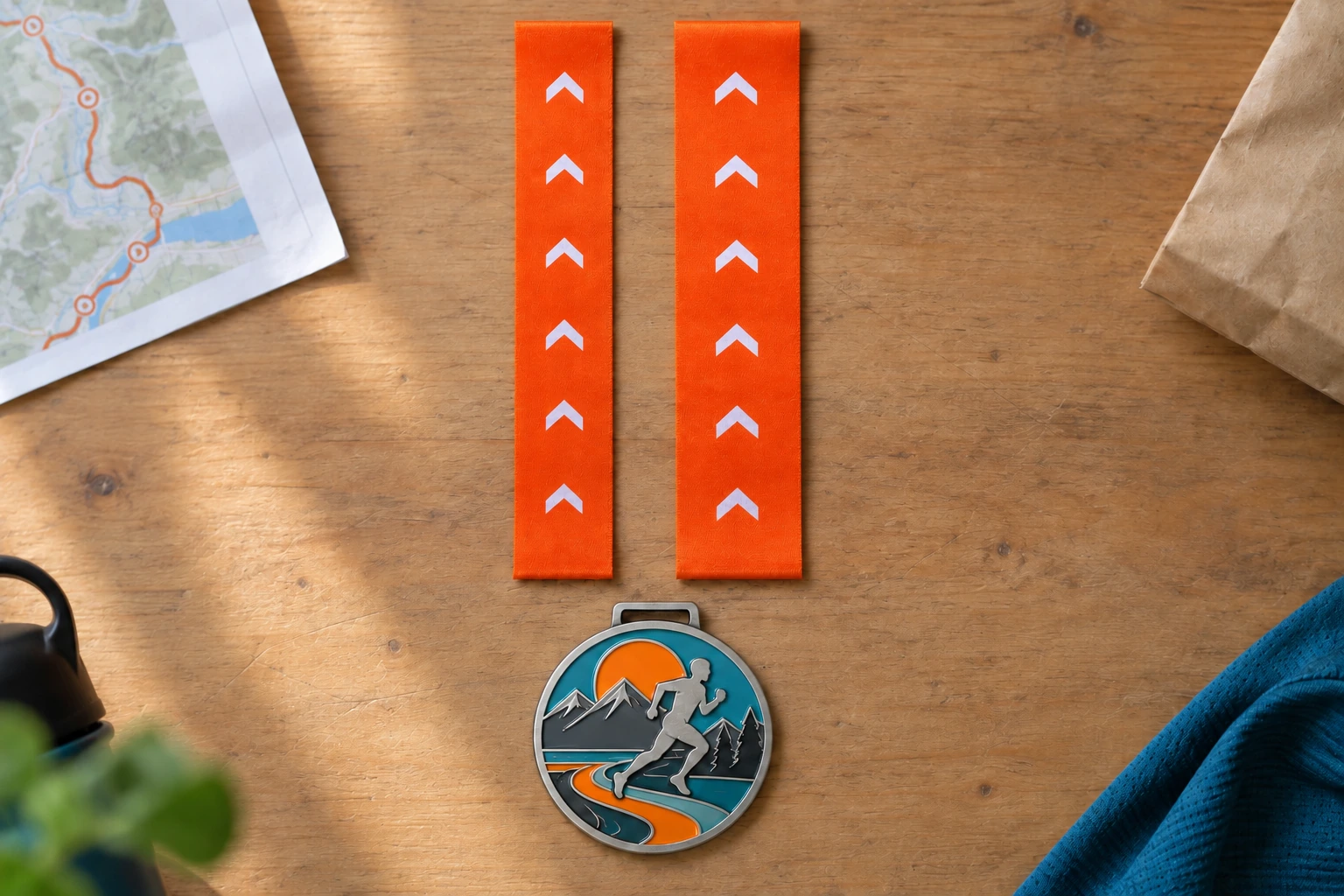
These are comparison points, not guaranteed pairings. A wider ribbon cannot rescue an overcrowded logo, and a narrower one is not automatically unsuitable for a larger medal. Ask to see the selected width with the actual medal design.
What Ribbon Length Will Fit the Wearer?
Unique Pin’s common ribbon specifications are 860 × 25, 860 × 30, 900 × 25 and 900 × 30 mm. In each pair, the first number is the ribbon’s total unfolded length and the second is its width. State both dimensions on the quotation and artwork so that “900 mm ribbon” cannot be mistaken for a 900 mm hanging drop.
Total unfolded length is different from where the medal sits below the wearer’s neck after assembly. If the recipients are children, or the award needs to hang at a particular position during a ceremony, share that requirement. The supplier can then review the proposed length with the chosen connection and medal.
How Should the Ribbon Attach to the Medal?
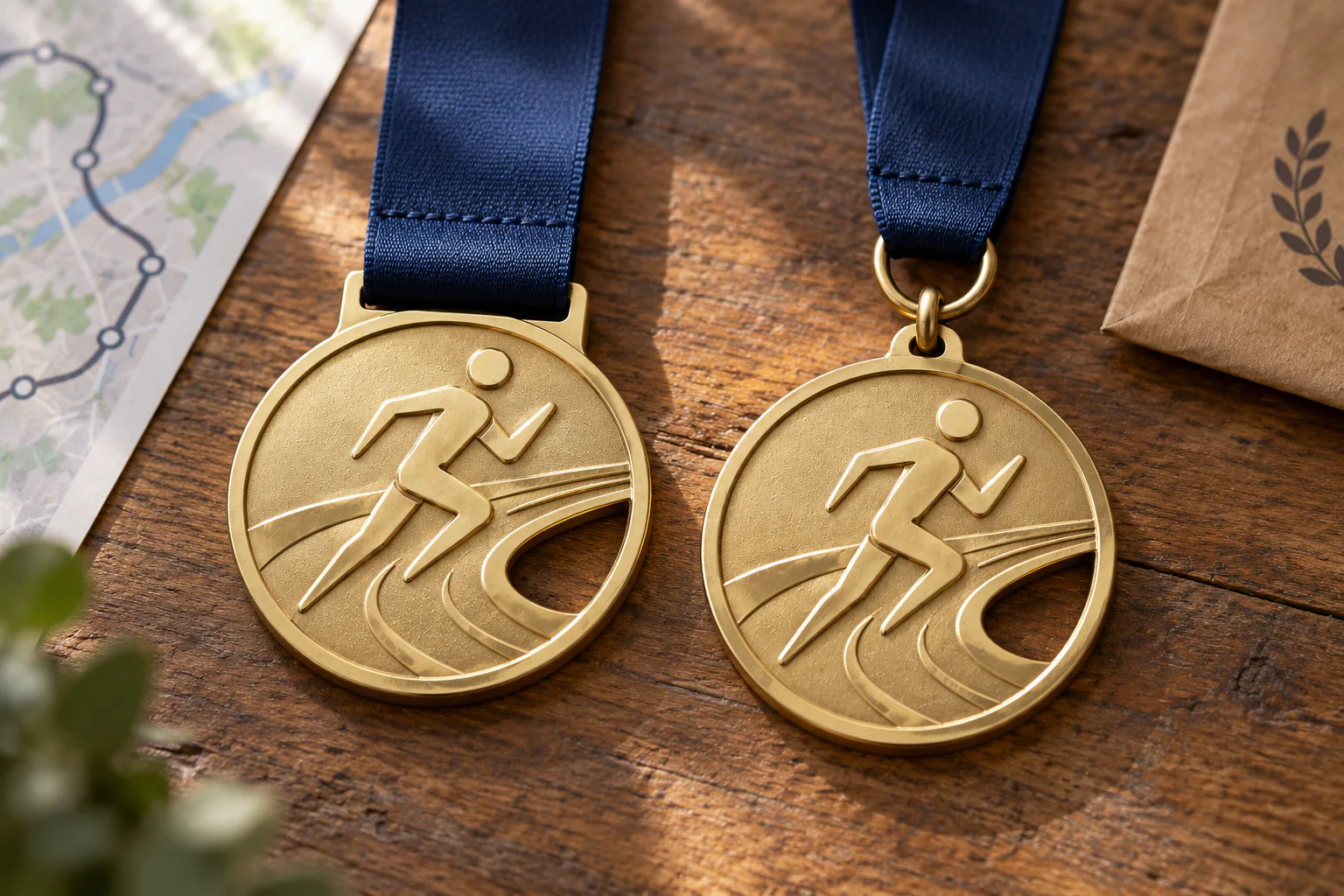
Unique Pin can discuss two connection directions: passing the ribbon through a suitable medal slot, or using a medal loop and separate connecting ring. The medal’s existing or proposed opening is the starting point. A slot needs to suit the ribbon width; a loop-and-ring arrangement needs to allow the medal to hang as intended.
If the medal artwork is still being developed, confirm its connection before finalizing the top edge of the design. If an importer is supplying an existing medal design, provide a view of its slot or loop. State the agreed ribbon and connecting parts in the quote so the complete assembly is clear.
See Your Ribbon and Medal Together Before Approval
Review the ribbon artwork in a flat layout, then review the assembled medal and ribbon. The second view shows which parts of the print remain visible, how the connection looks and how the medal hangs. Where possible, compare a plain and a printed ribbon on the same medal: it is easier to judge what the additional artwork contributes when the metal design stays constant.
For orders with several versions, check each named combination and its quantity against the quotation. If color, surface appearance or fit is especially important, discuss whether a physical sample is needed. Our custom medal design proof checklist covers the broader approval review after the design choices are made.
Frequently Asked Questions About Medal Ribbons
What is the most durable type of custom medal ribbon?
There is no reliable answer based only on whether a ribbon is plain or heat-transfer printed. How it performs depends on its construction, print requirements, connection and handling. If durability matters to your order, ask for a sample made to the proposed specification and check the print, edges and assembled connection for the intended use.
Is a 30 mm ribbon always better than a 25 mm ribbon?
No. A 30 mm ribbon gives artwork more width, but it may look too prominent with some medals. A 25 mm ribbon can work well for a plain color or compact design, provided the attachment fits and any text remains readable. Compare the two widths with your medal rather than applying a fixed diameter rule.
Can I put sponsor logos on a heat-transfer medal ribbon?
Yes, subject to the logo’s detail and available space. Supply the original file and identify any required size or position. Ask to review the mark at the proposed ribbon width and in the assembled view, especially if it repeats close to a fold or connection.
Plan Your Medal and Ribbon Together
You do not need to decide the ribbon type before making an inquiry. Send your medal idea or artwork, intended use, any required logo or colors, estimated quantity and required delivery date. If the width or length is still undecided, tell us what the ribbon must show and who will wear it.
We can review the medal and ribbon together, suggest a suitable combination and prepare a design proposal and quote. If you are planning the entire race medal project, including finishes, packaging and delivery, that guide covers the broader decisions.