
Custom Metal Keychain Materials: Zinc Alloy vs Brass vs Stainless Steel vs Iron
 By Sunny Huang
The short answer: zinc alloy suits complex 3D shapes, brass suits heavier premium gifts, stainless steel may suit precise moisture-exposed designs when the grade is appropriate, and iron-based construction can be economical for simple promotional orders.
Selecting the right custom metal keychain materials affects the practical process, artwork detail, surface protection and daily performance. Compare budget, application and manufacturing method together across the available custom metal keychains.
Quick Answer: Which Metal Is Best for a Custom Keychain?
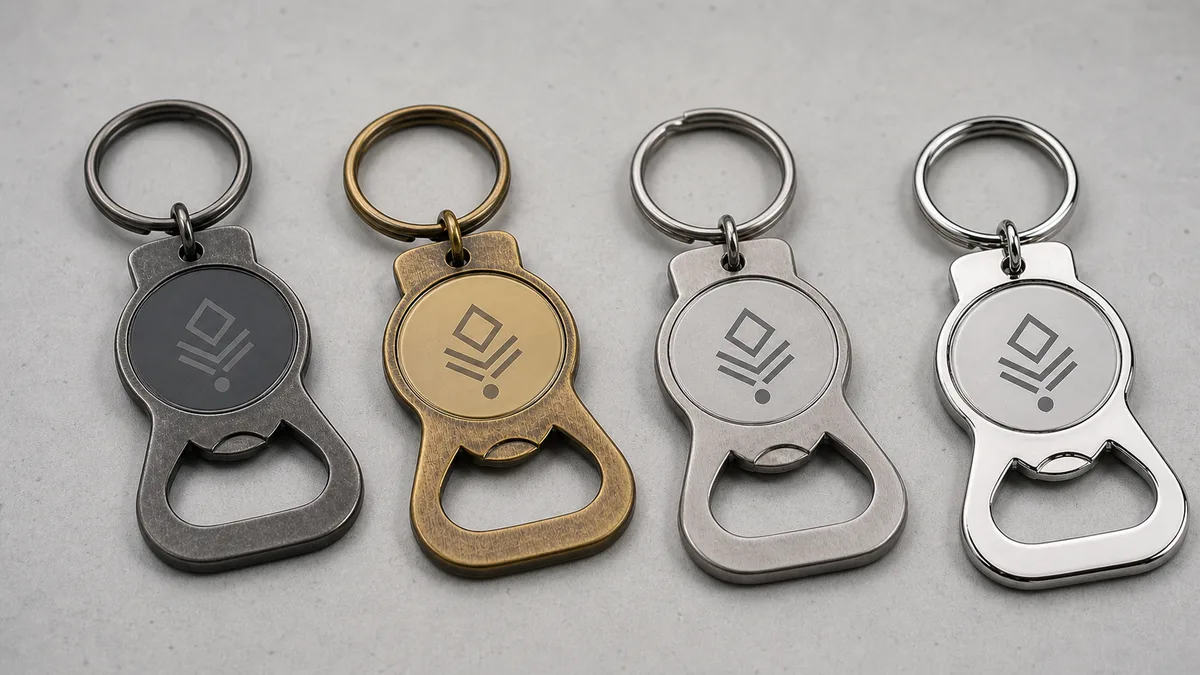
There is no single best metal keychain material for every order. Zinc alloy suits custom outlines, openings, movement and 3D relief. Brass adds weight and traditional character. Stainless steel may suit flat, precise designs exposed to moisture when the grade is appropriate, while iron-based construction can work for simple stamped promotions when plating and packaging are specified.
| Material | Common process | Main strength | Main limitation | Typical applications |
|---|---|---|---|---|
| Zinc alloy | Die casting | Complex shapes, openwork and 3D relief | Thin sections require careful engineering | Mascots, souvenirs, miniatures and bottle openers |
| Brass | Stamping, die striking or etching | Premium weight and traditional appearance | Higher material cost than iron in many projects | Corporate gifts, hotels and retail merchandise |
| Stainless steel | Laser cutting, stamping, engraving or etching | Corrosion resistance and modern appearance | Deep sculpted relief may be less economical | Outdoor, automotive, industrial and minimalist designs |
| Iron-based / low-carbon steel | Stamping or die striking | Economical for simple bulk designs | Requires reliable plating or coating | Giveaways, schools, events and promotional campaigns |
This comparison is a starting point, not a final specification. Size, thickness, artwork complexity, surface finish, hardware, packaging and quantity can change the recommendation.
Write material names precisely in the purchase specification. Stainless steel is a family of chromium-containing steels, so state the actual grade, such as 304 or 316 where appropriate, with the exposure environment, finish and any required test. In quotations, "iron keychain" may mean an iron-based or low-carbon steel body; confirm the base material, coating and material declaration before approval.
How to Choose a Custom Metal Keychain Material
1. Establish the Budget and Product Positioning
First decide whether the keychain is a giveaway, regular merchandise or a premium retail or corporate gift. Stamped iron-based construction may suit high-volume campaigns; brass adds weight; zinc alloy balances design flexibility and cost; stainless steel may be appropriate when its grade and corrosion performance match the application. Tooling, plating, enamel, hardware and packaging can outweigh the raw material difference, so compare the complete specification.
2. Define the Application Environment
A keychain carried daily has different requirements from an event giveaway. The brief should record:
- Indoor, outdoor or humid-environment use.
- Decorative or functional purpose.
- Expected handling, weight and perceived value.
- Promotional, corporate-gift or retail positioning.
- Packaging and shipping requirements.
For example, a specified stainless-steel grade may suit a flat keychain exposed to moisture. An iron-based body can suit an indoor campaign when the plating, coating and packaging are documented.
3. Match the Artwork to a Manufacturing Process
Review the artwork before finalizing the material. A sculpted mascot with openings usually points toward zinc-alloy die casting. A flat logo with raised metal lines may suit stamped iron-based steel or brass, while a precise outline or engraved information may favor stainless steel.
Quote the material together with the production process rather than treating them as separate choices. Our custom metal gift customization options also show the finishes, colors, techniques and packaging that may affect the final construction.
Zinc Alloy: Flexible for Complex Shapes and 3D Relief
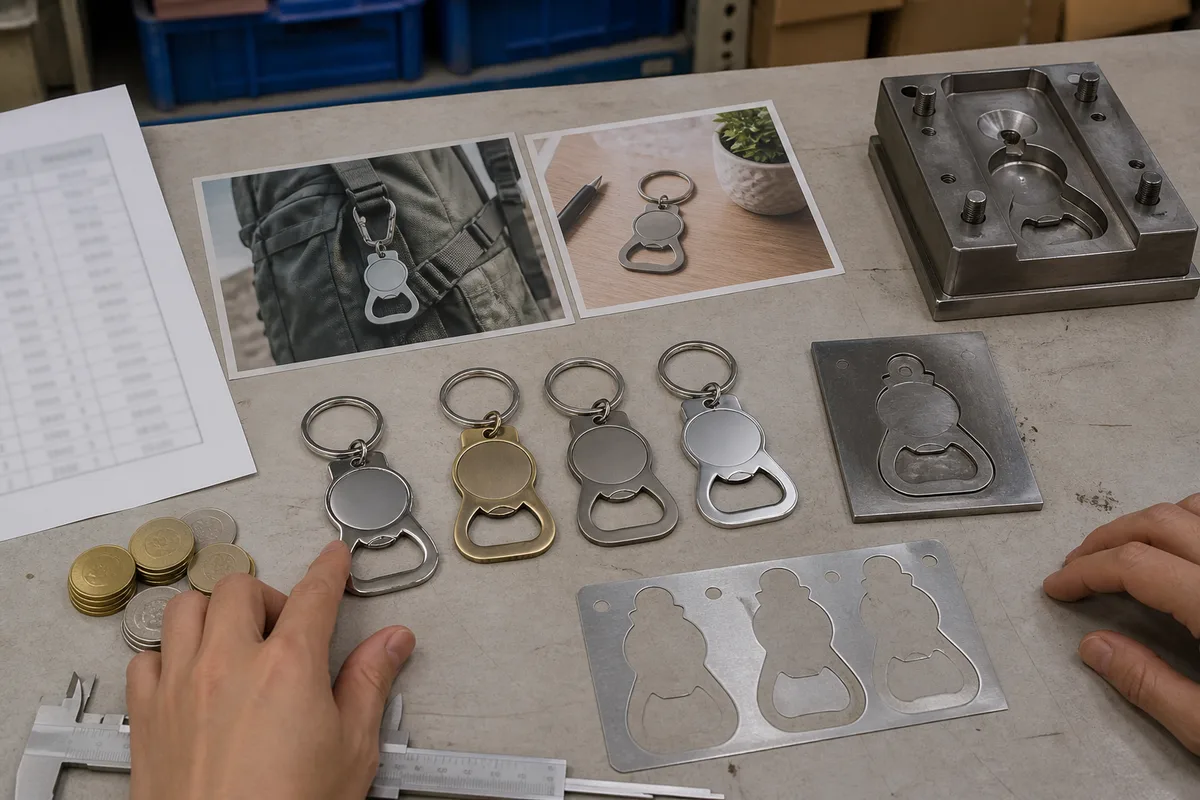
Zinc alloy is widely used for die-cast custom metal keychains. Molten alloy is introduced into a prepared mold, making it possible to reproduce unusual outlines, recessed details, raised relief and sculpted surfaces.
It works particularly well for:
- Character and mascot designs.
- Tourism, landmark and product-shaped souvenirs.
- Spinning or moving components.
- Sculpted bottle openers, openings and multiple relief levels.
Zinc-alloy pieces can receive polished, matte or antique finishes. Soft enamel, printed details and protective coatings may also be added when appropriate for the artwork.
Castability does not guarantee durability: thin projections, narrow bridges and small connection points can still bend or break. Adjust these areas during artwork preparation and check them on the physical sample.
Brass: Substantial Weight and Premium Character
Brass is a copper-zinc alloy with a warm natural color and a substantial hand feel. For buyers developing corporate gifts or higher-value merchandise, those characteristics can be as important as the logo itself.
Brass is commonly combined with:
- Die-struck or stamped artwork.
- Recessed enamel and engraved details.
- Polished or antique gold, bronze and copper-style finishes.
- Premium retail packaging.
Brass produces well-defined raised lines and supports traditional logos, emblems and anniversary designs with a substantial hand feel.
Surface expectations must be stated clearly. Natural brass can change in appearance over time, while plating or a protective coating can help maintain a more controlled finish. "Brass color" should not be used as the only instruction because natural brass, polished brass plating and antique brass are visually different.
Stainless Steel: Clean Appearance and Corrosion Resistance
Stainless steel may suit buyers who need a modern, precise appearance or better resistance to moisture. It is frequently used for flat and moderately formed keychains produced by laser cutting, stamping, engraving or photo etching, subject to the selected grade and environment.
Typical applications include:
- Automotive and industrial branding.
- Equipment identification and outdoor promotions.
- Minimalist, serialized or personalized designs.
- Flat functional bottle openers.
The material works especially well when the artwork depends on a clean outline, small engraved information or an unplated silver-toned surface. For deep sculpted relief, zinc-alloy die casting is often the more economical route to compare.
Stainless steel should not be described as completely rust-proof. Its corrosion resistance depends on the grade, surface condition, attachment components and exposure environment. Projects involving salt, chemicals or prolonged outdoor exposure require a clearly identified grade, such as 304 or 316 where appropriate, plus an agreed testing requirement.
Review the full assembly as well: a stainless-steel body connected to hardware with lower corrosion resistance will not provide uniform corrosion performance.
Iron: A Practical Option for Simple Promotional Orders
Iron-based steel is often selected for flat stamped or die-struck keychains when the artwork is straightforward and unit cost is a major concern. It can support enamel-filled logos with clear metal lines and properly sized recessed areas.
Common applications include:
- Trade show giveaways.
- School, club and fundraising merchandise.
- Event promotions and simple company logos.
- Large-volume campaigns.
The main technical concern is corrosion. Iron-based steel requires suitable plating or coating, and scratches, pinholes or incomplete surface coverage can expose the base metal to moisture. This makes polishing, plating inspection and protective packaging especially important.
Iron-based construction is less suitable for deep sculpted characters or complicated openwork. If simplifying the artwork would damage the design, compare it with zinc-alloy casting instead.
Not Sure Which Metal Fits Your Artwork?
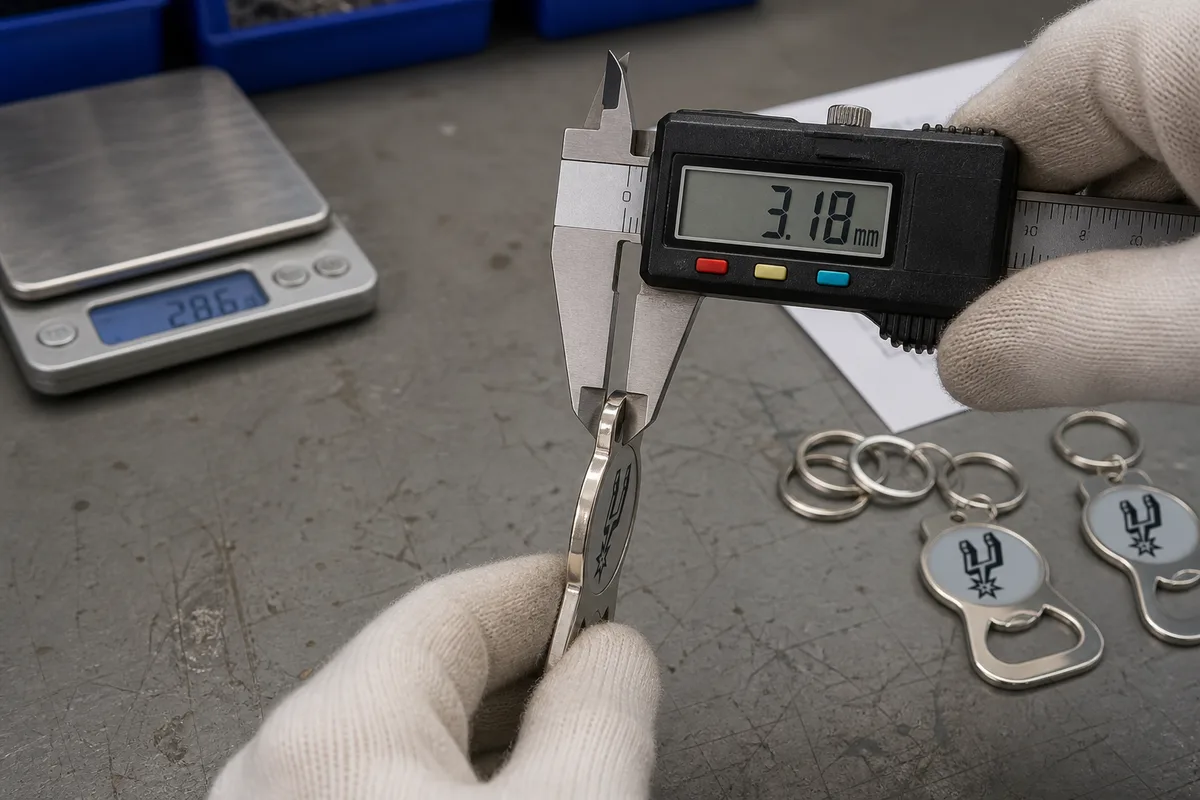
Send your logo, quantity, application and target finish. We can review whether your keychain should be die-cast, stamped, engraved or etched before preparing a quotation.
Why the Manufacturing Process Matters
Each manufacturing process creates different design possibilities:
- Die casting supports sculpted zinc-alloy forms, custom outlines and deeper relief.
- Stamping or die striking suits flatter iron and brass designs with defined metal borders.
- Laser cutting produces precise flat outlines, especially in stainless steel.
- Laser engraving adds names, numbers, logos or other surface details.
- Photo etching can reproduce fine but relatively shallow details.
- Printing handles gradients, photographs and artwork without metal separations.
- Enamel filling requires recessed areas and clear separation between colors.
The supplier should document why the proposed material and process are suitable for the artwork, application and target specification. This is particularly important when two quotations use different materials, because the lower price may reflect a different construction rather than an equivalent product.
For a broader view of tooling, forming, finishing and quality control, read our custom metal crafts manufacturing process guide. Similar approval and inspection principles also apply to how custom challenge coins are made.
Thickness, Finish and Hardware
Thickness should be confirmed after reviewing the artwork rather than copied from another product. As an initial quotation reference, many flat stamped or enamel keychains are discussed around 1.5-2.0 mm. Die-cast or deeply sculpted designs may require a thicker body. These figures are not universal standards.
The final thickness should account for:
- Overall dimensions.
- Relief depth.
- Narrow sections, openings and attachment-hole strength.
- Desired weight and retail positioning.
- Total shipment weight.
Hardware selection and assembly planning should confirm the split ring size, wire diameter, jump ring, chain or swivel, connection method and final orientation. A heavy metal body paired with undersized hardware can reduce the reliability of the complete product.
For a more detailed comparison of body dimensions, finished length and hardware choices, read about keychain size and attachment options.
The approved proof or purchase specification should also identify plating color, gloss level, antique treatment, enamel colors and any protective coating.
Factory Testing and Shipment Inspection
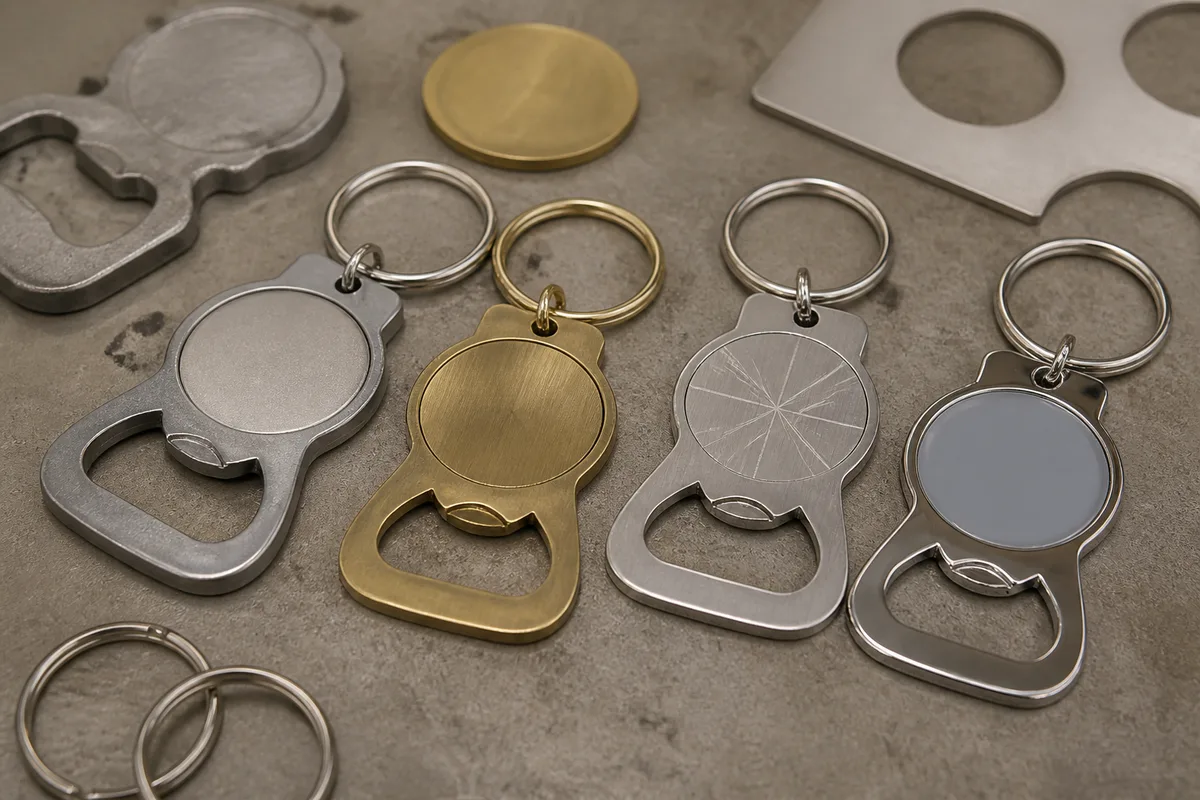
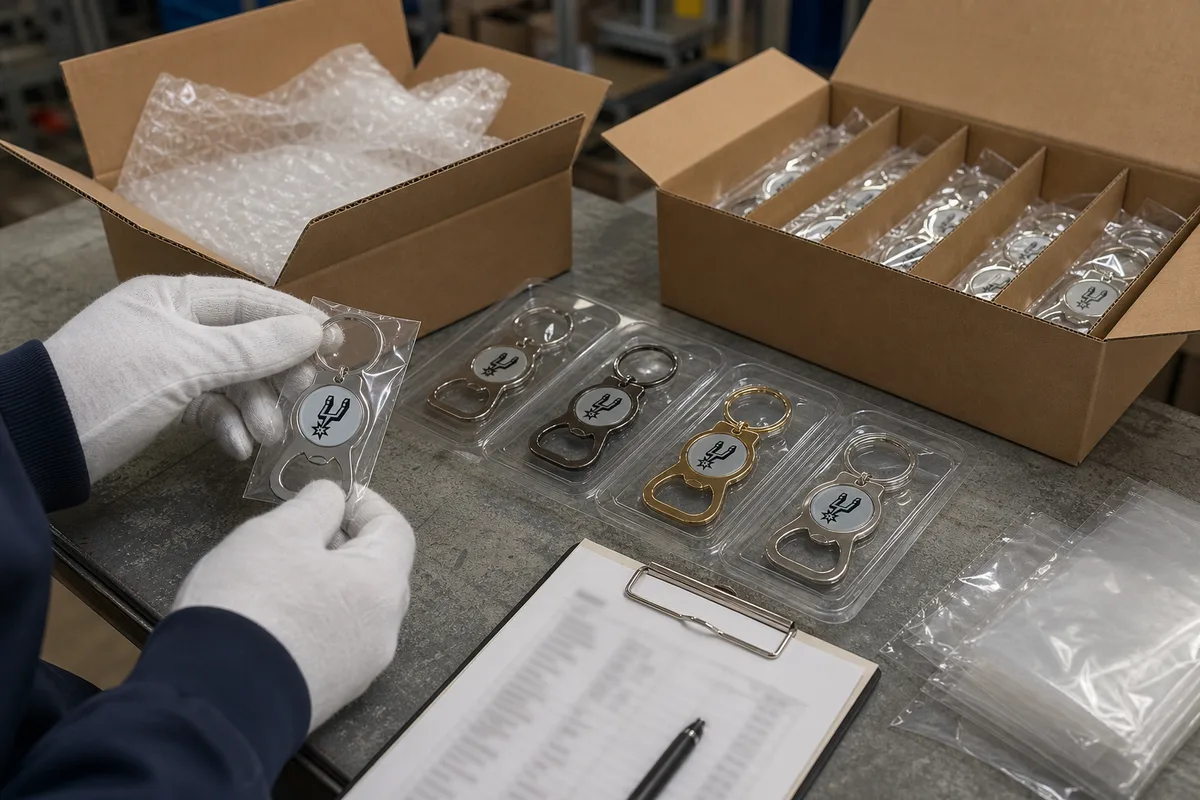
When weight, thickness, relief, function or surface appearance matters, approve a physical pre-production sample. The review should cover:
- Length, width and thickness.
- Weight, if specified.
- Front, back and side appearance, including logo clarity and relief.
- Plating, surface texture, enamel or printing placement.
- Burrs, sharp edges, hardware assembly and orientation.
- Packaging presentation.
Dimensions and weight can be recorded using a digital caliper and scale, but the permitted tolerances should be agreed upon in writing.
In-process checks should focus on risks associated with the selected manufacturing method, including incomplete casting, surface pits, polishing marks, uneven plating, enamel overflow, print misalignment and weak connection points.
Before shipment, inspection should confirm appearance, quantity, hardware assembly, individual packaging, accessories and carton identification. Iron products require additional attention to plating coverage and moisture protection.
If inspection under an agreed AQL sampling plan, material declarations, compliance reports or third-party laboratory testing are required, these conditions should appear in the purchase order before production starts.
Information Required for an Accurate Quote
Send the following details when requesting pricing:
- Vector artwork or the highest-resolution logo available.
- Target length, width and thickness.
- Order quantity.
- Intended application.
- Preferred material, if already selected.
- Flat construction, 2D relief or full 3D construction.
- Plating, enamel, engraving or printing requirements.
- Split ring, chain, swivel or clip preference.
- Packaging requirements.
- Destination country and required delivery date.
If the material is undecided, provide the artwork, application and target budget. These details allow the factory to compare feasible production routes instead of making assumptions.
Frequently Asked Questions
What is the best material for a custom metal keychain?
The best material depends on the design and use. Zinc alloy suits complex 3D shapes, brass supports premium merchandise, stainless steel may suit flat corrosion-resistant designs when the grade is appropriate, and iron-based construction is practical for simple cost-sensitive orders.
Is zinc alloy better than stainless steel?
Neither is universally better. Zinc alloy offers greater freedom for die-cast shapes and sculpted relief. Stainless steel is more suitable for many flat, engraved or moisture-exposed applications.
Which material is normally the most economical?
Iron-based steel is often economical for a simple stamped design. However, tooling, size, thickness, surface treatment, hardware, packaging and quantity determine the total project cost.
Can an iron-based keychain rust?
Unprotected iron-based steel can corrode. Plating or coating reduces the risk, but damaged or incompletely covered areas may remain vulnerable. Surface protection and packaging should be confirmed for humid destinations.
Should buyers approve a physical sample?
A physical sample is recommended when thickness, weight, surface finish, 3D relief, functionality or retail presentation matters. Photographs cannot fully communicate balance, surface feel or hardware performance.
Conclusion
Material selection is most reliable when the buyer and manufacturer review the budget, application and artwork together. The goal is not simply to select the most expensive metal, but to identify a material-process combination that reproduces the design and performs as required.
Before mass production, confirm the material, process, dimensions, finish, hardware, packaging and inspection criteria in writing. For finished style references, review our custom metal keychain collection; for measurement and attachment decisions, use the keychain size, thickness and attachment guide. Send the artwork for a practical material recommendation.
Ready to Start Your Custom Metal Keychain Project?
Send your logo, quantity, intended application, finish preference and required delivery date. Our team can review the artwork and recommend a practical material and manufacturing process for sampling and quotation.