Keychain Attachments: How to Choose Rings, Clasps, Chains and Loops
 By Sunny Huang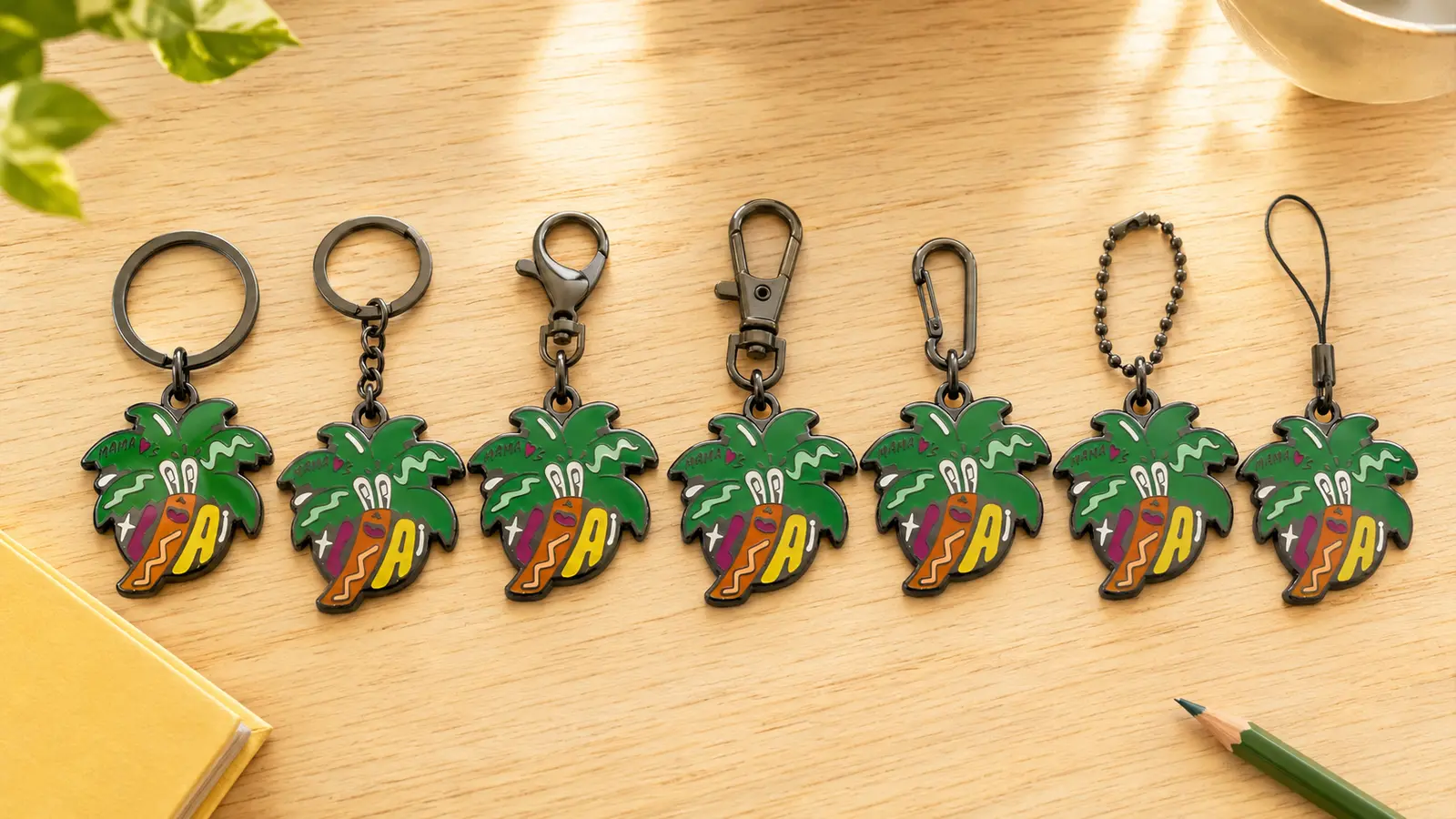
A keychain attachment changes how the finished product is carried and removed. A split ring is familiar for keys, a lobster clasp clips onto a bag, and a phone loop connects to an item without a suitable metal ring. This guide compares common keychain attachments by body material, weight, receiving point, orientation and packaging. No option is best for every project.
Table of Contents
What Counts as a Keychain Attachment?
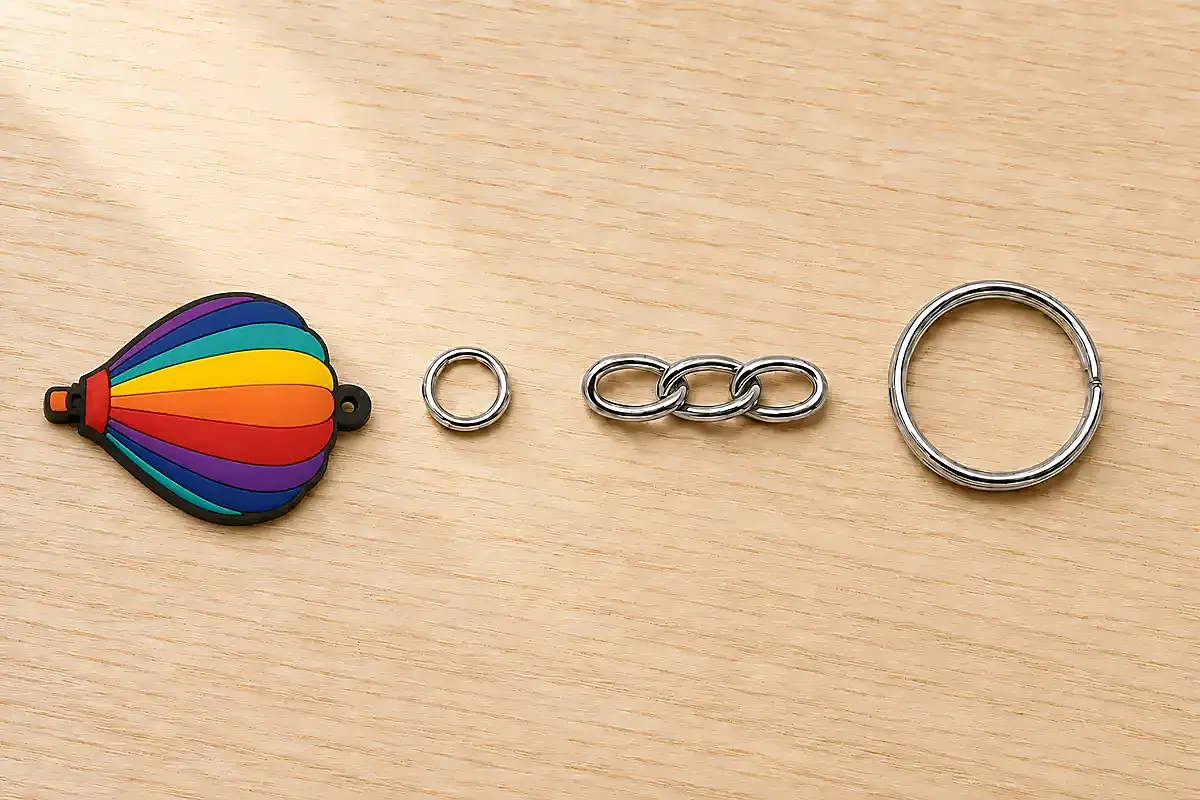
It helps to separate the finished assembly into three parts:
- Body or pendant: the custom metal, PVC, acrylic, leather or fabric part.
- Connector: a jump ring, eyelet, chain or swivel joining the body to the hardware.
- Main attachment: the split ring, clasp, hook, ball chain or loop.
These parts work as a system. A sturdy-looking clasp does not compensate for a narrow eyelet, open jump ring or connector that makes the design hang sideways. Approve the assembled product, not each component in isolation.
Keychain Attachments at a Glance
| Attachment | Common application | Main advantage | Point to check |
|---|---|---|---|
| Round or flat split ring | Keys and promotions | Familiar and compact | Ring size and threading |
| Lobster clasp | Bag charms and zipper pulls | Quick to remove | Gate opening and receiving-loop fit |
| Swivel or trigger clasp | Bags and straps | Allows rotation | Length, clearance and movement |
| Short link chain | Metal, acrylic and PVC pendants | Adds movement and separation | Link closure, chain length and body balance |
| Ball chain | Lightweight tags and souvenirs | Flexible and easy to connect through an opening | Connector fit and secure closure |
| Non-climbing carabiner-style clip | Promotional bag accessories | Large opening | Size, gate and decorative use |
| Wire or cord loop | Phones, cameras and tags | Fits a narrow slot | Cord thickness and loop length |
A carabiner-style promotional clip should not be described as climbing, fall-protection or safety equipment unless it has been designed and certified for that purpose.
How the Main Options Differ
Split Rings: Familiar for Everyday Keys
A split ring uses overlapping coils. Keys are threaded around the ring rather than passed through one gap. It suits ordinary keys that do not need frequent removal. Confirm that the selected ring size fits the body and intended key set.
Lobster Clasps: Convenient for Removable Accessories
A lobster clasp opens with a spring-operated lever. Its opening must fit the intended bag ring, strap loop or zipper pull. The body may also need a jump ring or chain so it hangs freely. Approve the actual component because dimensions vary.
Swivel Clasps: Useful When Orientation Changes
A swivel clasp adds a rotating joint. This can help a logo, mascot or two-sided pendant hang naturally, but it also adds length and another moving part. During sampling, rotate the assembly, check for rubbing and confirm which face appears forward.
Chains, Ball Chains and Loops: Connectors for Specific Situations
A short chain creates space between a pendant and ring or clasp, helping irregular shapes move freely. Ball chains suit lightweight tags with a suitable opening. Cord or wire loops fit narrow slots instead of metal rings. Select each option around the real opening and how the finished item will be handled, not a catalog photograph.
Choose the Attachment by Use, Not by Name
Start with the place where the product will be carried:
- Everyday key set: compare a split ring with the number and type of keys expected.
- Bag charm or zipper accessory: consider a lobster or swivel clasp that fits the receiving loop.
- Retail or event merchandise: review orientation, balanced appearance and packaging.
- Phone or compact device: use a loop only when it fits the actual slot.
- Heavier metal body: review the complete assembly, connection points and balance.
“Secure” and “easy to remove” are competing priorities. A quick-release clasp is convenient but introduces a gate and spring mechanism. Choose according to the recipient's actual use.
Match Keychain Attachments to the Body Material
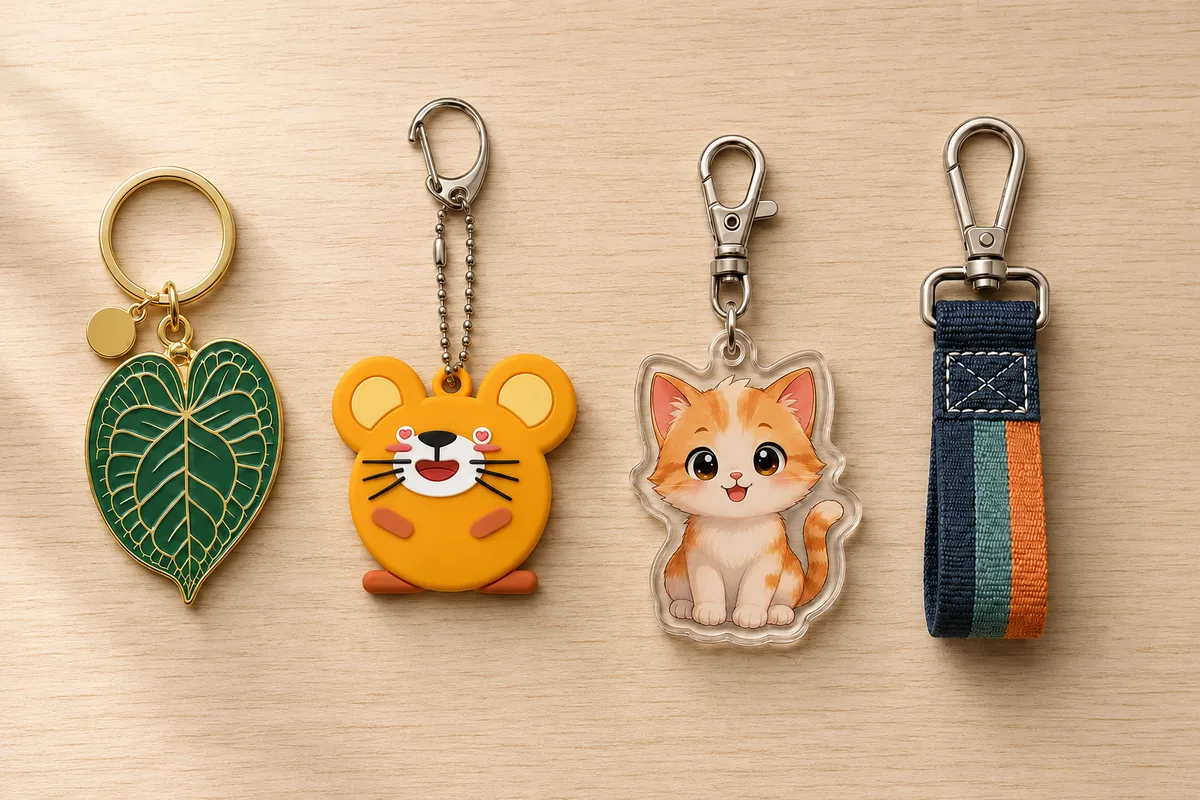
Body material affects the connection. Metal keychains may use a cast eyelet, opening or integrated loop. Acrylic needs enough material around the hole. Soft PVC may use an embedded connection, while fabric and leather may require stitched loops or reinforced fittings.
Weight matters, but there is no useful universal limit for every assembly. Ask the supplier to evaluate the actual body, connector and attachment together. If performance is important, agree on an application-specific test before production.
For metal-body decisions, see the custom metal keychain materials guide. For body dimensions, thickness and finished length, use the metal keychain size, thickness and attachment guide.
Confirm Size, Fit and Appearance
Before approving a sample, confirm:
- the attachment opening fits the intended key, strap, zipper or slot;
- jump rings and chain links are closed and aligned;
- the custom body hangs in the intended direction;
- the hardware finish works with the body finish;
- moving clasps and swivels operate consistently;
- the completed assembly fits the pouch, card or box;
- the sample approval record identifies the actual hardware and relevant dimensions.
Matching every part is optional, but the choice should be deliberate. Packaging should limit rubbing between metal parts. Send the supplier the artwork, quantity, use, body material, packaging, destination and required date. If hardware is undecided, explain where the product will be carried and how often it should be removed.
Frequently Asked Questions
Is a split ring better than a lobster clasp?
Neither is universally better. A split ring suits ordinary keys; a lobster clasp is easier to clip onto bags or straps. Choose according to the receiving point and removal frequency.
What attachment should I use for a bag charm?
A lobster or swivel clasp can clip onto a suitable bag ring or loop. Measure that receiving point and confirm the clasp opening.
Can the attachment be changed after the artwork is approved?
Sometimes, but it may change the connector, hanging direction, finished length and packaging. Review an updated proof or sample.
Final Takeaway
Choose keychain attachments as part of the complete product. Define where the item will be attached, how often it will be removed and how it should hang. Then review the body, connector, attachment, finish and packaging together.
When you are ready to compare finished options, browse custom metal keychains or send your artwork, intended use, quantity and preferred attachment for a project review.