
Memorial Challenge Coins: How to Create a Respectful Tribute
 By Sunny Huang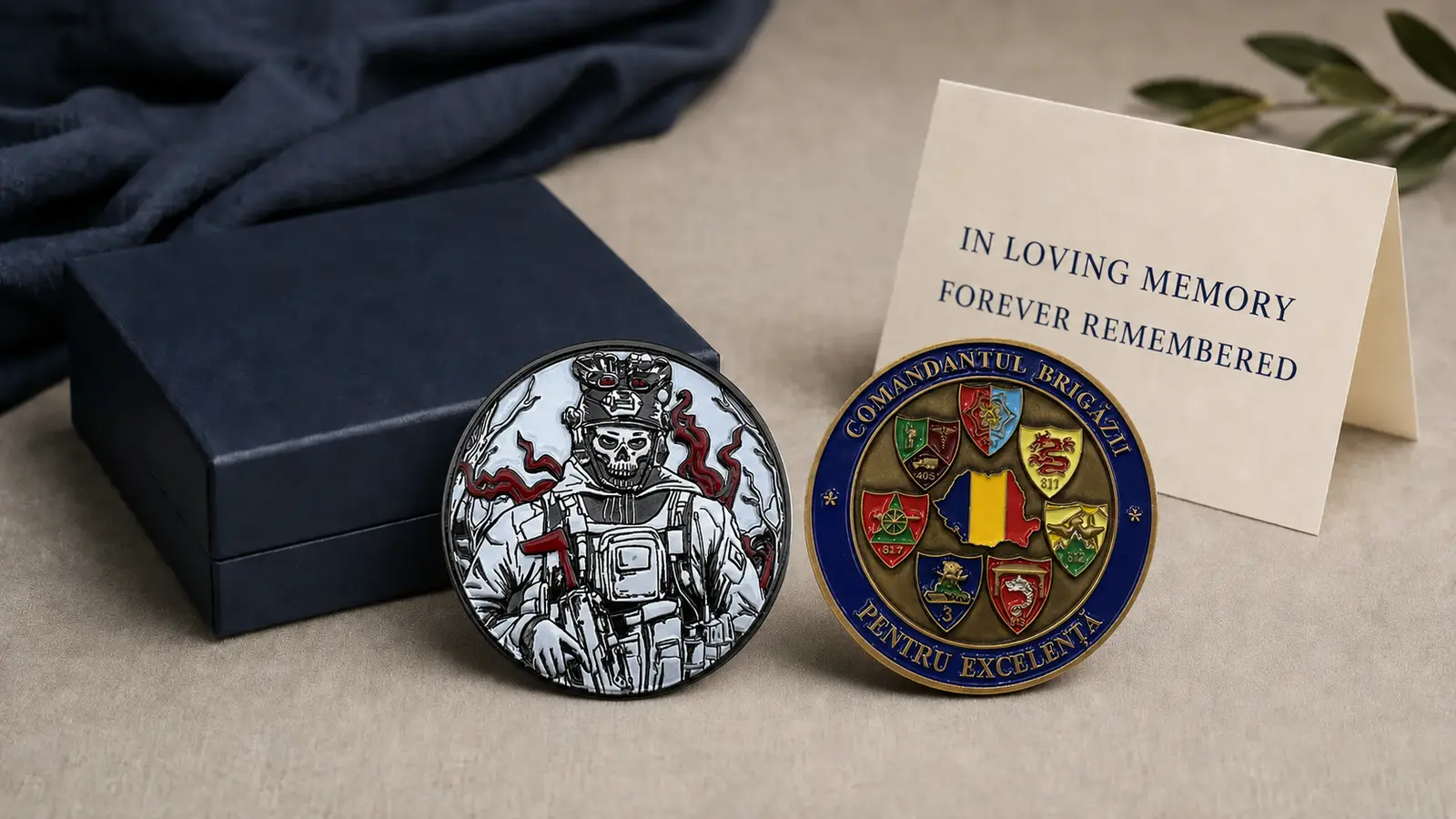
A memorial coin has a difficult job: it must hold a name, a story and a shared connection in a space only a few inches wide. The strongest designs do not try to include every detail. They identify what matters most and give recipients something they will feel comfortable carrying, displaying or passing on.
Memorial challenge coins may honor a colleague, public servant, volunteer, friend or shared loss. Because the subject is personal, the planning process requires more care than placing a logo on a template. Names, dates, symbols, permissions and the presentation method all deserve review before production begins.
Table of Contents
What Is a Memorial Challenge Coin?
A memorial challenge coin is a metal keepsake created to preserve the memory of a person, group or meaningful experience. It may represent service, friendship, sacrifice or a connection shared by the recipients. Its value comes from the story attached to it rather than from the metal itself.
Challenge coins are also used for membership, achievement and special events. Wounded Warrior Project describes these broader roles while noting that accounts of the tradition's origin vary. A remembrance coin belongs to that wider tradition, but its purpose is specific: to keep a person or loss present in the memory of a community.
There is no universal rule governing who may create one or how it must be presented. Families, veteran groups, public-safety organizations, schools, companies and clubs may approach remembrance differently. Begin with the people involved, not an assumed ceremony or a standard list of symbols.
Memorial Coins and Commemorative Coins Are Not Exactly the Same
A commemorative coin normally marks an occasion such as an anniversary, retirement or organizational milestone. A memorial coin focuses on remembrance. One project can contain elements of both, but the useful question is what recipients should understand when they first see it.
Write that purpose in one sentence before discussing artwork. For example:
This coin will be given to members and family representatives to remember a colleague and the years of service shared with the team.
Use the sentence as a filter. If an image, phrase or effect does not support the purpose, it probably does not belong in the design.
Decide Who the Coin Is For and When It Will Be Given
The recipient group affects the design, quantity and packaging. A coin for close family members may be more personal than one distributed across an association. A formal presentation may call for a box and written dedication, while a piece intended for everyday carrying benefits from a compact size and uncomplicated edge.
Clarify these points first:
- Who should receive the coin?
- Will it be presented privately, at a ceremony or by mail?
- Should recipients carry it, display it or keep it in a presentation box?
- Will the project be repeated on future anniversaries?
- Who has authority to approve the final wording and symbols?
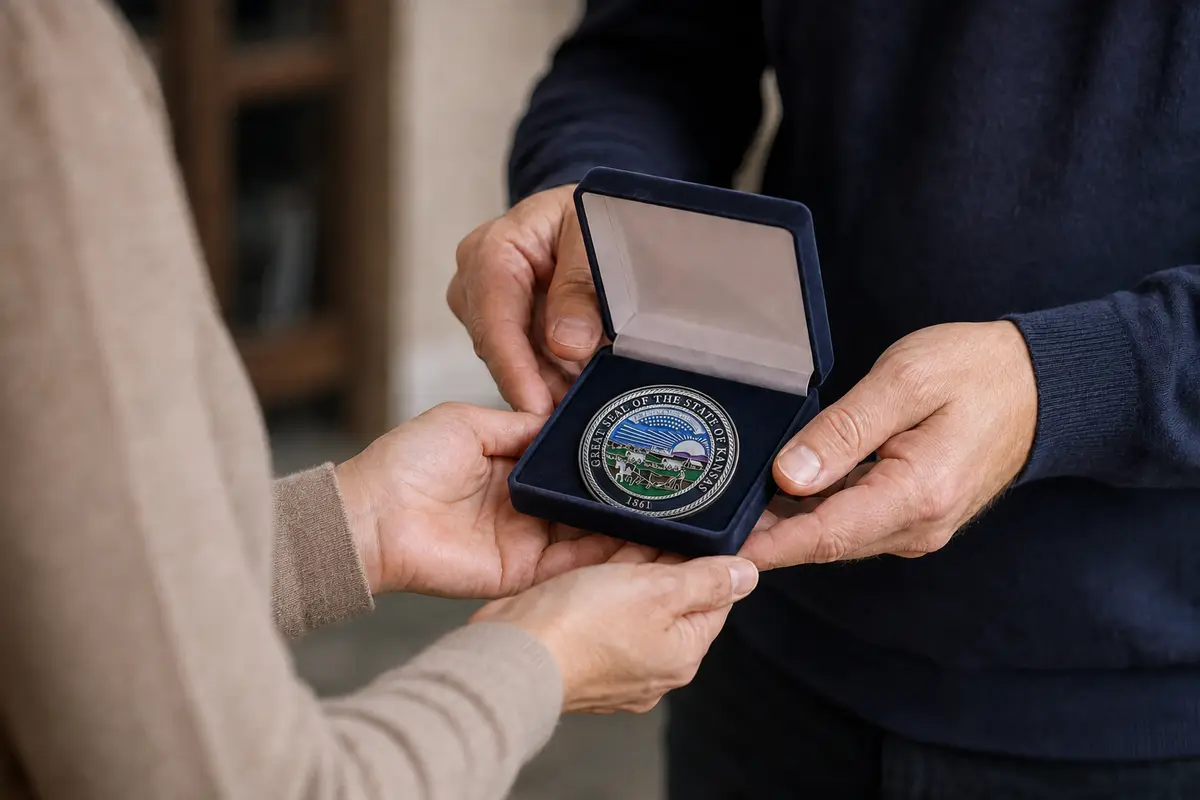
Customs vary. A handshake presentation is familiar in some challenge coin traditions and presentation etiquette, while other groups prefer a boxed presentation. Neither method is universally required.
Plan the Front and Back Around One Clear Story
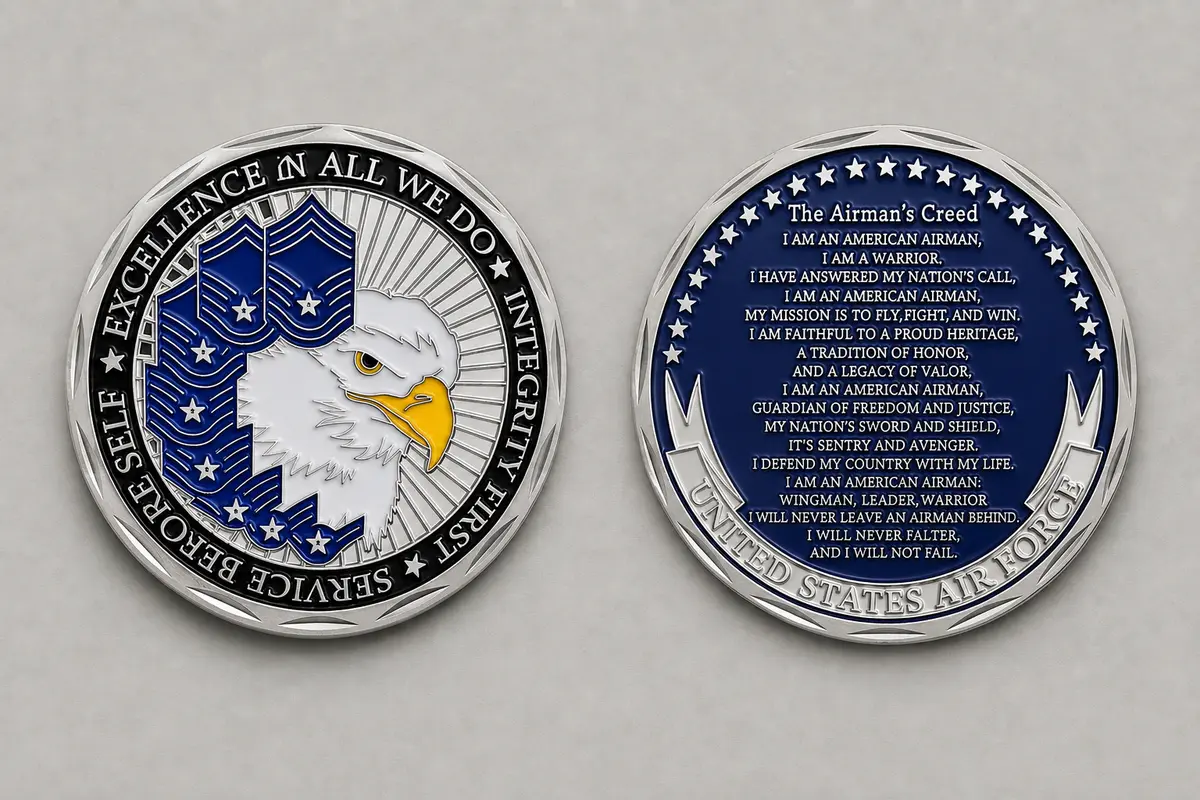
Two sides provide useful space but can encourage overcrowding. Give each side one job. The front might establish who is being remembered through a name, approved portrait or dominant symbol. The reverse can preserve context through dates, a short dedication, a location or a symbol connected to the person's work and interests.
These are options, not requirements. A quiet design with a name, two dates and one meaningful image may carry more weight than a layout filled with every available detail. Move a longer story to a presentation card instead of shrinking it around the edge of the coin.
Choose Wording That Is Accurate, Brief and Personal
The words should sound like the people who will receive the coin. A name, years of service, familiar motto or short dedication can be enough. Avoid fitting a complete biography around the edge; small text becomes difficult to manufacture, inspect and read.
Confirm:
- spelling and preferred form of the name;
- dates and date format;
- rank, title, post-nominal letters or role;
- capitalization and punctuation;
- the exact wording of a motto or quotation; and
- whether the family or organization wants private information displayed.
When appropriate, ask one person close to the subject and one organizational representative to review sensitive details. Compare dates against an independent record before approving tooling.
Use Symbols With Context, Not Assumed Meanings
Laurel branches, stars, paths, flowers and horizon lines can suggest recognition, guidance, continuity or memory, but symbols do not have one fixed meaning. Choose imagery because the recipients understand its connection. A tree may refer to a familiar place; a compass may represent a mentor; a wave, vehicle, tool or musical element may recall an important part of someone's life.
Color should follow the story too. Antique silver, brass and restrained enamel can create a quiet presentation, but a tribute does not have to be dark. A bright team color or flower may be more personal than a conventional black-and-silver palette.
Check Permission for Portraits, Badges and Official Marks
A clear reference image does not automatically include permission to reproduce it. Confirm the right to use portraits, professional photographs, logos, department badges and other protected artwork.
Military marks need particular care. The U.S. Department of Defense trademark licensing guide states that official seals are protected and that many Military Service marks require a license or prior written permission. Its challenge coin guidance directs users to the appropriate Military Service Trademark Licensing Program Office. Other organizations may have different rules.
Ask the authorized project representative to confirm reproduction rights. If permission is uncertain, develop an original symbol that does not imitate a protected seal, and never imply official endorsement when none exists.
Make Portraits and Fine Details Work at Coin Size
Portraits need enough space and a suitable technique. A detailed photograph cannot simply be reduced to a small raised-metal image without losing expression and contrast. A simplified relief, line-based portrait or printed treatment may work better, depending on the artwork.
Review the proof at its actual production size. Check whether the face, name, dates and main symbol remain recognizable without zooming. Detailed portraits or several lines of wording may need a larger diameter; a compact coin works best with fewer elements. Our challenge coin size and thickness guide explains how dimensions and relief affect artwork capacity.
Estimate Quantity From Recipients, Not From a Generic Percentage
There is no standard order quantity for a remembrance project. Begin with a recipient list that may include:
- close family members;
- current and former team members;
- ceremony participants;
- association or partner representatives;
- archive or display copies; and
- a small reserve for people who could not attend.
If future requests are likely, record the approved artwork, finish, dimensions and packaging. Do not order a large surplus simply because a generic formula recommends it; distribution should remain intentional.
Match the Packaging to the Moment
A pouch may suit a large team distribution, a capsule protects the surface while leaving both sides visible, and a fitted box gives a formal presentation more presence. A remembrance card can carry the longer message that did not fit on the metal.
Confirm packaging before production because diameter, thickness and relief affect the fit. If the coin will be mailed, assess the complete packed item. At the presentation, a few sincere words explaining why it was created are usually more appropriate than a sales-style speech.
Review the Proof as a Permanent Record
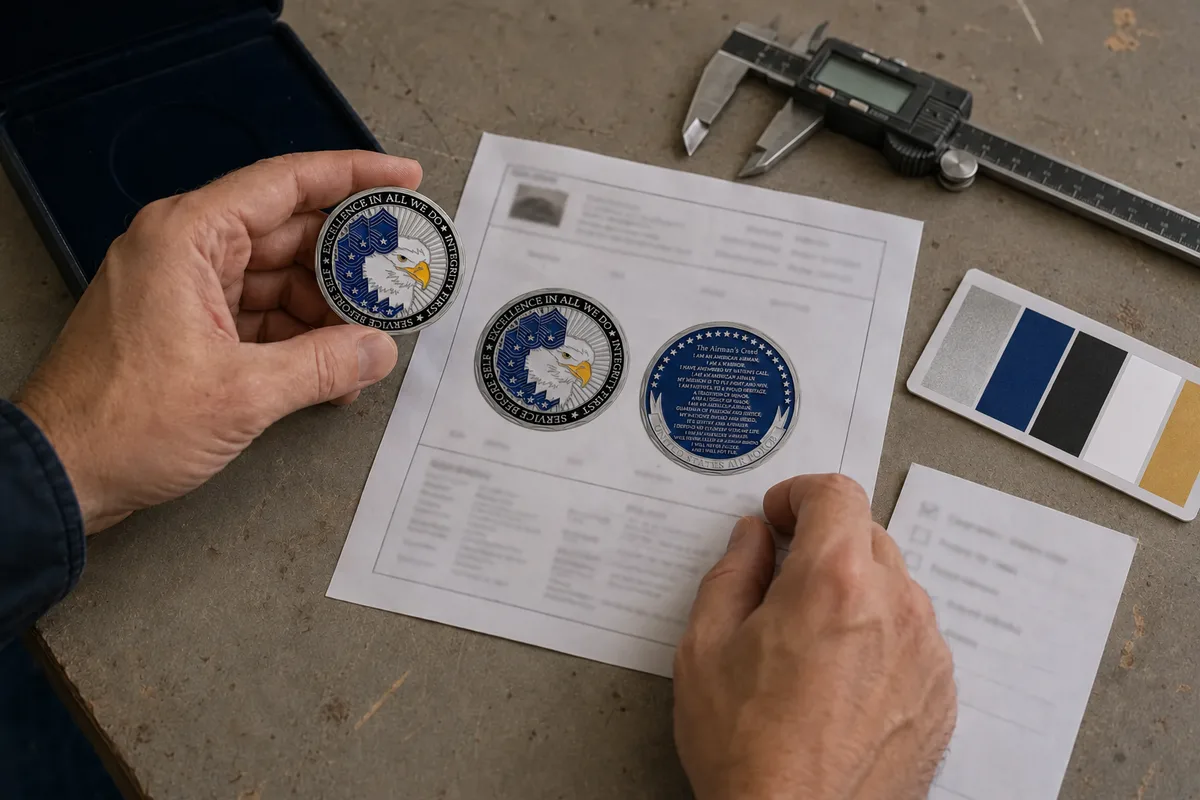
Proof approval is the last practical opportunity to correct information before tooling. Treat it as a record review, not simply a color check:
- Is every name spelled correctly?
- Are dates, titles and roles confirmed?
- Has the portrait or photograph been approved?
- Is there permission to use every logo, badge and official mark?
- Can the smallest text be read at actual size?
- Are the front and back shown in the correct orientation?
- Do the relief, enamel and printed areas match the intended technique?
- Does the packaging fit the finished dimensions?
- Have the appropriate family and organization representatives approved the proof?
Changing a date, portrait or emblem after tooling begins may require new tooling and additional time. Careful review protects the meaning of the project.
Frequently Asked Questions
What is a memorial challenge coin?
It is a metal keepsake created to remember a person, group or meaningful shared experience. It may be carried, displayed or presented to family members, colleagues or organization members.
What is the difference between a memorial coin and a commemorative coin?
A memorial coin focuses on remembrance of a person or loss. A commemorative coin usually marks an event, anniversary, retirement or milestone. One project can serve both purposes.
What information should be included?
Common elements include a name, dates, role, short dedication and one or two meaningful symbols. Include only information that can be verified and read clearly.
Can a photograph be used on a memorial coin?
Yes, when the image quality and usage permission are suitable. It may need to be simplified for relief or reproduced through an appropriate printing method.
When are remembrance coins presented?
They may be given privately, at a memorial service, during an anniversary gathering or at an organization event. Follow the wishes of the recipients and organization rather than an assumed universal custom.
Do I need permission to use a department badge or military emblem?
Often, yes. The rights holder should confirm whether the mark may be reproduced. For U.S. Military Service marks, consult the relevant Trademark Licensing Program Office.
Create a Tribute That Recipients Will Understand
The most effective memorial challenge coins are not necessarily the most complex. They make the subject clear, use verifiable wording and give every symbol a reason to be there.
Begin with the recipients, the presentation moment and one sentence explaining what the coin should preserve. Then decide what belongs on each side, confirm permissions and proof every name and date. To translate approved artwork into a practical metal layout, review our custom challenge coins and how challenge coins are made resources before requesting a quotation.