Custom Pet Tags: One Brand Design, Different Pet Details
 By Sunny Huang
A pet brand may want one recognizable design across an entire order, while each tag needs a different name or phone number. Add a printed QR code, and the available space becomes even more important. The challenge is to keep the brand visible while making essential information easy to find and read.
For brands, importers and bulk buyers, the first question is when personalization happens: before the bulk order is produced, or after the tags reach the retailer? That decision affects the artwork, production requirements and information you need to supply. This article focuses on planning custom pet tags with a shared design and individual details supplied for production.
One Design Across a Personalized Order
Custom pet tags can share a logo, shape and color scheme while carrying different information for each pet. Unique Pin supports different names, phone numbers and other text within a batch through laser marking or printing. The suitable method depends on the tag material, finish and artwork.
Before developing the layout, separate the fixed elements from the variable fields. Fixed elements might include a brand logo and decorative border; variable fields might include a pet’s name and an owner’s phone number. Mark these areas on the reference artwork so the manufacturer can assess them together.
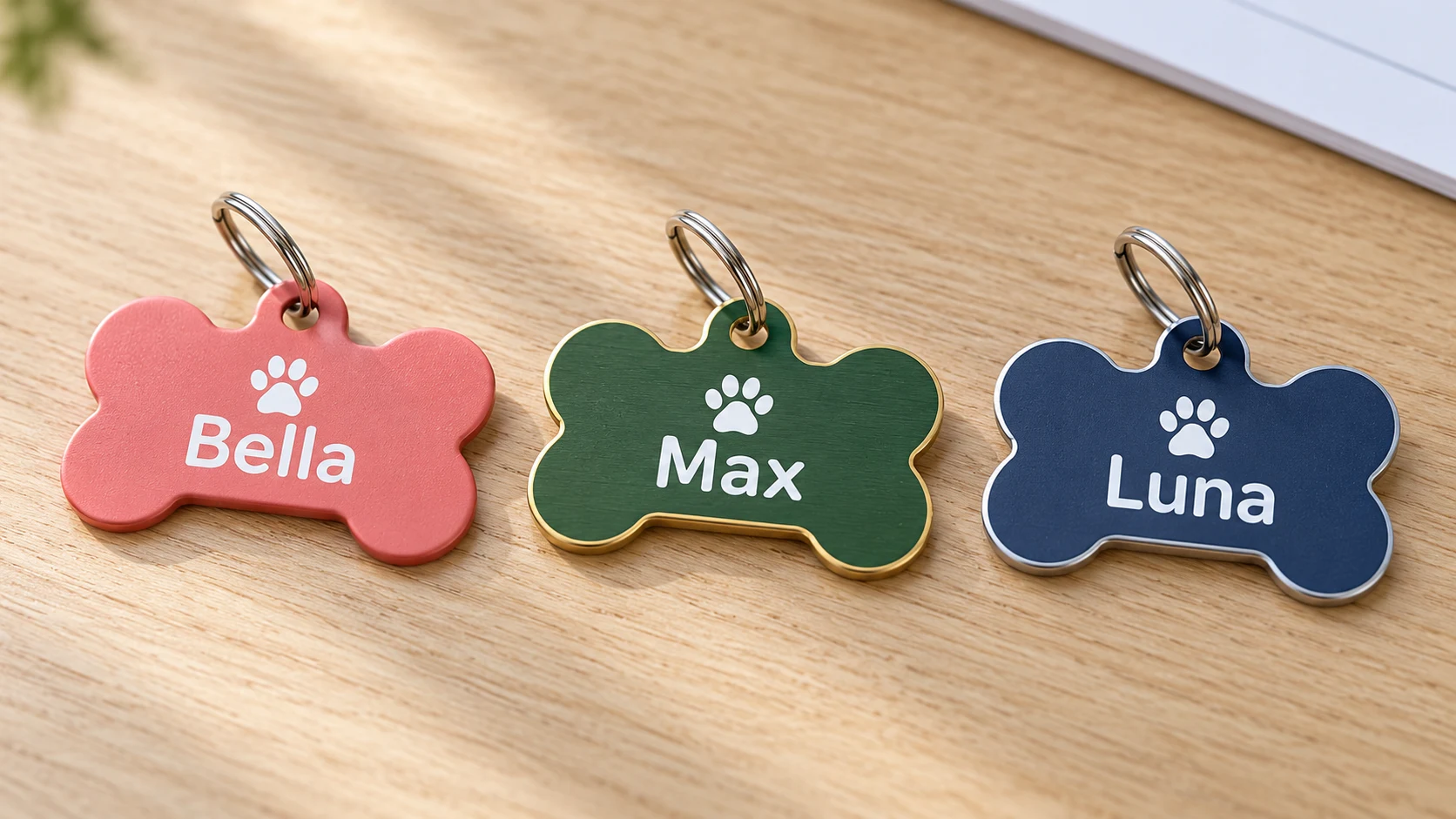
For example, a hypothetical order for Bella, Max and Luna could use the same bone-shaped tag, background color and brand graphic, with a different name and phone number on each piece. This illustrates a possible layout, rather than a completed customer project.
If the names and numbers will only become available after retail purchase, identify who will add them and how. Do not assume a bulk manufacturing order includes later engraving, online registration or individual order fulfillment. Those arrangements need to be established separately.
Give Every Detail a Place on the Tag
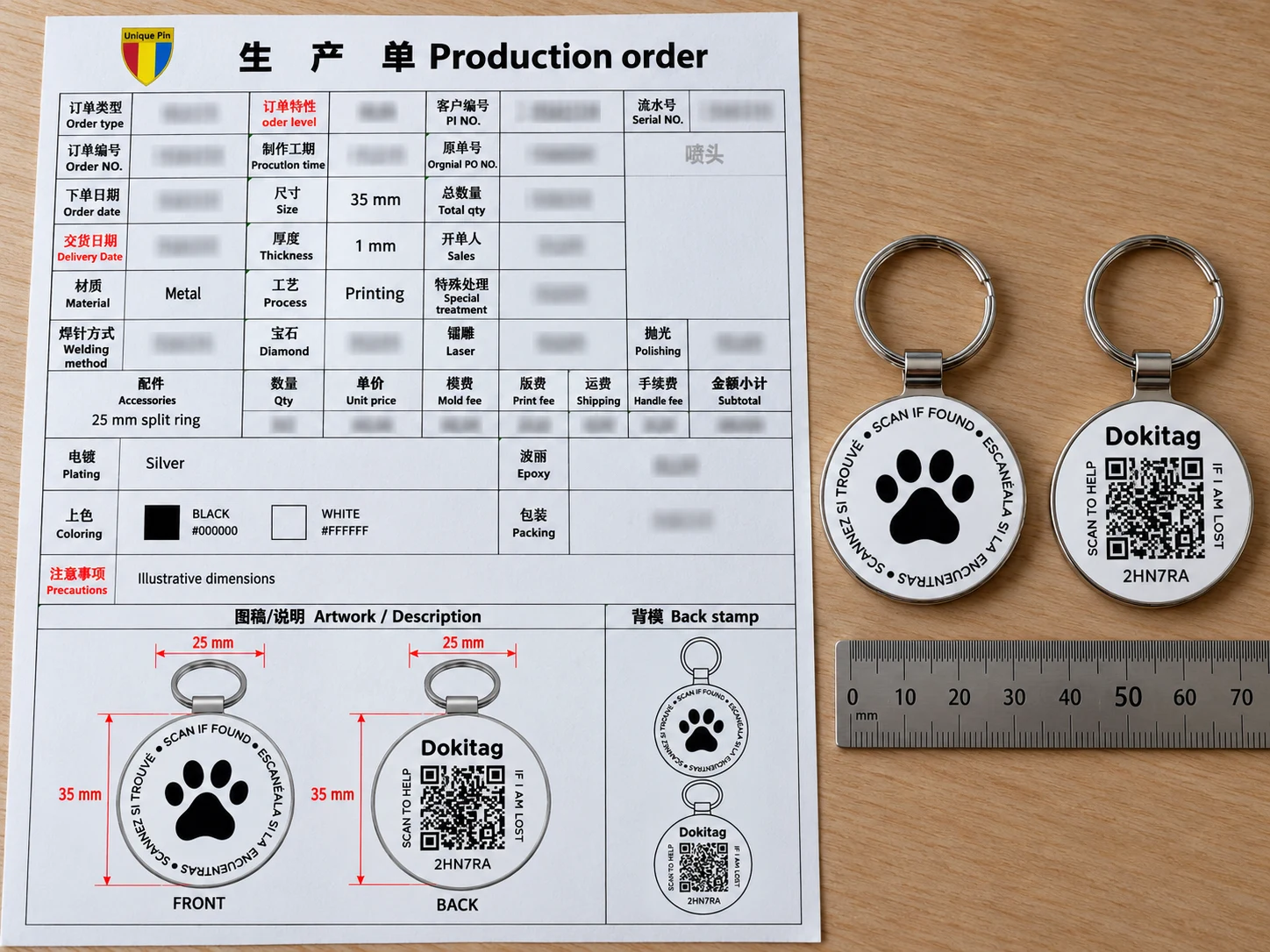
Plan the front and back around what someone needs to notice first. The front might carry the pet’s name and brand artwork, while the reverse holds a phone number and a QR code. A double-sided layout can reduce crowding, although the usable area still depends on the shape and attachment hole.
Outer dimensions do not tell the whole story. Borders, holes and narrow sections reduce the space available for text. On a bone-shaped tag, the center may accommodate a name, while the curved ends offer less uninterrupted writing space. A reference from our custom metal dog tag range can help start the shape discussion, but the layout should be developed around your own artwork and information.
Consider two versions of the same design. One uses a modest logo above the name, leaving the reverse for a phone number and a separate QR area. The other adds a slogan, a large illustration, two numbers and a heavy border. Both may look attractive when enlarged, but the second leaves less room for readable information at the finished size.
Allocate space for essential contact information before adding decorative details. If a longer name does not fit, try a different line break, simplify the graphic or assess a larger tag before reducing the lettering. Keep text and the QR area clear of the hole and edges.
What Should a Printed QR Code Do?
Decide what scanning the code should achieve. A pet profile and a brand homepage serve different purposes. If the tag is intended to help identify a lost pet, the destination should make useful contact information easy to find.
Unique Pin provides QR code printing on custom pet tags. Printing the code and managing the linked page are separate responsibilities: confirm who supplies the print-ready code or destination link, who prepares the code artwork, and who maintains the linked content. If every tag needs a different code, confirm production feasibility and the method for matching each code to its corresponding text before ordering.
Assess scanning on a physical sample made with the proposed printing method and finish. Code size, contrast, clear space around the code and surface reflections can affect readability. A code that scans from a computer screen is not sufficient evidence that it will scan reliably on the finished tag.
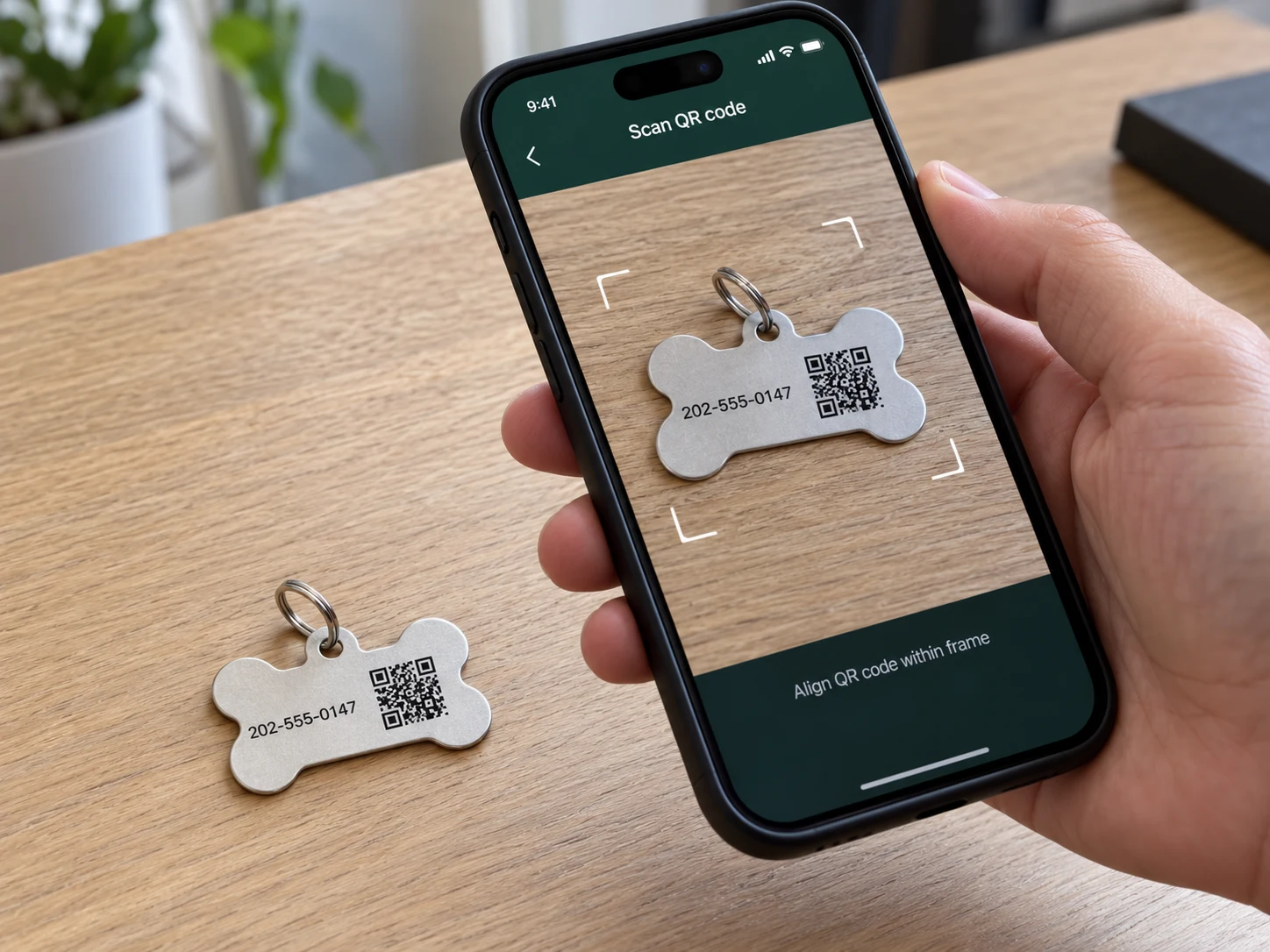
Keep a directly readable phone number alongside the QR code where space permits. Access to an online profile depends on the linked service remaining available. A printed QR code alone does not provide GPS tracking or NFC functionality, and it cannot guarantee a pet’s recovery.
Design for the Collar—and the Pet Wearing It
An enlarged drawing cannot show how a tag will sit on a collar. Assess the intended size against the pet, collar width and attachment point. A design that looks balanced on a broad collar may hang awkwardly from a narrow one.
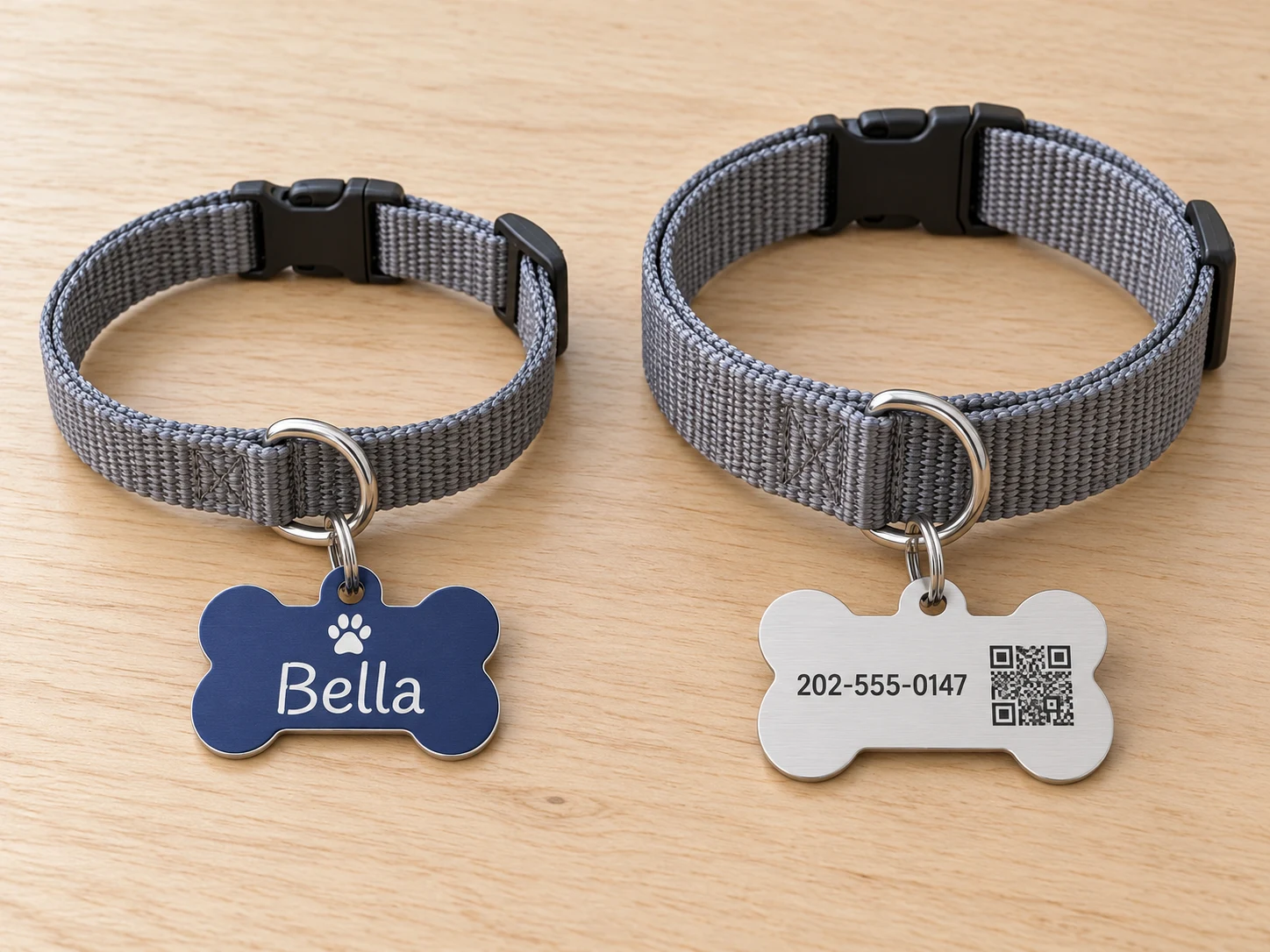
Review width, height and thickness together, then ask for the proposed weight or a sample when weight matters to the project. Two tags with the same outline can feel different if their materials or thicknesses differ. An actual-size paper outline can help assess proportions, but it cannot reproduce the weight or movement of the finished product.
Check projecting corners, edge finishing and the position of the attachment hole. The connecting ring affects how the tag hangs and moves around other collar fittings. A larger ring may make installation easier while also increasing the distance the tag hangs below the collar.
Metal tags can make noise when they strike other tags or hardware. Review the complete collar arrangement if this is a concern. Choose the tag body and attachment together, and inspect the sample for rough edges, awkward movement and interference with nearby fittings.
Match the Finish and Marking Method to the Artwork
Start with the information and graphics you need to reproduce. A tag carrying a name and phone number has different requirements from one featuring a multicolor illustration. For text, the key question is whether the proposed marking method produces readable contrast on the selected surface.
For detailed artwork, identify the elements that must remain recognizable: a small logo, fine outlines, color transitions or a particular lettering style. Review the available metal finishing and customization options, then confirm which combination suits the pet tag. Not every process is suitable for every material or graphic.
Specify the base material separately from the desired appearance. A silver-colored finish does not identify the metal underneath. When comparing proposals, check that material, dimensions, thickness, finish, marking method and attachment are all stated; otherwise, similar-looking quotations may describe different products.
Use the sample to assess both appearance and legibility under ordinary lighting. Discuss how contact with rings and collar hardware may affect the marked surface, and ask what finish-specific care or limitations apply. A polished appearance alone does not establish resistance to wear.
Keep Personalization Consistent Across the Order
Once the layout is agreed, prepare a data sheet that connects each entry to the correct tag version. Keep names, phone numbers and other fields in separate columns. Store phone numbers as text so leading zeros and country prefixes are preserved.
The following structure can be adapted to the project:
| Information | Example | What to confirm |
|---|---|---|
| Fixed artwork | Logo, background color, standard wording | Approved artwork version |
| Variable text | Pet name, phone number | Spelling, capitalization and line breaks |
| QR code | One shared code or individual codes | File or link source and matching entry |
| Product version | Size, shape, color | Version and quantity for each entry |
| Reference ID | Buyer’s row or order number | Connection between data, proof and finished item |
The reference ID is an order-management field; it does not need to appear on the tag unless requested. Agree on how long entries will be handled, using both short and long examples. Approve any alternative layout or font adjustment rather than allowing uncontrolled shrinking. For individual QR codes, the data sheet also needs an unambiguous link between the code file, pet details and product version.
Before production approval, review representative samples and agree on the checks required for the order:
- Compare the shortest and longest names at the finished size.
- Check spelling, phone prefixes and correspondence with the supplied data.
- Test QR scanning on the proposed physical sample and verify the destination.
- Inspect the edges, hole, connecting ring and fit on the intended collar arrangement.
Confirm the final data version, transfer method and procedure for submitting corrections. If tags must be packed by customer or reference number, include that requirement in the quotation request.
Questions About Custom Pet Tags
Can every tag in a bulk order have different text?
Yes. Unique Pin supports different names, phone numbers or other text through laser marking or printing while keeping the brand design consistent. Confirm the method, data format and handling of longer entries before production. Supply a clearly identified final file to avoid confusion between revisions.
Can a tag combine artwork, contact details and a printed QR code?
Yes, a combined layout can be assessed, including artwork on one side and contact details with a QR code on the reverse. Feasibility depends on the usable area and design. Specify whether the QR code is repeated across the order or different for each tag.
Can the same design be made in different sizes?
Size variations can be discussed, but each version needs its own layout assessment and quotation. Text, artwork and hole placement may need adjustment rather than proportional reduction. Confirm the quantity required for each size.
Planning a custom pet tag order? Request a quote from Unique Pin with your artwork, estimated dimensions, quantities by version, attachment and packaging needs, destination and required delivery date. Explain which details change between tags and whether QR codes are shared or individual. For the initial layout discussion, fictional names and sample numbers are sufficient; production data can follow through the agreed process.