How to Choose Custom Metal Bookmarks for Retail and Branded Gifts
 By Sunny Huang
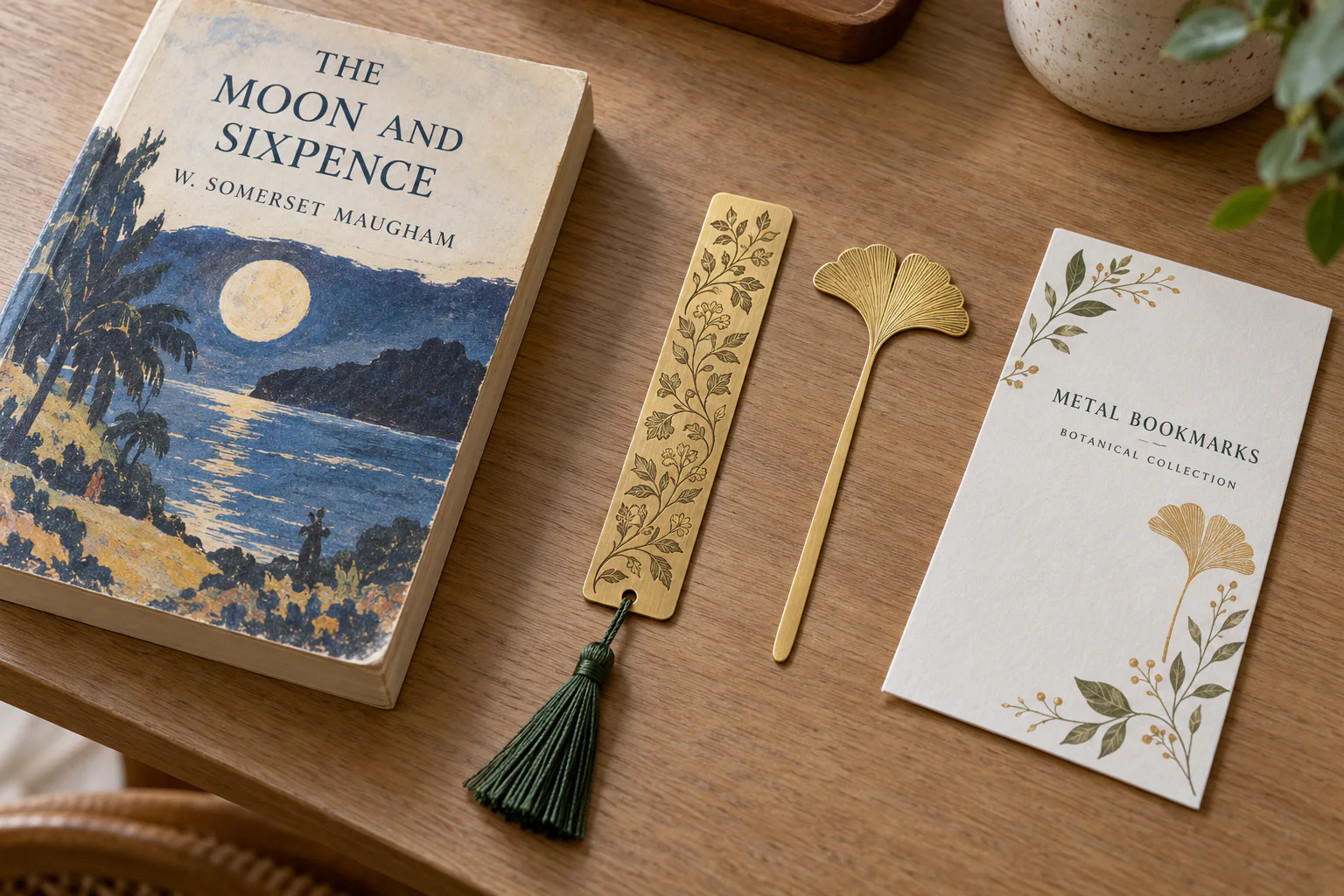
A bookmark design can look clear on screen yet lose detail at finished size, protrude awkwardly from a book or become difficult to secure on a backing card. When sourcing custom metal bookmarks, start with the part that sits between the pages, then work outward to the decoration, artwork and packaging.
Bookstore merchandise, corporate gifts and publisher giveaways share these decisions, but their priorities differ. The right specification should suit both the reader’s use and the way the bookmark will be sold or distributed.
Which Metal Bookmark Format Fits Your Project?
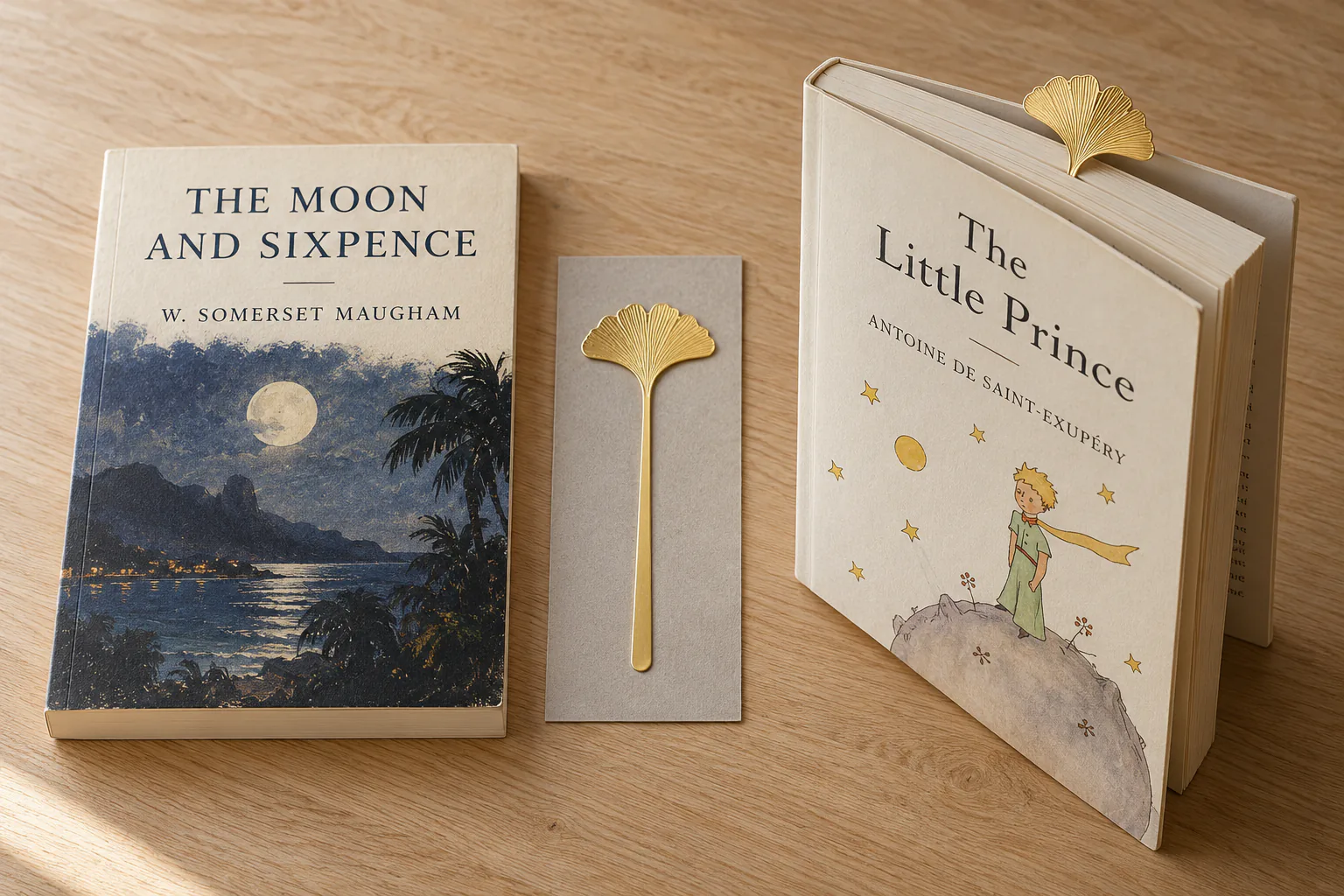
A flat bookmark places most of the artwork on the body that slides between pages. It offers a continuous area for an illustration or logo, with an exposed section for removal. A top-decorated bookmark places a motif above the page edge while a narrower stem sits inside the book.
Choose between them according to where the design needs space and how the item will be packed.
| Project | Useful starting point | Reason to consider another format |
|---|---|---|
| Bookstore retail | Flat body for artwork spread across the bookmark | A top decoration may better suit a compact symbol or character |
| Branded gifts | Flat body for a wordmark or longer logo | A top decoration can keep a simple emblem visible above the pages |
| Publisher giveaways | Flat format that fits the book’s mailing pack | A protruding decoration needs additional packaging clearance |
A tassel is an attachment, not a separate structure. Add it after choosing the body format, and allow space for it in the packaging.
Set the Size and Thickness Around the Intended Book
Overall length is not enough to specify a bookmark. Record the body’s length, width and thickness, plus the dimensions of any top decoration. Mark how far the body should enter the book and how much should remain exposed.
Provide a representative book or its page and cover dimensions. A design intended for a paperback giveaway may need to stay within the cover and mailing package; a retail bookmark may allow more visible decoration. If the product is intended for several book sizes, identify that range rather than approving it against one book alone.
Separate the thickness of the page-contacting body from a thicker decorative top. Increasing the whole item’s thickness to accommodate the decoration may change how it sits between pages.
For US buyers, show inches and millimeters on the drawing, with one unit controlling production. Choose metal bookmark thickness alongside the structure and intended book, rather than treating it as an isolated specification.
Match Your Artwork to Printing, Laser Engraving or Cutouts
Identify the features that make the artwork recognizable before choosing a process. Color, surface lines and open spaces serve different purposes.
| Design priority | Process to evaluate | Approval focus |
|---|---|---|
| Color illustrations or multicolor logos | Printing | Color reproduction, coverage and visibility on the selected surface |
| Lettering, line drawings or a simple mark | Laser engraving | Contrast and detail on the actual material and finish |
| Open silhouettes or decorative patterns | Cutouts | Removed areas, retained connections and the resulting outline |
For example, a botanical illustration could retain its colors through printing, become a line drawing through laser engraving or be simplified into connected cutout shapes. These are different design interpretations, not interchangeable production options.
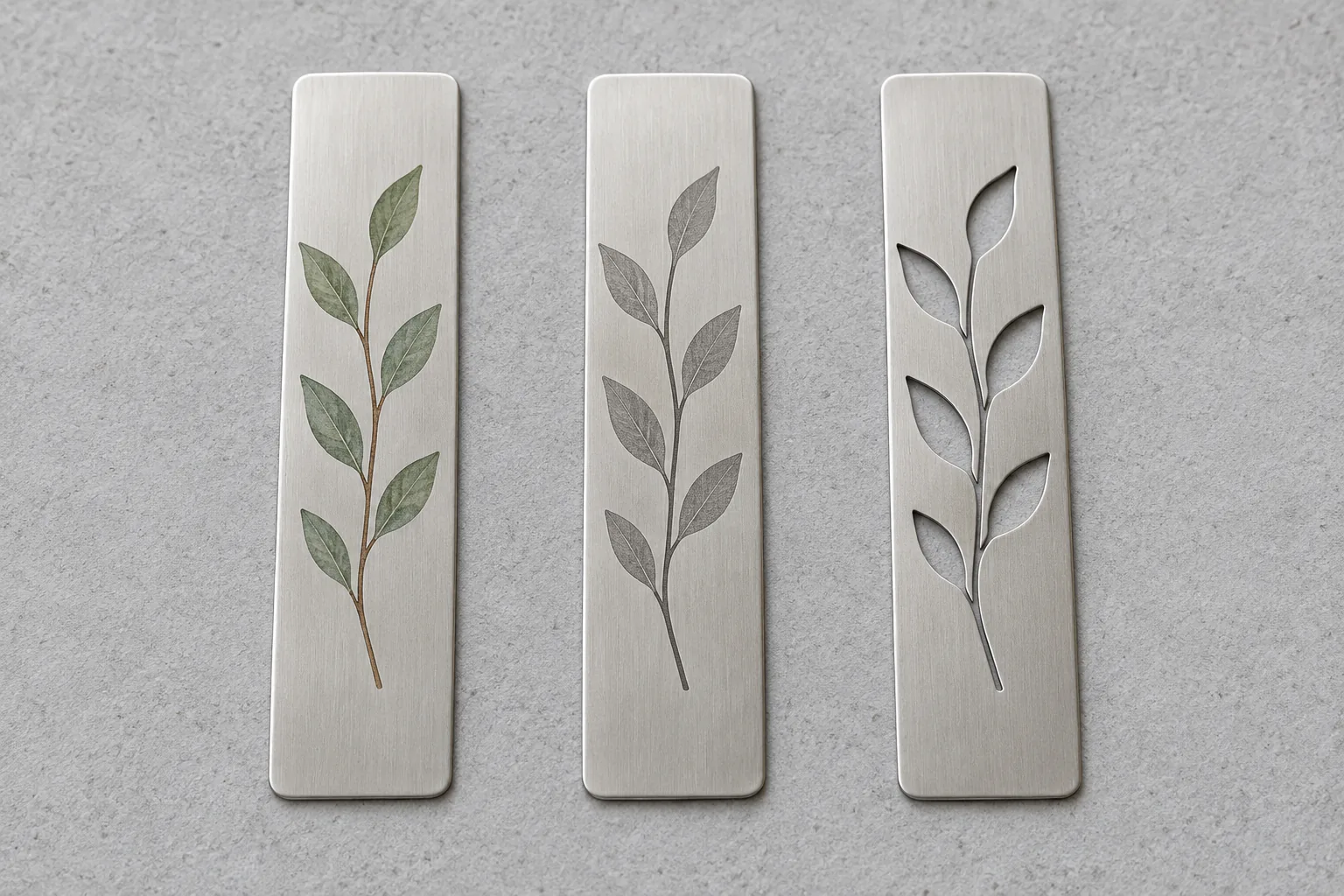
Laser engraving does not automatically create deep relief or a black mark. Its appearance needs confirmation on the chosen surface.
For combined artwork, label each process area separately. Our customization options provide an overview of available treatments; the suitable combination still depends on the proposed bookmark.
Choose the Metal and Finish for Your Design
Brass and stainless steel are available options, but a photograph of a gold or silver bookmark does not identify its base metal. Specify the substrate separately from plating, polishing, brushing or another surface treatment.
Compare labeled physical samples under similar lighting. The base material and finish together influence the appearance, including the metal tone, reflections and contrast around the artwork. Ask for the combination you intend to order rather than approving an unrelated finish sample.
For a visual reference, our multicolor feather bookmark set shows several metal-tone finishes. Use such examples to describe the desired appearance, then confirm the actual material and treatment in the quote.
Record the approved combination clearly. “Gold finish” alone leaves room for differences in tone and reflectivity.
Keep Edges, Cutouts and Attachments Practical
Review the outline before approving production artwork. Pointed tips, narrow projections and delicate connections deserve attention because they may affect handling or require changes during manufacturing.
A retained element in a cutout pattern needs a connection to the surrounding metal. For example, a small leaf inside an open frame may need a bridge, a broader connection or conversion to a printed or engraved detail. The acceptable dimensions depend on the material, thickness and production process.
Our gold cutout bookmark set provides a reference for framed openwork designs. Develop your own artwork around the intended structure rather than copying an existing motif.
Place attachment holes where the surrounding metal can support the proposed connection. Show the intended tassel or cord position on the drawing so it can be assessed with the complete design.
Make Logos and Small Text Readable at Finished Size
Review a correctly scaled printout instead of relying on an enlarged screen image. Look for closed letter interiors, crowded strokes and fine lines that become difficult to distinguish.
For custom bookmarks with a logo, decide which information must remain with the product after unpacking. A brand name may belong on the body or exposed decoration, while dates, campaign details and longer messages can sit on the backing card.
For a publisher giveaway, a recognizable symbol and short title may communicate more clearly than a miniature reproduction of the entire cover. Preserve the essential identity first, then decide whether additional text earns its space.
Check a Physical Sample in the Intended Book
A sample review should follow the reader’s actions: insert the bookmark to the planned depth, turn nearby pages, close the book normally and remove it. Note where handling feels awkward, whether anything catches and whether the book closes differently. Do not force the cover shut.
Inspect the contact areas for rough edges, raised features or visible marks after use. Observe whether the decorative top stays above the pages and whether a tassel, cord or connection slips into the page block.
Record the book type and dimensions together with the sample’s material, body size and thickness. Photograph any issue and identify the requested adjustment.
For products intended for a range of books, repeat the review with representative examples. Approval should describe the conditions observed; it should not become a blanket claim that the bookmark cannot mark or damage any book.
Match Packaging to Retail or Gift Distribution
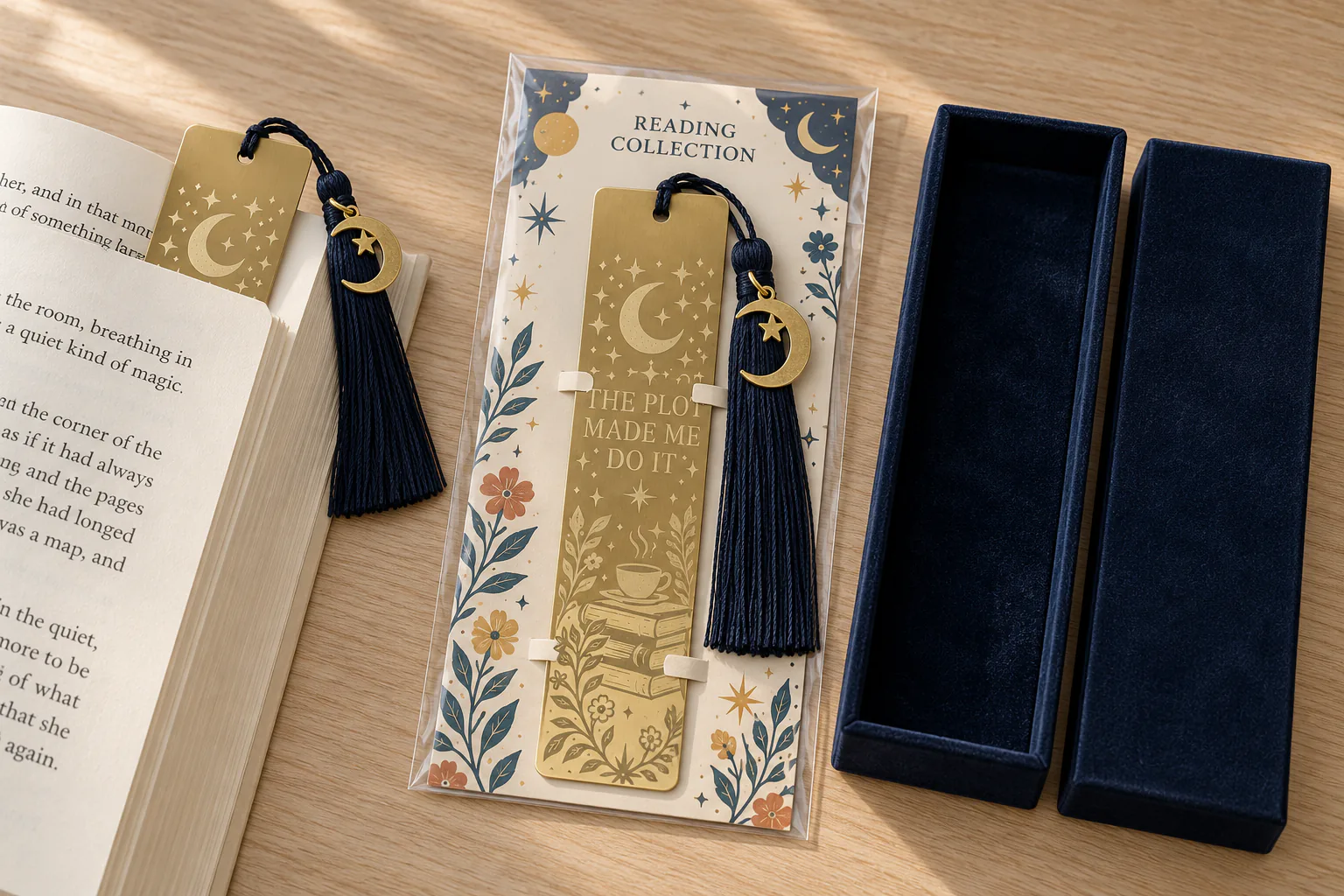
Approve packaging with the bookmark installed. A backing card that looks attractive on its own may conceal the motif or fail to hold the product in its intended position.
| Distribution method | Packaging decision |
|---|---|
| Retail | Secure the bookmark while keeping the main design visible; check the hanging or counter display |
| Branded gifts | Use a card or fitted box that presents the product and carries the message |
| Publisher giveaways | Fit the protected bookmark within the book’s mailing pack and define the insertion method |
Assign mounting, bagging and insertion to the factory, distributor or publisher. These tasks affect the delivered product and should be included in the agreed scope.
What to Send for a Comparable Bulk Quote
When ordering metal bookmarks in bulk, give each supplier the same brief:
- Intended use, bookmark format and target book dimensions
- Body and decoration dimensions, including separate thicknesses
- Artwork with printing, laser engraving and cutout areas identified
- Base metal and finish, or a clearly described appearance preference
- Quantity per design and required attachments
- Packaging, assembly tasks, arrival date and delivery ZIP code
Ask suppliers to separate product costs from applicable setup, sampling, packaging, assembly and freight charges. Compare the same specifications and delivery terms.
Mark undecided items as “recommendation requested.” A useful quote identifies its assumptions so you can resolve them before approving artwork or samples.
FAQs About Custom Metal Bookmarks
Can one metal bookmark combine printing and cutouts?
You can request both. Identify the printed and open areas separately, and have the supplier assess print placement around openings before confirming the combination.
Can I use the same artwork on both sides?
Yes, subject to process suitability. Define the orientation when the bookmark is turned over, and confirm that the quoted price includes the requested treatment on both sides.
Can a small trial order use the same design as a later bulk order?
It can use the approved design and specifications. Keep the version reference, record changes and reconfirm pricing; trial and bulk orders may have different unit and setup costs.
What if I have artwork but no final size or material?
Send the intended use, target book dimensions and appearance references. Ask for options, then agree on the specifications before production.
Request a Custom Metal Bookmark Quote
Share your artwork, intended use, quantity per design and target book size, if known. Include your packaging preference, required arrival date and delivery ZIP code. You do not need every specification finalized to begin: tell us which choices remain open, and our team can review the structure, material and artwork options before preparing your project quote.