Custom Cufflinks: How Your Logo Works on the Cuff
 By Sunny Huang
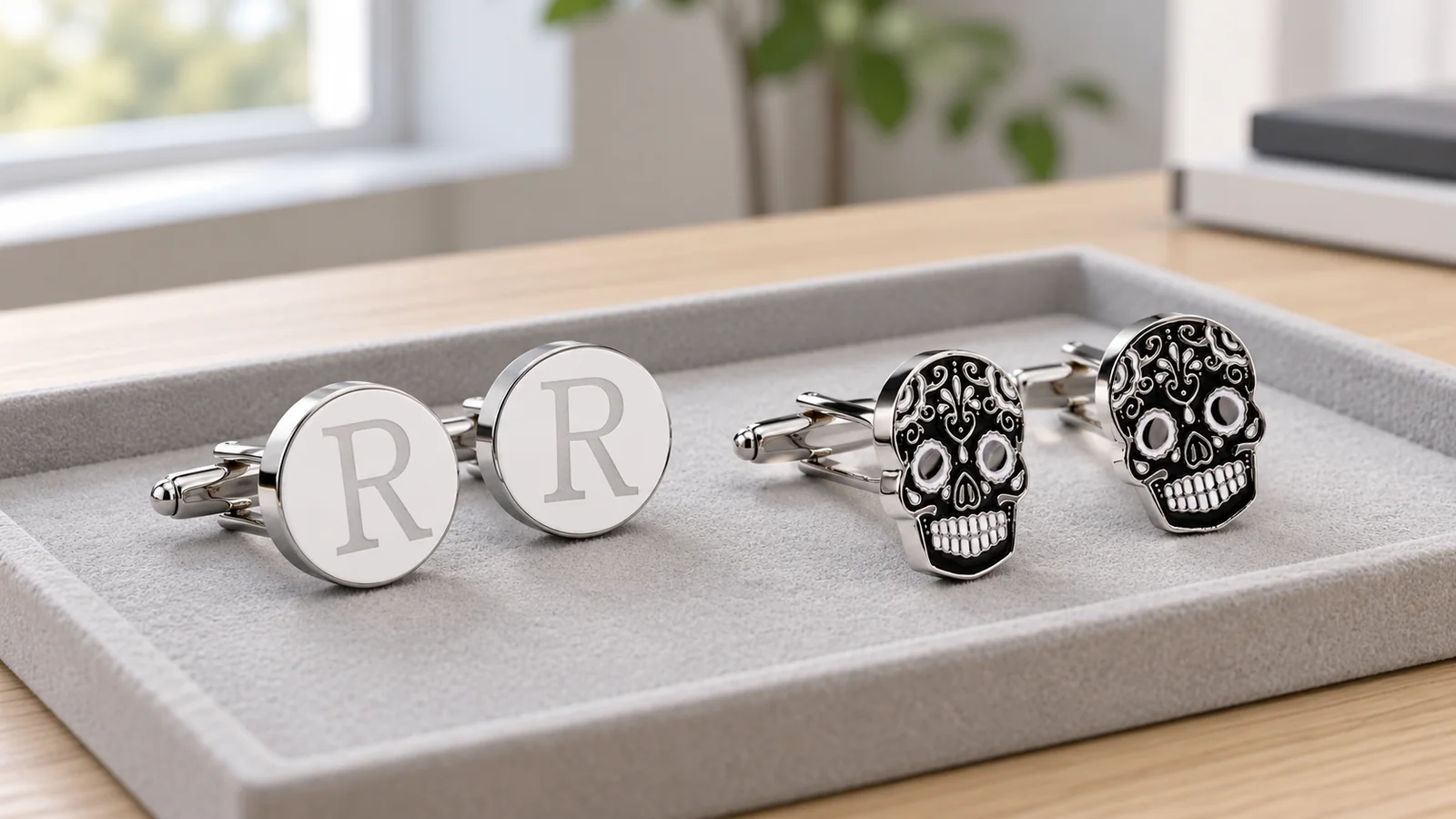
A front-facing mockup helps you judge the artwork, but it leaves important parts of a custom cufflink unresolved. The decorative face needs to accommodate the rear fitting, and the finished design needs to make sense when fastened to a shirt.
For buyers developing corporate gifts or branded accessories, the first decision is how the identity should appear: within a complete display face or through the product’s outline. The following examples explain how that choice relates to lettering, construction and the wearing position.
Three Parts of the Design: Face, Outline and Fitting
The face carries the visible artwork, the outline defines the outer shape, and the fitting secures the cufflink through the shirt’s cuff holes. These parts serve different purposes, but a change to one can affect the others.
Before developing the artwork further, separate the decisions in your brief:
| Design part | What the buyer needs to clarify |
|---|---|
| Face | Which wording, symbols or colours must appear |
| Outline | Whether the outer shape should frame the artwork or follow the graphic |
| Fitting | How the fastening assembly connects behind the decorative body |
Adding a company logo does not automatically require a custom outline. Equally, choosing a circular or rectangular face does not mean the product must use an existing mould. The artwork, dimensions and construction still need to be agreed for the proposed design.
Treat the front and rear views as parts of the same specification. This gives the designer a clearer starting point than a logo file accompanied only by a preferred shape.
Keep the Mark on a Face or Let It Define the Outline?
Start with the information the recipient needs to recognise. If a corporate gift introduces a less familiar company, its full name may be important. A complete display face gives the designer space to arrange the name and symbol together, although the wording still needs to fit at the intended size.
Custom shaped cufflinks are worth discussing when an approved graphic can identify the brand independently. However, detached elements may require connections or a supporting face. Those additions can change the visible silhouette and should be included in the customer’s design approval.
| Project requirement | Direction to discuss first | Reason |
|---|---|---|
| Full company name and symbol must remain | A complete display face | Both can be arranged within one surface |
| An approved symbol can stand alone | A graphic-led outline | The silhouette can contribute to recognition |
| Separate logo elements cannot be altered | A design with a supporting face | The elements need a continuous product body |
| A shared design needs different names or initials | A defined lettering area | Text lengths and layouts may vary |
For custom logo cufflinks, choose the direction that preserves the required identity with the fewest unnecessary compromises. An elaborate outline adds little if recipients still need wording that no longer has enough space.
Our round letter and skull-shaped products illustrate these two approaches. They are different designs, rather than alternative versions of one customer’s logo.

Explore our custom cufflinks and tie clips for examples of different decorative faces and product outlines.
What the Rear Connection Changes
The rear fitting needs an appropriate attachment area behind the decorative body. Its proposed position should be considered while the face is being developed, particularly where an outline leaves limited metal behind the artwork.
Separate graphic elements also need to form a connected product. A common base or linking section may provide that connection, but its appearance matters: supporting metal can become visible around or between the original elements. The necessary dimensions depend on the fitting and construction, so there is no single attachment-area measurement suitable for every design.
Our square cufflink’s rear photograph shows a fastening assembly connected behind a continuous plate. It provides a useful reference for discussing the rear surface, but does not establish how every shaped cufflink should be built. Where the available surface is restricted, consider the connection position and supporting area together.
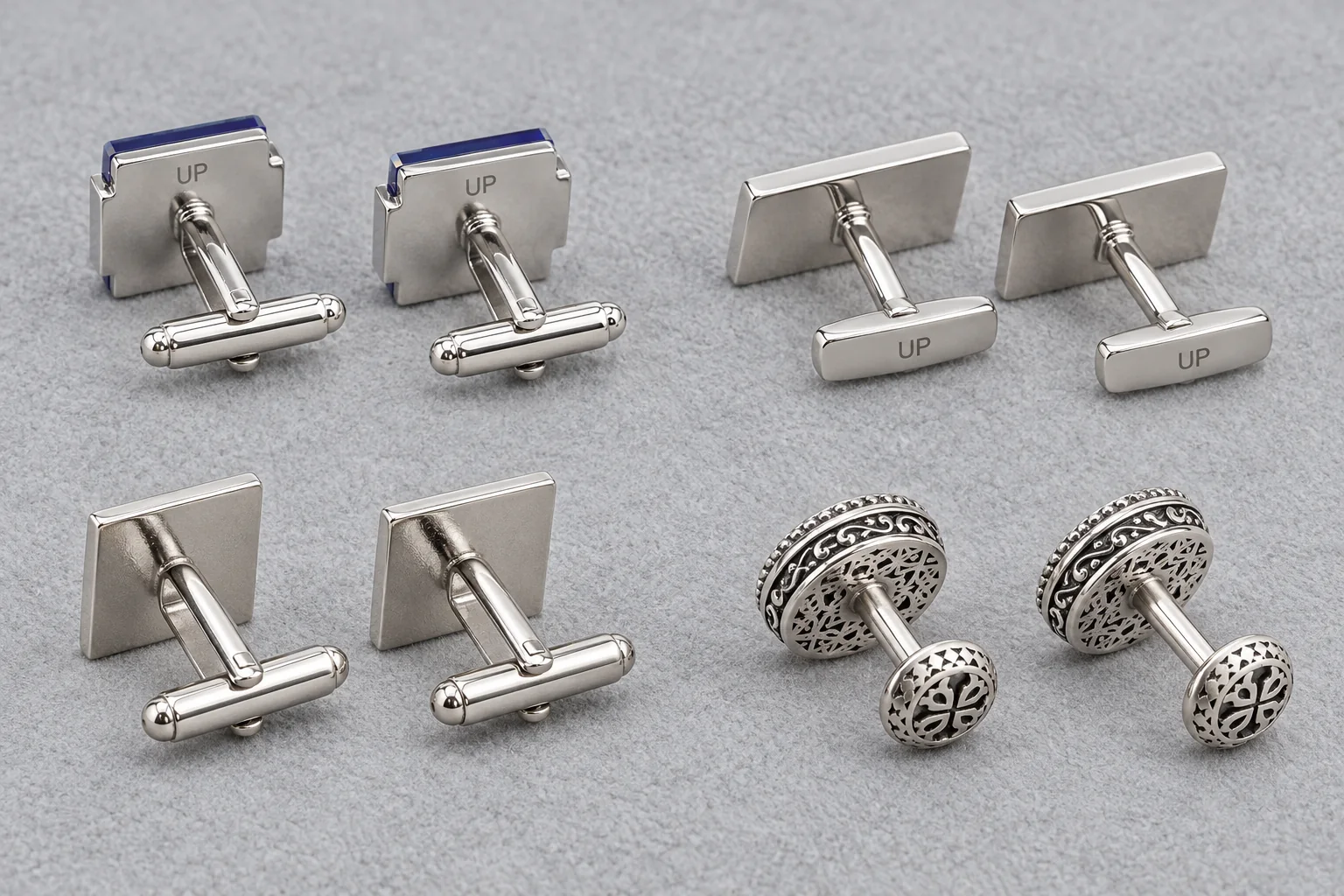
For procurement drawings, show the front outline, rear connection position and intended lettering direction. If a structural adjustment changes the visible design, include it in the artwork submitted for approval. This keeps the agreed appearance and proposed construction aligned.
Keep Lettering Readable in the Wearing Position
Company names and initials need to be assessed in the position in which they will be worn. A horizontal wordmark in a flat drawing does not, by itself, establish its direction on the sleeve. Confirm the proposed orientation using the fitting position and a representative shirt cuff.

Our single-letter cufflinks show a compact character with space around it. Monogram cufflinks with overlapping letters require a different layout assessment: decorative strokes can make initials difficult to distinguish. For company logo cufflinks, use the approved letter arrangement or request an authorised compact version rather than inventing an abbreviation.
Engraved cufflinks also need sufficient visual contrast between the mark and its surrounding surface. Reflections can make lettering easier to see from one angle and less distinct from another. The photographs demonstrate appearance and placement; they do not identify the specific engraving process used on the pictured letter designs.
Check essential wording in both the product view and the wearing view. If it becomes crowded, discuss a revised layout, size or presentation method. Any change to brand wording or artwork should be agreed with the customer before production.
Read Our Product Examples from Front to Cuff
Our photographs show three treatments: a round letter face, a square decorative face and a skull-shaped body. Each helps answer a different design question. They are finished-product examples, not documented stages of a customer development project.
| Product example | What can be observed | What to clarify for a new project |
|---|---|---|
| Round letter cufflinks | One character sits within a complete circular face; a wearing photograph shows its placement on a white cuff | Whether an approved initial or compact mark can represent the intended identity |
| Square decorative cufflinks | Diagonal silver-tone bands cross a black face; the rear assembly is visible in another view | How the customer’s artwork would fit within the display surface |
| Skull-shaped cufflinks | The outer contour follows the graphic while internal decoration remains on the face | Whether the proposed symbol can form a connected body with space for the rear fitting |
The round letter’s product view makes the border and surrounding space visible. Its wearing photograph adds the shirt context. The black skull-shaped cufflinks similarly show how a recognisable contour appears against fabric, while the square product provides a clearer view of the rear connection.
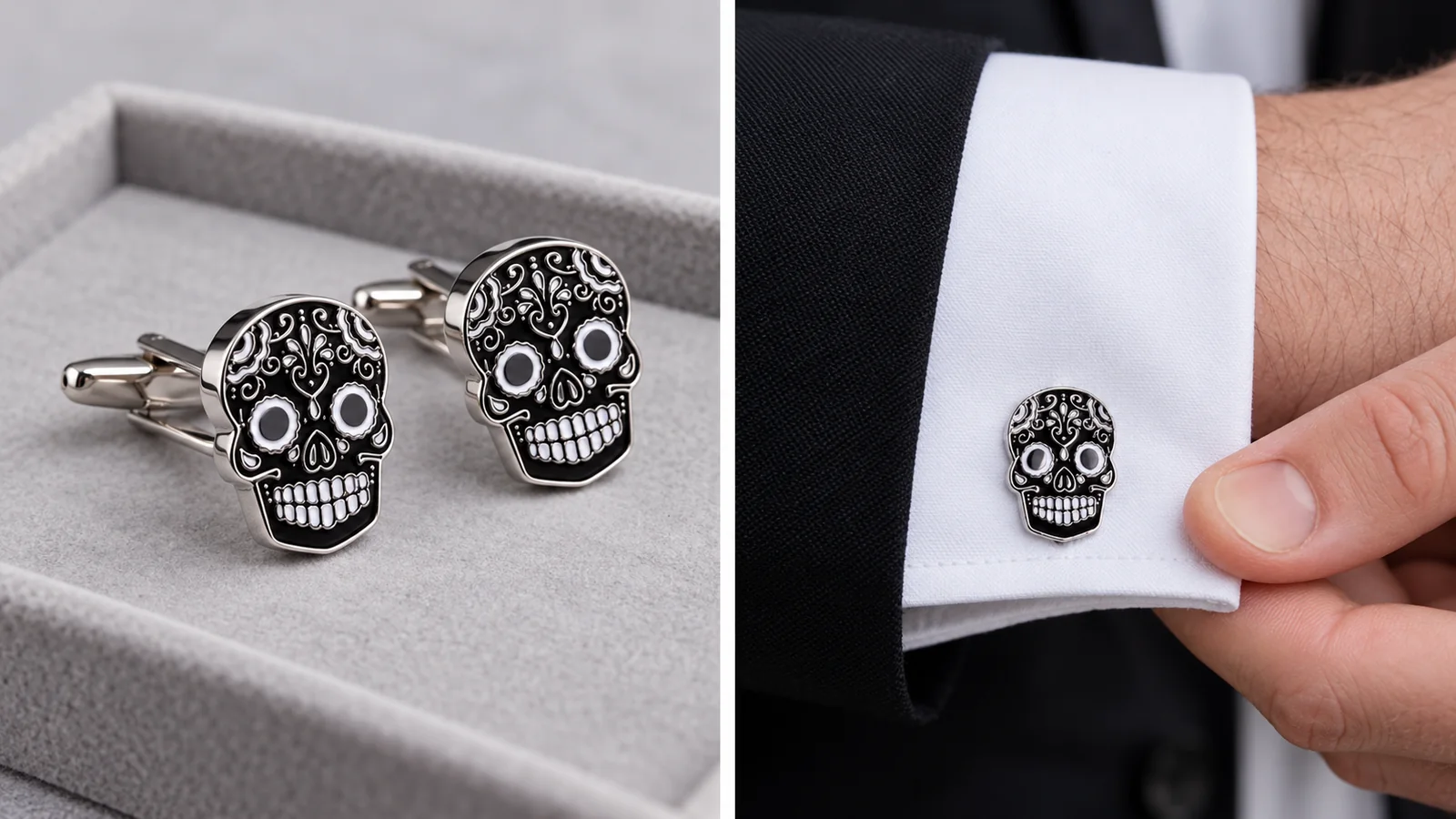
For a distributor preparing a proposal, use the example that addresses the client’s question. A letter-based design can start a discussion about compact identification; a shaped motif can start a discussion about silhouette and supporting structure. The products need not share the same design route to belong in the same proposal.
Their photographs have different angles and lighting, so they should not be used to compare exact dimensions, comfort or durability. Projecting edges, the overall proportion against the cuff and the visibility of the mark need to be assessed for the proposed product. Where appropriate, rounded contours can reduce contact with clothing or skin.
Questions About Logos and Personalised Text
Can our full company name appear on the cufflinks?
It can be considered, but suitability depends on the name’s length, lettering and available face area. Send the complete brand artwork and identify wording that must remain. If the layout becomes crowded, we can discuss a different size, arrangement or presentation method rather than assume an abbreviation is acceptable.
Can pairs in one bulk order have different engraved text?
Yes. We can engrave different names, initials or short text on the front of cufflinks sharing a common design. Provide each text entry and the number of pairs required. Confirm spelling, capitalisation and that both pieces in each pair should carry the same text. Longer entries may need a different layout from shorter ones.
Will you change our logo without approval?
No. We first ask whether an official simplified or small-format version is available. Proposed changes to wording, lines or spacing are submitted for customer confirmation before production.
Planning custom cufflinks for a corporate gift or branded range? Send us your logo, intended use and the brand elements that must remain. We can discuss whether a complete display face or a custom outline better accommodates the design, together with its rear connection and lettering layout. Contact our team to discuss your project.