Woven vs Embroidered Patches: What If Your Logo Has Small Text?
 By Sunny Huang
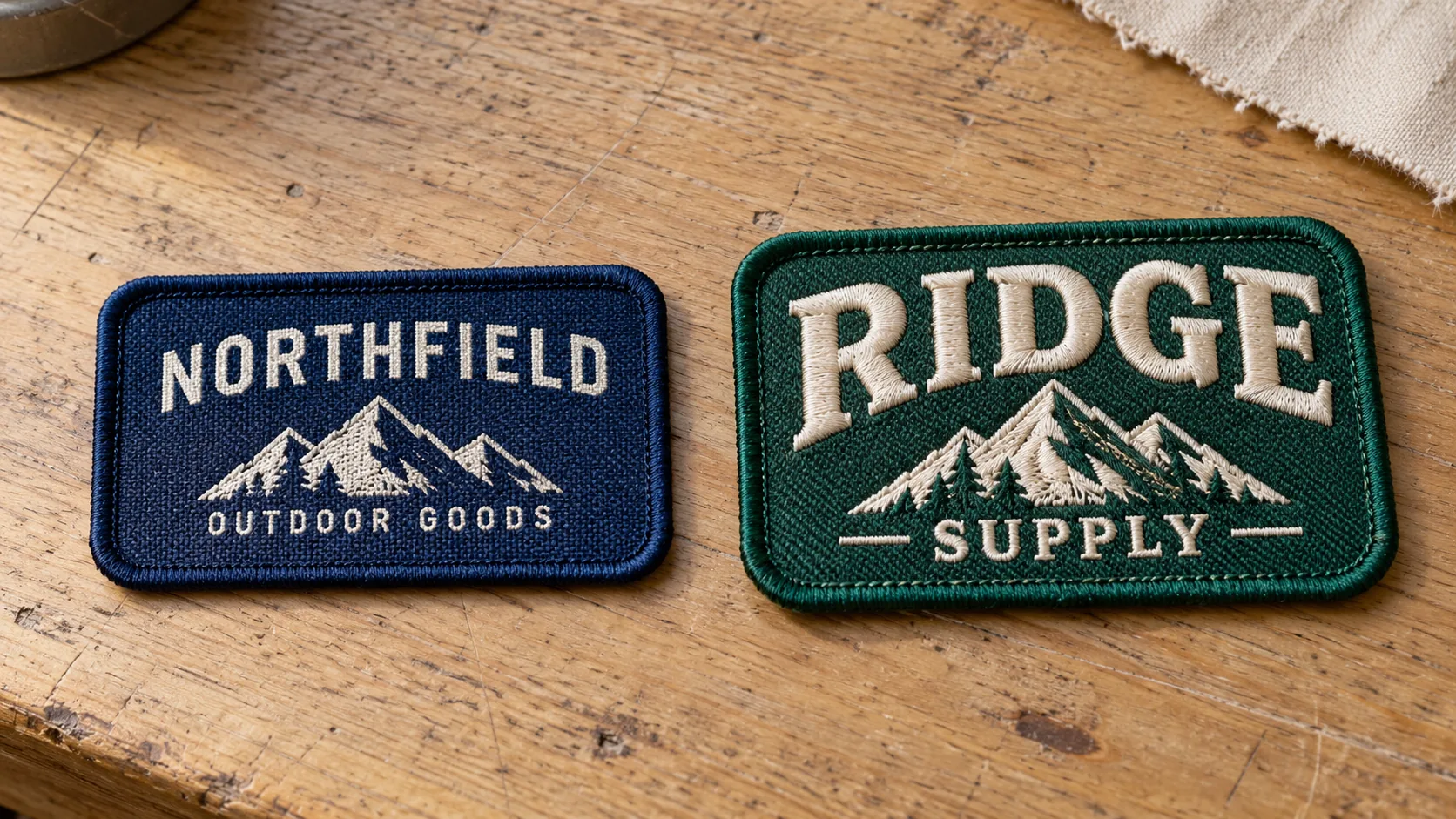
A clothing brand may have fixed the chest patch dimensions but still need every word of its logo to remain readable. A promotional products distributor may face a different constraint: the customer wants embroidery’s raised texture, even though the artwork contains fine lettering.
Choosing woven vs embroidered patches starts with separating those requirements. Which wording must stay? Can the font or layout change? How much does the surface texture matter?
Woven patches generally suit small lettering and fine lines, while embroidered patches provide a raised, textured finish. The choice depends on the logo at its finished size and the changes the brand permits. Keeping every word does not necessarily rule out embroidery if the lettering or layout can be adjusted.
In This Guide
Why Can Small Text Become Hard to Read on a Patch?
Zooming in on a logo makes narrow gaps and fine strokes easier to see. At the finished patch size, those details occupy much less space. Printing the artwork at the intended dimensions can reveal crowded wording, although paper cannot show how threads will reproduce it.
Look at the openings inside letters such as “a” and “e,” the thickness of each stroke, and the gaps between characters. Small openings can close visually, while neighboring letters may appear joined. Thin strokes can lose definition. If the lettering and background have similar colors, changing construction alone may not provide enough contrast.
Our design or production team reviews these features against the specified finished dimensions. Text height alone does not determine readability, so we assess each logo individually. When artwork leaves the result uncertain, we use a physical sample to check how the lettering reads.
Which Logo Details Must Stay Recognizable?
Before changing the design, distinguish required information from elements the brand will allow you to adjust.
| Information level | Examples | What to confirm |
|---|---|---|
| Core identity | Brand name and main emblem | Which letterforms, shapes, and proportions must remain unchanged? |
| Required wording | Full company name or tagline | Must every word stay, and can the font, spacing, or line breaks change? |
| Secondary decoration | Fine lines, ornaments, background textures | Which details, if any, may be simplified? |
Keeping the wording unchanged does not necessarily mean keeping the same typography or layout. Confirm these restrictions separately before ruling out embroidery.
For apparel brands, protect the features customers recognize across the clothing line. Distributors should obtain the end customer’s approval for specific changes rather than assume a general request for “clearer text” authorizes a redesign. A small tagline may be mandatory; removal always needs explicit approval.
When Are Woven Patches Better for Small Text?
Woven patches are worth considering when the available space is limited, essential lettering or lines are fine, and the customer accepts a relatively flat surface. A small sleeve logo beside a seam, for example, may leave little room for enlargement.
Woven designs use interlaced fine threads, which generally allow finer lettering and narrower lines than standard embroidery. When reviewing custom patch options, consider whether that smoother appearance suits the garment and the brand’s visual identity.
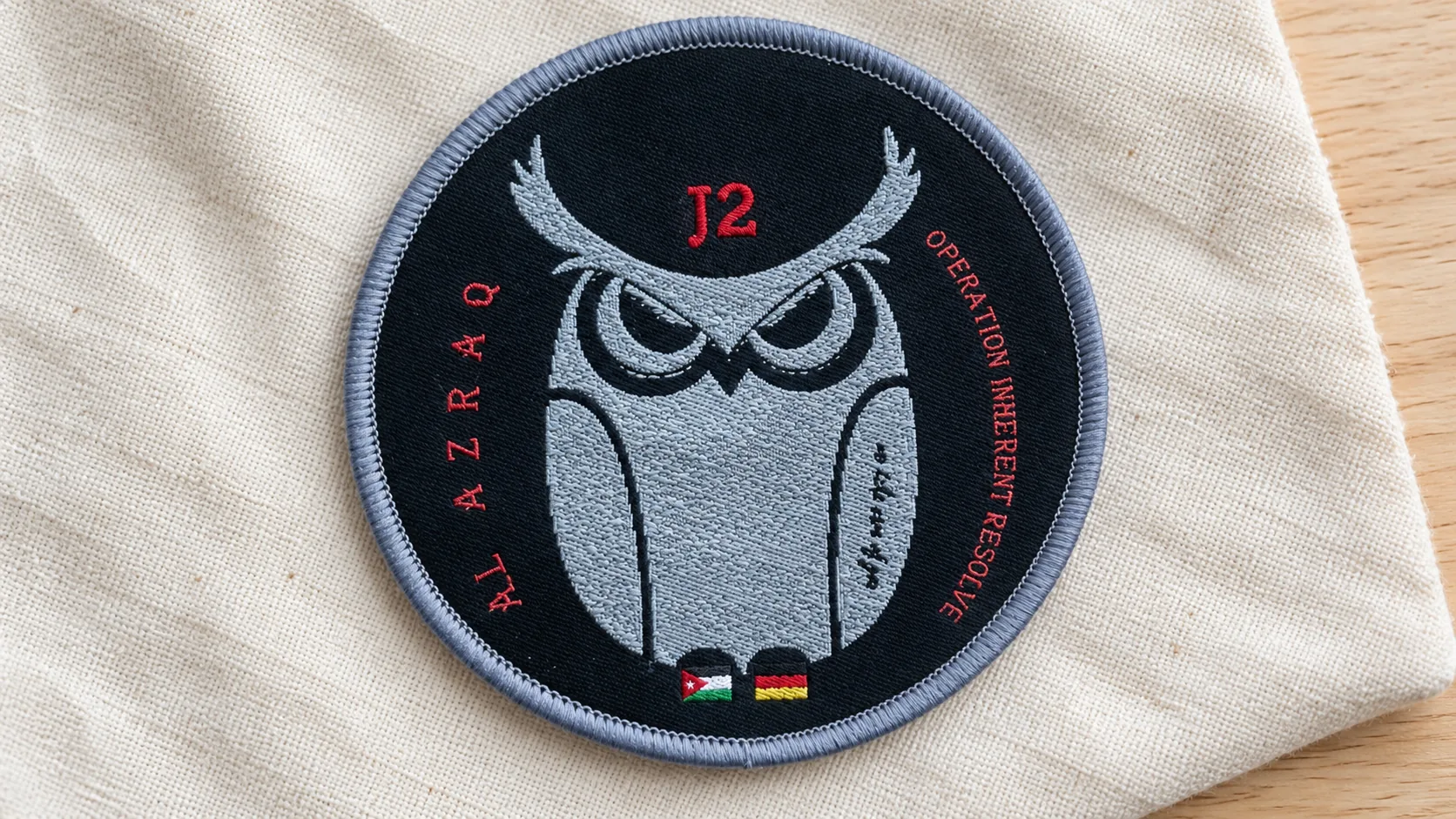
Woven construction cannot make unlimited information readable within a small area. Dense lettering, weak contrast, and an overcrowded layout can still create problems. Review the whole patch as well as any close-up: a letter visible under magnification may be difficult to recognize when the garment is worn.
When Are Embroidered Patches Still the Better Choice?
Embroidery remains a strong choice when raised texture contributes to the intended appearance and the main emblem and lettering are sufficiently bold. A jacket badge built around a prominent symbol and short wordmark may suit embroidery without needing every decorative line reproduced.
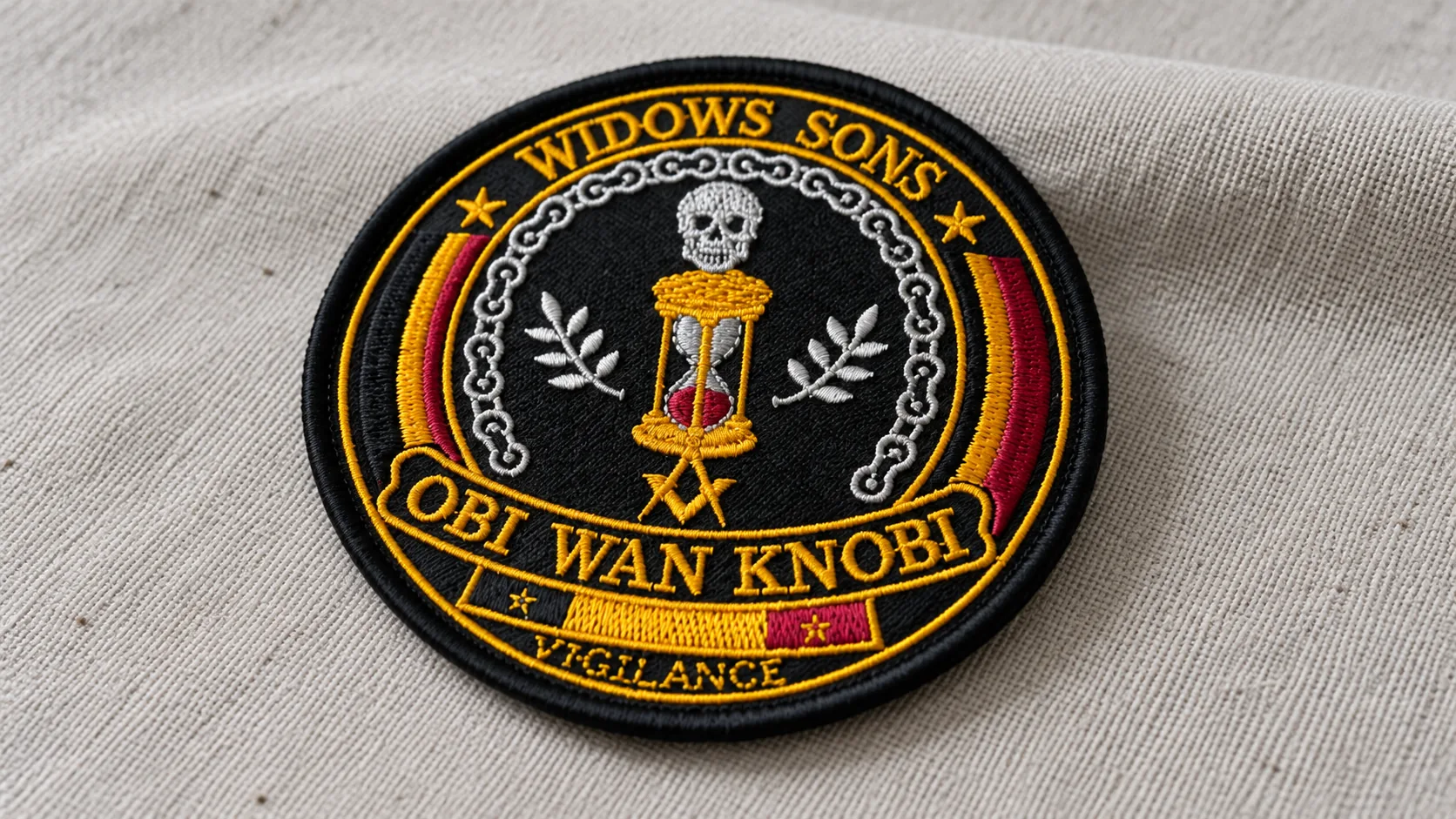
The presence of a small tagline does not automatically disqualify the design. What matters is whether the required wording can remain readable within an acceptable layout.
If the customer prefers a textured surface, establish how much flexibility exists in the dimensions and secondary artwork. Changes to an established wordmark need particular care: a clearer but substantially altered logo may not meet the brand’s requirements.
Should You Enlarge the Patch, Simplify the Logo, or Switch to Woven?
First establish what cannot change, then choose a patch option that can meet those requirements. Use the customer’s restrictions to narrow the possibilities.
| Buyer’s constraint | First option to assess | Tradeoff or limitation |
|---|---|---|
| Embroidered texture matters; placement has spare room | Enlarge the patch and give the lettering more space | Larger visual footprint on the garment |
| Dimensions and wording are fixed; typography or layout can change | Adjust lettering or line breaks for embroidery | Revised appearance needs brand approval |
| Dimensions and artwork are tightly restricted; embroidery struggles with essential detail | Evaluate woven construction | Flatter finish; readability still needs checking |
| Decorative details can change | Simplify decoration to create room for required text | Only approved elements may be altered |
| Dimensions, artwork, and embroidered texture are all fixed | Assess whether the brief is feasible | If it is not, at least one requirement must change |
Enlarge the Patch When Placement Allows
Check the largest acceptable width and height against pockets, seams, and the garment’s proportions. Use the extra space to enlarge the lettering or improve its spacing. A larger outline with unchanged text will not, by itself, resolve the original problem.
Our guide to patch shapes and dimensions can help with outline and placement considerations.
Simplify Secondary Details with Brand Approval
Identify the permitted changes: removing a decorative line, adjusting a secondary font, or placing a tagline on two lines. At a fixed width, increasing letter spacing may require moving another element. Review the revised arrangement without assuming that any required wording can be shortened.
Switch to Woven When Essential Detail Takes Priority
If the necessary detail remains difficult to reproduce through acceptable embroidery adjustments, assess woven construction. Confirm that the customer accepts its flatter appearance. If the wording still cannot be read comfortably, revisit the design requirements rather than treating a change of construction as a complete solution.
Example: A 65 × 40 mm Apparel Patch with a Small Tagline
Illustrative scenario: An apparel brand needs a 65 × 40 mm chest patch, about 2.6 × 1.6 inches. The name, main emblem, and every word of the tagline must stay. Placement prevents enlargement, and the buyer prefers embroidery’s raised texture.
Suppose the brand allows a simpler tagline font or a two-line layout. The first step is to assess those changes while preserving the name and emblem. This may create more usable space for the lettering without deleting words. Embroidery remains an option if the revised design meets the readability and appearance requirements.
If the tagline’s font and single-line layout must also remain unchanged, compare whether embroidery or woven construction can reproduce that artwork adequately. Woven may offer more scope for fine detail, provided the buyer accepts the flatter finish.
The decision still depends on readability at the specified dimensions. If neither option works, the brand needs to reconsider placement, size, or artwork restrictions. These dimensions describe this hypothetical brief; they are not a minimum size or a claim about a tested sample.
Frequently Asked Questions About Woven and Embroidered Patches
How small can text be on a custom patch?
There is no single minimum that works for every design. Font, stroke width, spacing, contrast, and finished dimensions all affect readability. Send the artwork with the intended patch size so we can assess the lettering; uncertain details may need physical sample confirmation.
Are woven patches always cheaper than embroidered patches?
Not always. In our quotations, woven patches often cost less when size, quantity, and backing are comparable. Final pricing depends on the artwork and specifications. Compare both options against the same requirements, including any approved design changes.
Do I need a vector file to compare patch options?
No. We can begin with a clear PNG, JPG, or reference photo, together with the target dimensions and required wording. Vector artwork is helpful for preparation, but it does not by itself make tiny lettering readable.
Discuss Your Patch Design
Send your logo or reference image, target dimensions, placement, and quantity. Mark any wording, font, or layout that must remain unchanged. Our team can assess whether embroidery is practical at that size, identify possible artwork adjustments, and explain when woven construction is worth considering.