
How to Design a Custom Belt Buckle: 9 Decisions Before Production
 By Sunny Huang
A custom belt buckle has two jobs. It carries the artwork people see, but it must also connect securely to the belt behind it. A design can look convincing from the front and still require changes if the size, weight or back attachment does not suit the intended strap.
To design a custom belt buckle, begin with its use and the belt specifications. Then confirm the buckle dimensions, artwork hierarchy, 2D or 3D relief, metal finish, color and hinge-and-hook attachment. Before production, review the front, back and dimensions together on a digital proof.
The nine decisions below provide a practical starting point for brands, distributors, event organizers and other buyers preparing a custom project.
1. Define How the Buckle Will Be Used
The intended use affects almost every later decision. A retail fashion accessory, corporate award and event souvenir may carry similar artwork, but they do not have the same priorities.
A brand selling the buckle with a leather belt may focus on repeatable specifications, comfort and packaging. A recognition buckle may need a prominent title, recipient details and a clear visual hierarchy. An event organizer may need one design adapted for several categories or years.
Clarify the following before working on the layout:
- Who will receive or buy the buckle?
- Will it be worn regularly or mainly displayed?
- Is it supplied with a belt or as a separate buckle?
- Does it belong to a series?
- Will individual names or numbers be added?
- What packaging is required?
- What is the order quantity and deadline?
These answers give the designer a working brief instead of only a logo file.
2. Confirm the Belt Specifications
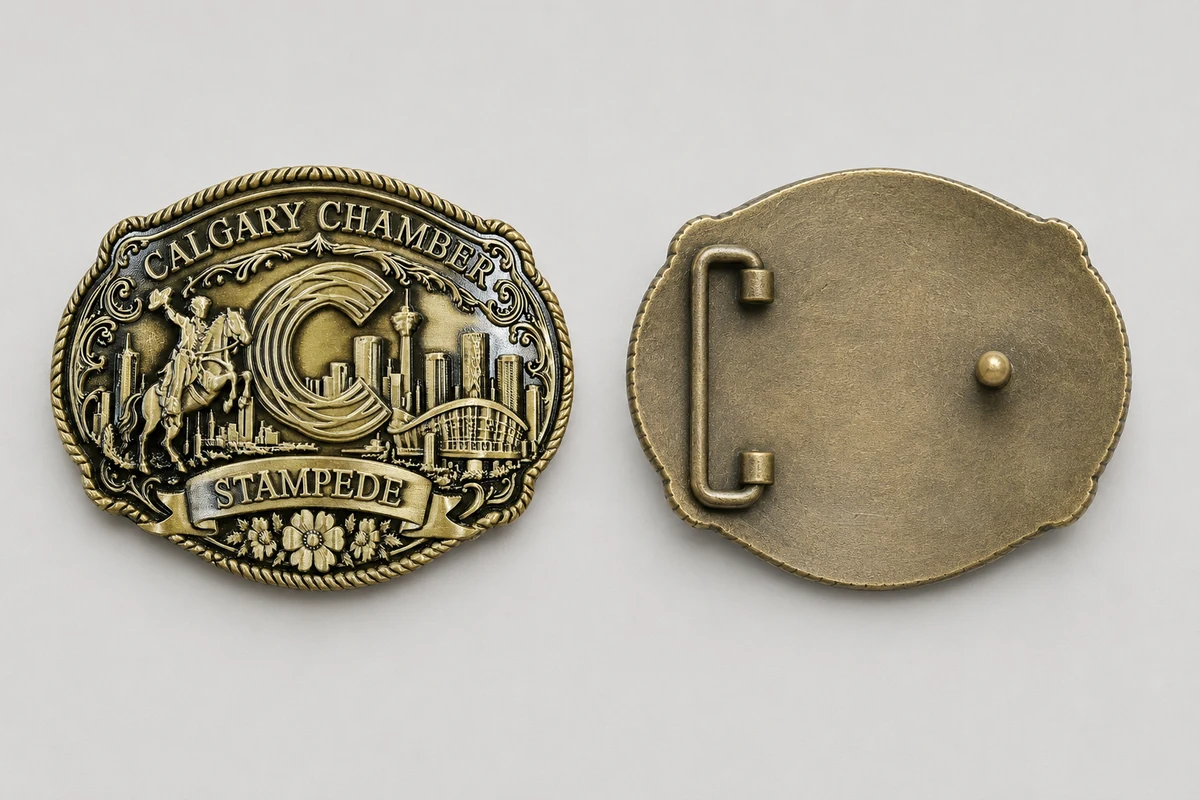
For a custom belt buckle with a plate buckle and hinge-and-hook attachment, the belt is part of the design decision. The hinge connects to the folded end of the belt, while the hook engages with a belt hole. Their spacing and position must work with the actual strap.
Provide the belt width and thickness whenever possible. A photo of the front and back of the belt connection is also useful, particularly when an existing belt will be reused.
Do not rely on the phrase "standard belt." Belt construction varies, and the decorative face of the buckle can be wider than the connection area behind it. The critical measurement is the part of the strap that meets the attachment.
If the belt is being sourced from another supplier, share the approved buckle and belt specifications with both parties. This reduces the risk of receiving two individually correct components that do not fit each other.
3. Choose a Practical Size and Shape
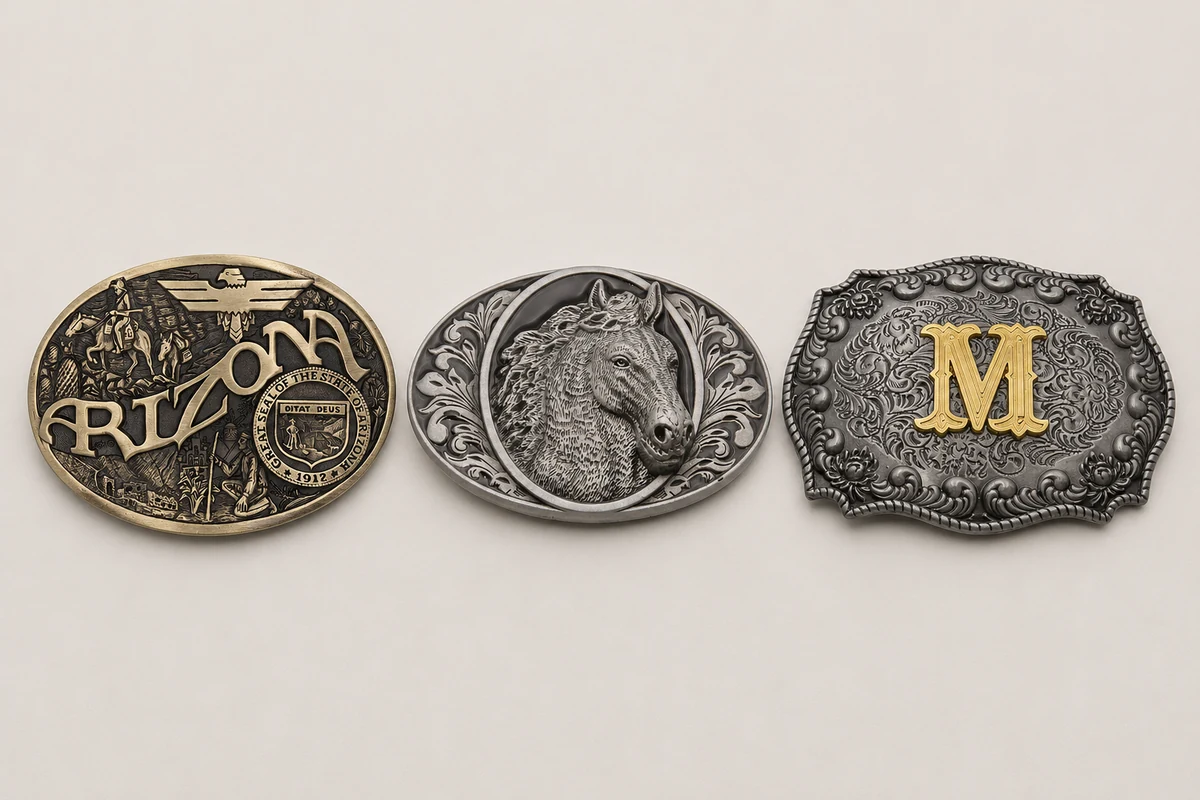
Custom zinc alloy plate buckles can be developed in oval, rectangular and other shaped outlines. The appropriate dimensions depend on the artwork, intended use and belt.
A larger face provides more room, but it also changes the weight and wearing experience. Thickness, relief and solid or open areas all contribute to the final result. A buckle intended as a large award piece does not need to follow the same proportions as one intended for everyday apparel.
Check three areas when setting the dimensions:
- The back connection must match the belt.
- The face must provide enough usable space for the artwork.
- The overall size and weight must suit the intended use.
The outside dimensions are not the same as the usable artwork area. Borders, curved edges and relief can reduce the space available for text. Review the design at approximately its finished size rather than only as an enlarged screen image.
4. Build a Clear Artwork Hierarchy
A buckle does not need to reproduce every element from a poster, badge or event graphic. Metal designs are usually easier to understand when the information has a clear order.
Start with the main symbol or logo. Then decide which name, title or event information must be read first. Dates, category details and decorative textures should support that message rather than compete with it.
A useful hierarchy is:
- Main logo or symbol
- Primary name or award title
- Supporting event or organization information
- Date, number or short secondary text
- Border and decorative detail
Small text, fine lines and tightly packed elements may need adjustment during artwork preparation. This is not necessarily a change to the identity of the design. It is part of converting flat artwork into raised, recessed, engraved and colored metal areas.
When submitting artwork, send the highest-quality logo, sketch or reference available. A rough concept is still useful if it clearly shows the intended subject and required wording.
5. Decide Between 2D and 3D Relief
A 2D design uses defined raised and recessed levels. This works well for logos, borders, lettering and graphic elements that need clear separation. Soft enamel can be added to selected recessed areas when color is part of the design.
A 3D design uses gradual changes in height to form rounded or sculpted surfaces. It can suit animals, faces, landscapes and organic motifs where contour matters more than flat separation.
Neither option is automatically better. The decision should follow the artwork.
Many buckles use both approaches. A 3D central subject can be combined with a 2D border and lettering. Laser engraving can add selected names, numbering or fine surface information where appropriate. Open areas can also become part of the design, but the remaining structure must still support the buckle and its attachment.
The digital proof should make each level understandable. If the buyer cannot tell which areas are raised, recessed, colored or engraved, the production specification is not yet clear enough.
6. Select the Metal Finish
The confirmed base material for this product is zinc alloy. Its appearance can be changed through plating and surface treatment.
Available directions may include:
- Polished gold-tone, silver-tone or copper-tone finishes
- Antique gold, antique silver or antique copper
- Black nickel or gunmetal
- Matte surface effects
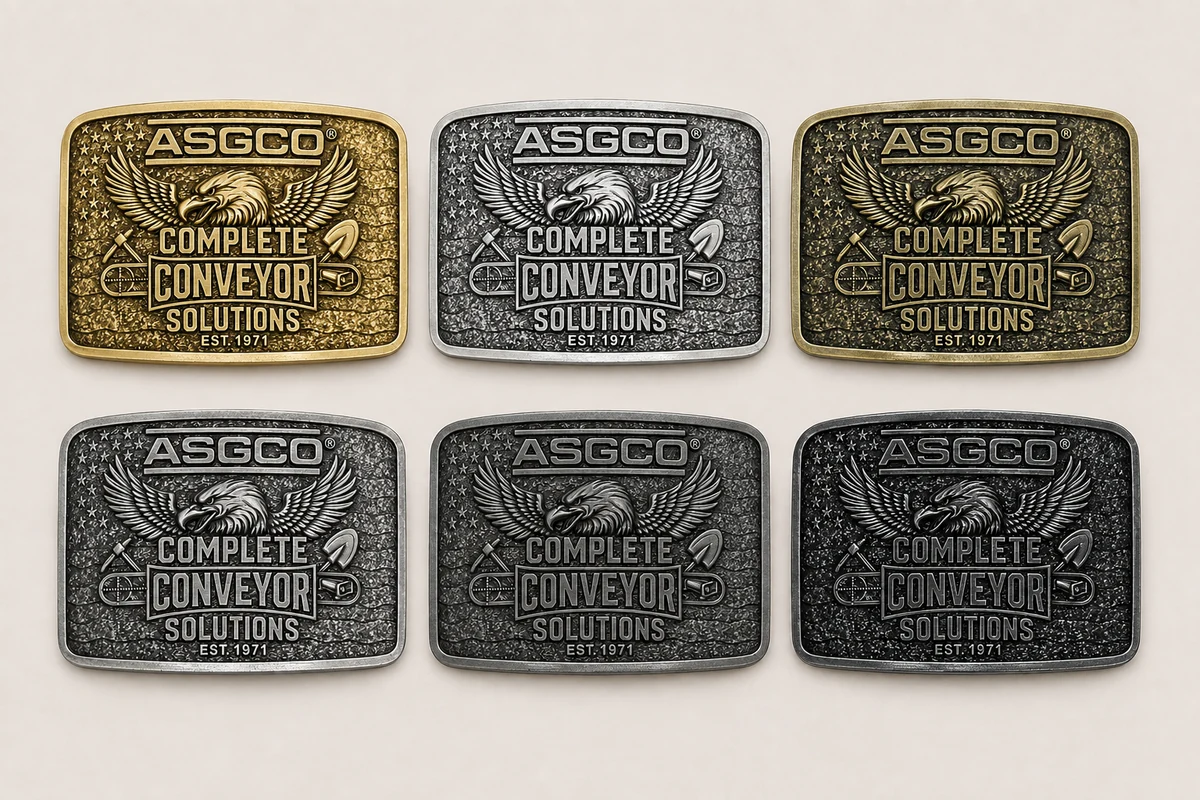
A polished finish reflects more light and can create a bright, clean appearance. A matte effect reduces strong reflections. An antique finish usually creates darker recessed areas, helping relief and texture appear more distinct.
Finish names describe appearance; they should not be confused with the base material. For example, an antique brass appearance does not necessarily mean the buckle is made from solid brass. Product descriptions, quotations and approvals should distinguish zinc alloy from the selected plating or finish.
When comparing finishes, use the same artwork where possible. Looking at unrelated buckle designs makes it harder to understand how the surface treatment changes contrast.
7. Decide Whether to Add Color
Soft enamel can separate logos, borders and other clearly defined areas. It is particularly useful when color is necessary for brand recognition, event categories or a coordinated merchandise range.
Not every area needs color. Leaving selected parts as exposed metal can preserve contrast and keep the design from becoming visually crowded. Antique finishes can also provide depth without adding multiple enamel colors.
Before approval, confirm:
- Which areas remain metal
- Which recessed areas receive color
- The intended color references
- Whether the same colors apply across all order versions
- Whether engraving or numbering changes between pieces
Gradients, photographic imagery and very fine color transitions do not translate in the same way as solid enamel sections. Artwork may need to be simplified or adapted to the selected process.
8. Review the Hinge-and-Hook Attachment
The back of the buckle is not a secondary detail. For the confirmed plate buckle construction, the hinge-and-hook system determines how the product attaches and closes.
The digital proof should show the back attachment, not only the decorative face. Check:
- Hinge position and direction
- Hook position and orientation
- Space available for the belt
- Compatibility with the supplied strap width and thickness
- Clearance behind the decorative plate
- Any back engraving or identification
If a physical sample is produced, test it with the intended belt. A sample may involve additional cost, and its timing depends on the design and required processes. Photos or video can support remote review, but the confirmation method should be agreed before bulk production.
Where a sample is approved, the bulk order should follow the confirmed design and specifications. Any requested change after approval needs to be assessed before production continues.
9. Approve the Complete Digital Proof
The proof is the point where the design becomes a production specification. It should show enough information for the buyer to understand what will be made.
Review:
- Front artwork
- Back attachment
- Finished width and height
- Relief levels
- Plating and surface effect
- Metal and enamel areas
- Engraved information
- Spelling and dates
- Open or cutout areas
- Packaging requirements
At Unique Pin, production begins after the customer approves the digital proof. Revisions can be made before production, so this is the correct stage to resolve unclear text, proportions, finishes or attachment details.
Do not approve the project based only on an attractive front-view rendering. The front, back, dimensions and belt connection belong to the same product.
From Approved Artwork to Finished Buckles
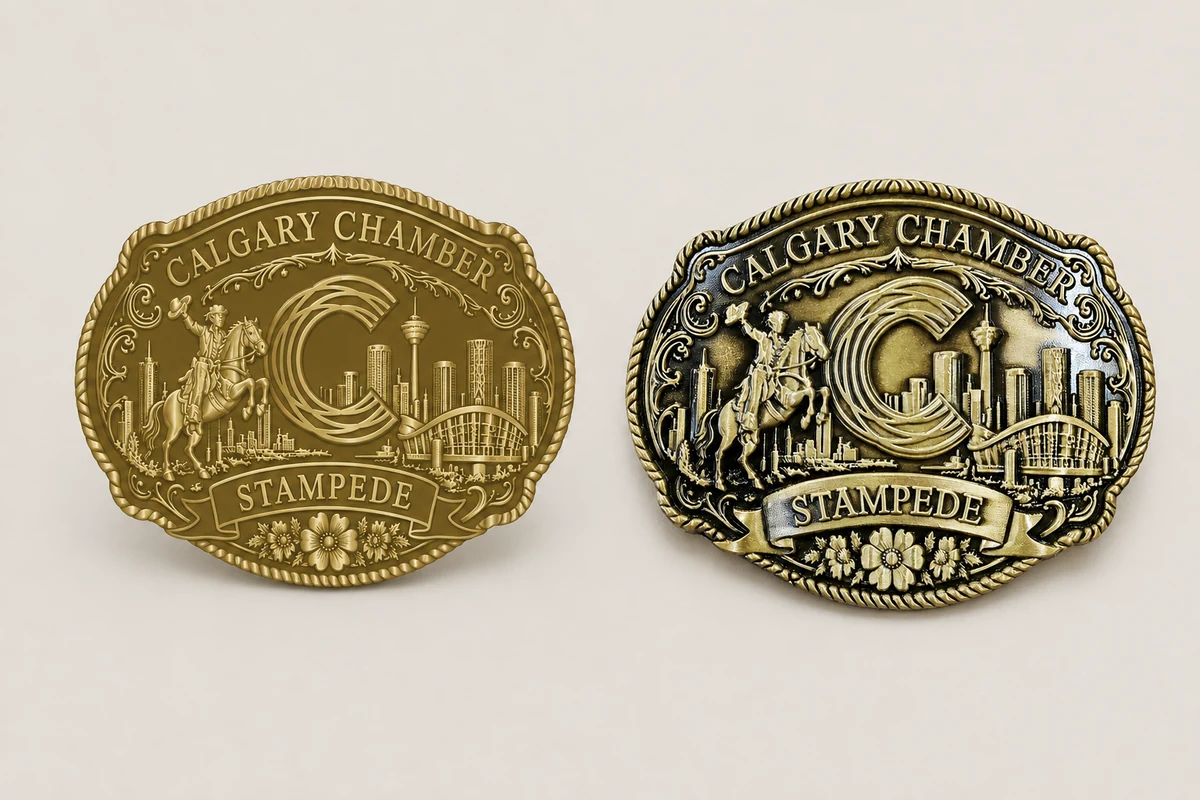
After approval, a zinc alloy buckle order may move through mold preparation, die casting, polishing, plating and the selected finishing steps. Soft enamel filling or laser engraving is completed where specified. The products then proceed through quality inspection and packaging.
The exact sequence can vary when an order combines different effects. Timing should therefore be evaluated from the approved design, quantity, sample requirements, packaging and destination instead of being presented as one universal lead time.
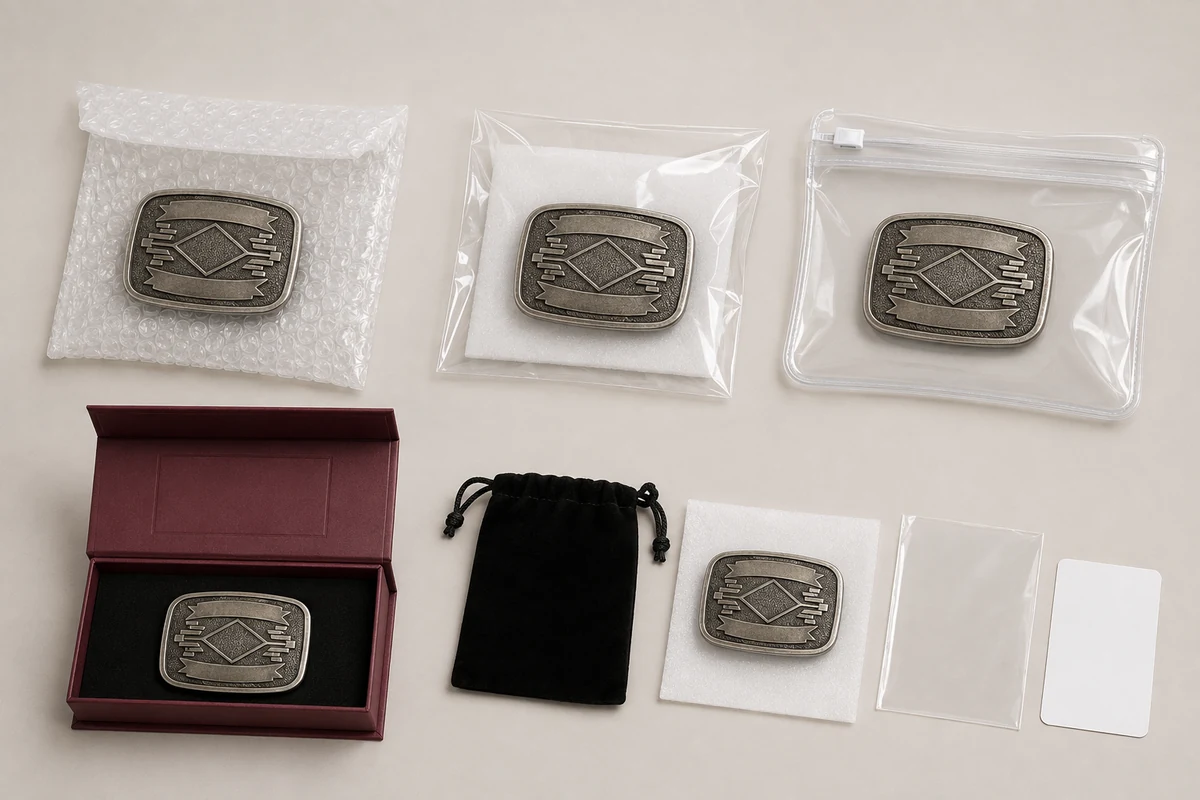
Packaging options can range from protective individual packing to velvet pouches or presentation boxes. The appropriate choice depends on whether the buckle is being shipped as a component, sold as retail merchandise or presented as an award or corporate gift.
What to Send for a Custom Belt Buckle Quote
A complete request helps the artwork and quotation process move more efficiently. Send:
- Logo, sketch or reference image
- Intended buckle dimensions or belt specifications
- Belt width and thickness
- Quantity
- Preferred 2D, 3D, enamel or engraved effects
- Preferred plating and finish
- Packaging requirements
- Required delivery date
- Destination country and postal code
If some design choices are still open, explain the intended use and provide the belt information. The artwork team can then suggest a workable direction for the custom belt buckle and prepare a digital proof for review.
Frequently Asked Questions
How do I design a custom belt buckle?
Begin with the intended use and belt specifications. Then confirm the size, artwork hierarchy, relief, finish, color and back attachment before approving the digital proof.
How can I make sure the buckle fits my belt?
Provide the belt width, thickness and photos of its connection area. The hinge, hook and available clearance should be reviewed against those specifications.
Is 2D or 3D better for a logo buckle?
2D relief usually suits clean logos, lettering and defined color areas. 3D relief is useful for rounded, sculptural subjects. A combined design may work when the central motif needs depth but the wording needs clear levels.
Can the buckle combine enamel and an antique finish?
Yes, a design can use soft enamel in selected areas while retaining an antique metal effect elsewhere, subject to artwork review. The proof should clearly identify colored and exposed metal areas.
Can I order a sample before bulk production?
A physical sample can be produced, and photos or video may be provided for review. Sample cost and timing depend on the design and should be confirmed with the quotation.
Ready to Review Your Belt Buckle Idea?
Send your logo or sketch, belt width and thickness, preferred size, quantity, finish, packaging requirements, deadline and destination country or postal code. We can provide design guidance, prepare a free digital proof, assess a sample where needed and provide a production quote after the specifications are reviewed.