Custom Western Belt Buckles for Women: A Retail Buying Guide
 By Sunny Huang
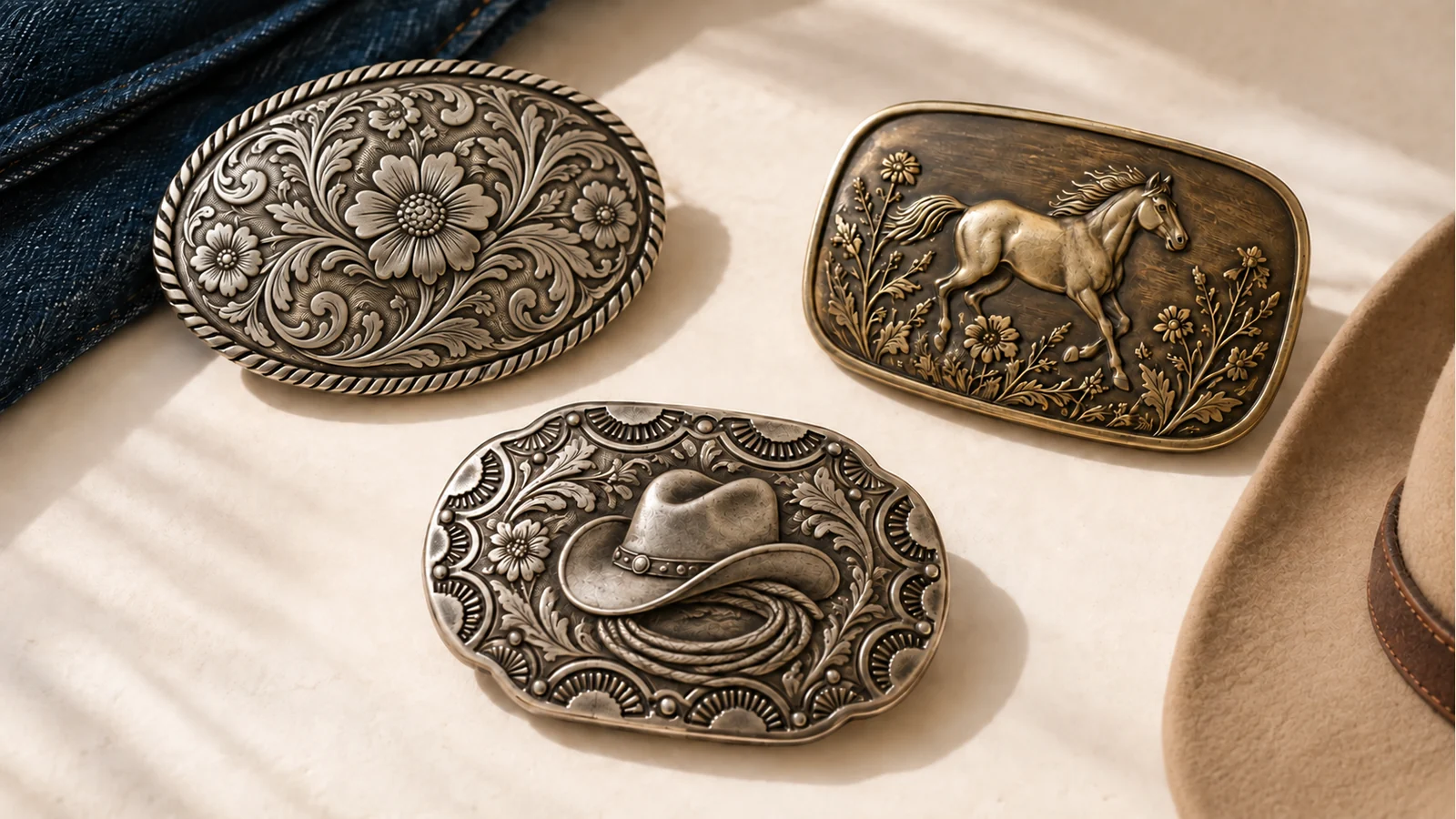
A floral buckle looks right beside your denim collection. You choose a second finish, add a horse motif, and suddenly a small accessories launch involves several stock lines, packaging decisions and a belt compatibility question nobody has answered.
For boutiques developing custom western belt buckles, those purchasing details deserve attention before the artwork is approved. A design needs to suit your customers, work with the intended belt and arrive with specifications you can use again.
This guide helps boutique buyers plan a women’s western buckle collection: choose between buckles and complete belts, define style-and-finish quantities, confirm belt compatibility, compare quotes and approve samples before production.
In This Guide
1. Choose How the Collection Will Be Sold
Start with the product your customer will actually receive: a separate buckle or a complete belt.
Selling buckles separately lets shoppers pair them with compatible belts they already own. Your listing must explain the attachment requirements and clearly state that a belt is not included. A front-view photograph alone does not tell customers whether the buckle will work for them.
Selling complete belts gives you control over the finished combination, but adds belt lengths, strap materials, colors and assembly to the buying brief. Confirm who supplies the strap and who checks the assembled product.
If two suppliers are involved, give both the same connection specifications. Arrange a trial assembly before approving the combination.
Make this decision early. It affects your packaging, product photography, inventory structure and the information store staff need when answering questions.
2. Give Each Design a Reason to Be in the Range
When selecting western belt buckles for women, begin with the clothes and accessories your customers already buy. A women’s collection does not need to consist entirely of small buckles or floral designs.
Review belt sales, customer requests and recurring outfit combinations. Do shoppers want an understated accessory for everyday denim, a prominent decorative piece, or merchandise carrying your brand’s artwork?
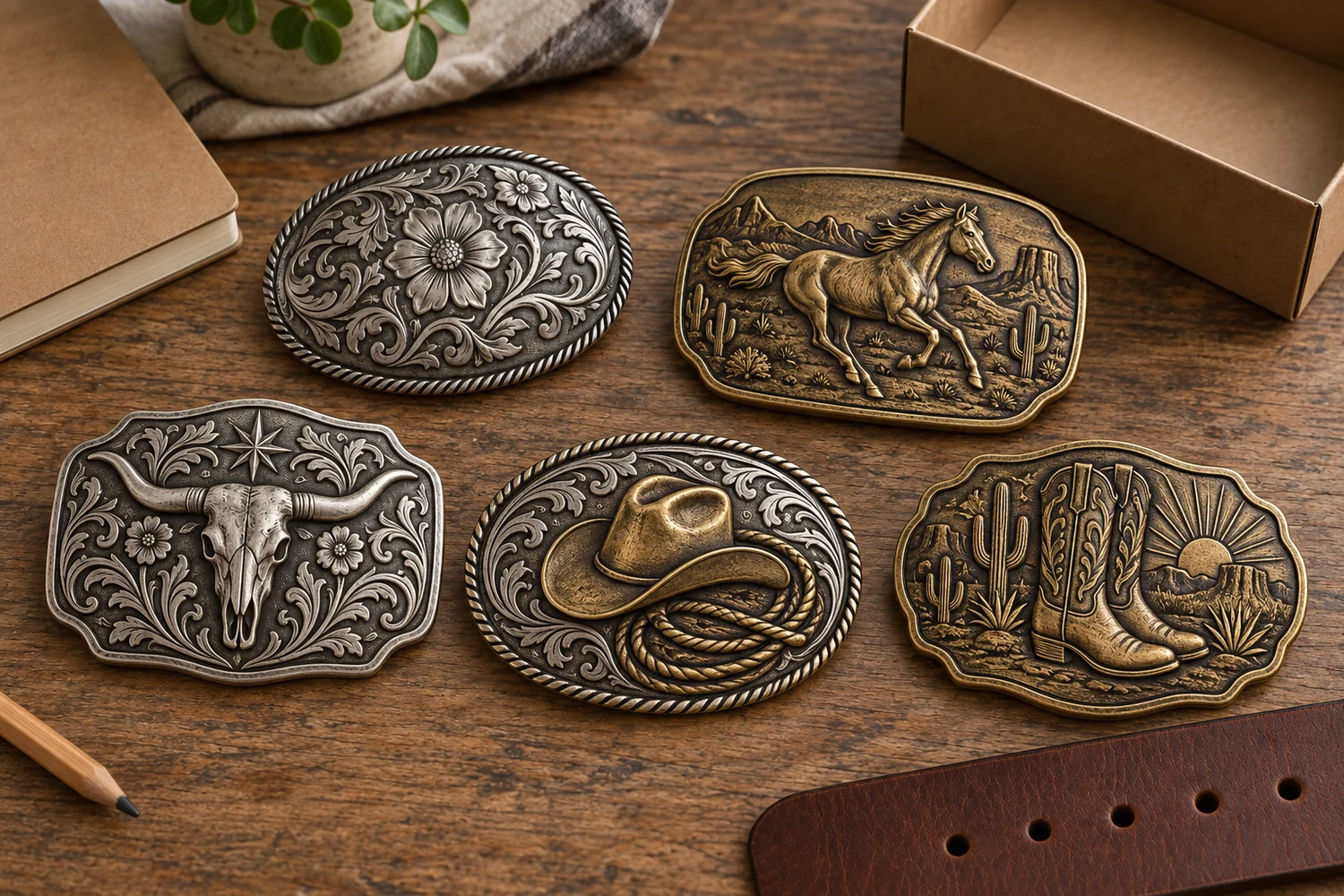
Give each proposed design a specific role. For example, an initial concept range might include:
- An oval floral design that coordinates with existing leather accessories.
- A more prominent equestrian design for customers who favor statement pieces.
- A restrained geometric design with a small brand detail.
These are planning examples, not proven best sellers.
Place the concepts beside photographs of your actual merchandise. If two designs target the same customer, outfit and intended retail price bracket, consider whether both need to launch together.
Use these comparisons to decide which concepts deserve a physical sample:
| Style direction | Merchandise to compare | Sample review focus |
|---|---|---|
| Floral motifs, engraving and rope borders | Your shop’s belts, boots and other accessories | Are the details clear at actual size? |
| Equestrian or brand artwork | Customer requests and your brand’s visual identity | Is the motif recognizable, and do the edges sit comfortably when worn? |
| Restrained geometric designs | The other styles proposed for the collection | Do the proportions, surface finish and brand detail create a distinct option? |
For each shortlisted style, record the measured face dimensions and weight, photograph the back and attachment, and compare front and side photographs worn with the intended belt and outfits. Set aside designs that obscure the outfit details you want to show, press into the wearer when sitting, or fail to offer a distinct role in the range. Use physical samples for these comparisons; there is no universal women’s buckle size or preferred weight.
Browse available custom belt buckle options, then narrow your brief to the designs your shop has a reason to stock.
3. Allocate Quantities by Style and Finish
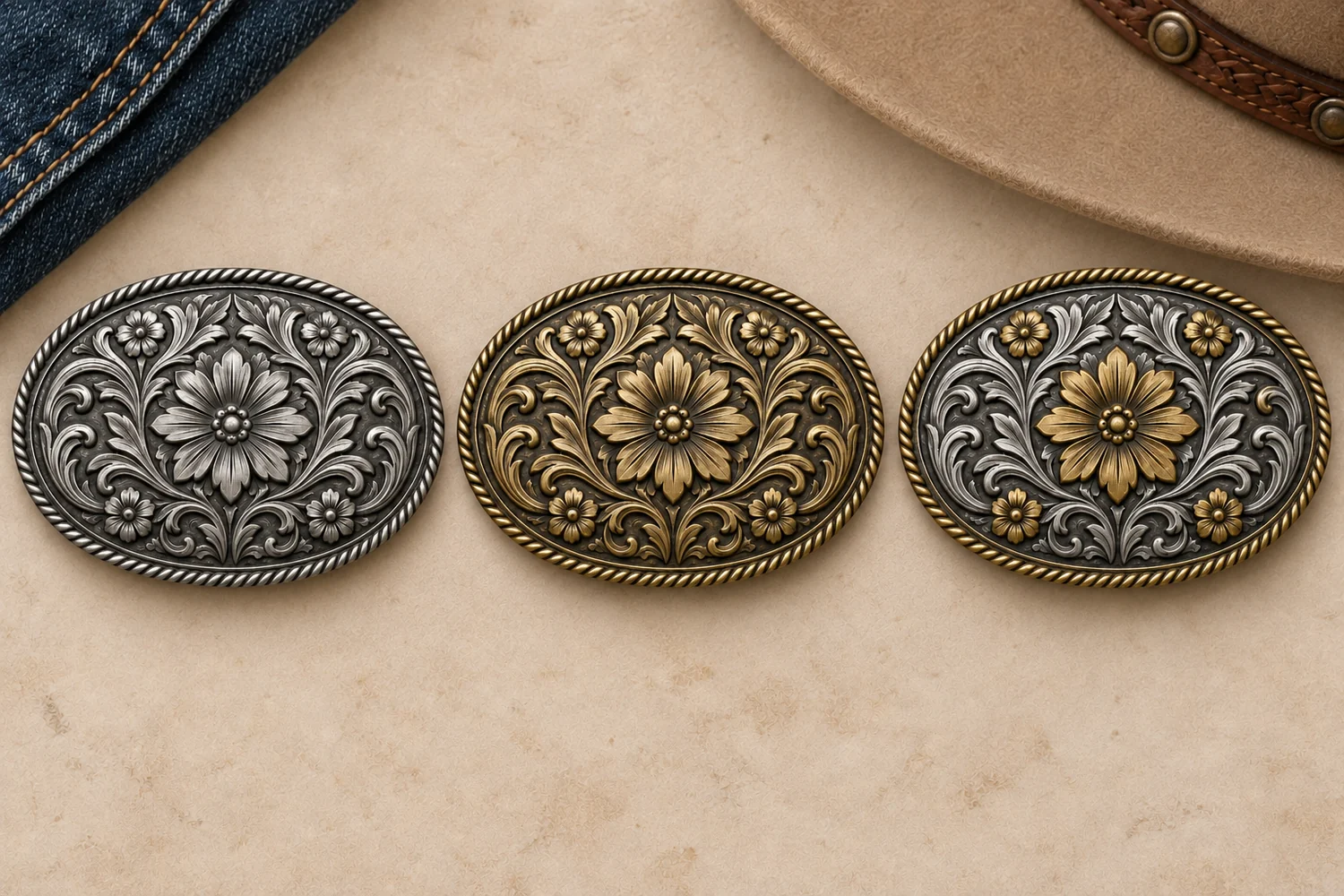
An order total is not enough to describe a collection. Three designs offered in two finishes create six variants, each needing a quantity and an identifiable stock record.
Build a purchase-planning sheet before requesting a quote:
| Field | What to record |
|---|---|
| Style ID | Your internal reference for the design |
| Artwork version | The exact drawing being quoted |
| Finish | The requested finish and reference |
| Dimensions and attachment | Face size and belt connection requirements |
| Quantity | Units required for that variant |
| Packaging | Protection, presentation and labeling requirements |
Allocate quantities using evidence from your own shop where possible. Existing sales of silver-tone and brass-tone accessories may help form a starting hypothesis, but they do not guarantee the same preference for buckles.
Without relevant sales history, prepare a narrower and a broader style-and-finish quantity plan within your budget, and request a quote for each. Compare a narrower launch with fewer variants against a broader assortment before committing.
Ask which charges apply once and which repeat by design, finish or order. Confirm whether finish variations can use the same mold or other production tooling; do not assume that similar artwork means identical production requirements.
Use the same artwork, variant quantities and packaging specification for each quote, and ask:
- Does the minimum order quantity apply to the whole order, each design or each finish variant?
- What does the unit price include, including the buckle, belt if required, assembly and individual packaging?
- Are tooling, samples, packaging and shipping quoted separately? Which charges recur on a repeat order?
- What minimum quantities apply to reorders, and under what conditions is the tooling retained?
- Which trade terms apply, and which import duties, taxes or other destination charges are excluded?
4. Check Fit With the Actual Belt
The visible width of a buckle is not its belt compatibility measurement.
For the plate-style construction covered here, the hinge connects to the folded belt end and the hook engages a belt hole. The strap and attachment must work together. Not every existing belt is designed for a removable buckle.
Send the supplier the intended strap width and thickness, photographs of its connection, and a physical strap sample when practical. If you are sourcing the belt separately, keep both suppliers working from the same approved specification.
Check the assembled sample while standing and sitting. Does the face sit comfortably? Does an edge press into the wearer? Is the hook properly engaged?
Record dimensions in inches and millimeters for your purchasing documents, checking that the conversions agree. Avoid describing a product simply as fitting a “standard belt.”
For a fuller technical checklist, see our custom belt buckle design guide.
5. Review Samples as Products You Will Sell
A digital proof helps confirm the layout, dimensions and specified features. A physical sample lets you inspect the object your customer will handle. Agree on sample costs, timing and approval criteria before proceeding.
Review the sample in four passes:
Artwork and appearance. Check spelling, logo placement, relief and color areas against the approved drawing. Examine fine details at normal viewing distance, not only in enlarged photographs.
Finish and surface condition. Inspect the face, edges and back under consistent lighting. Look for unexpected roughness, visible marks or color differences that need discussion. Identify the physical reference you are approving.
Attachment and handling. Fit the buckle to the intended belt. Check the connection, moving parts and contact points. A brief handling check is useful, but it does not establish long-term durability.
Retail presentation. Place the sample in the proposed packaging. Check whether it moves against abrasive surfaces, whether the closure stays secure and whether staff can identify the correct variant.
Photograph concerns and send one consolidated revision list. After corrections, identify the accepted sample and artwork version in writing. “Looks good” leaves too much uncertainty when several designs are being developed.
6. Specify Packaging and Customer Information
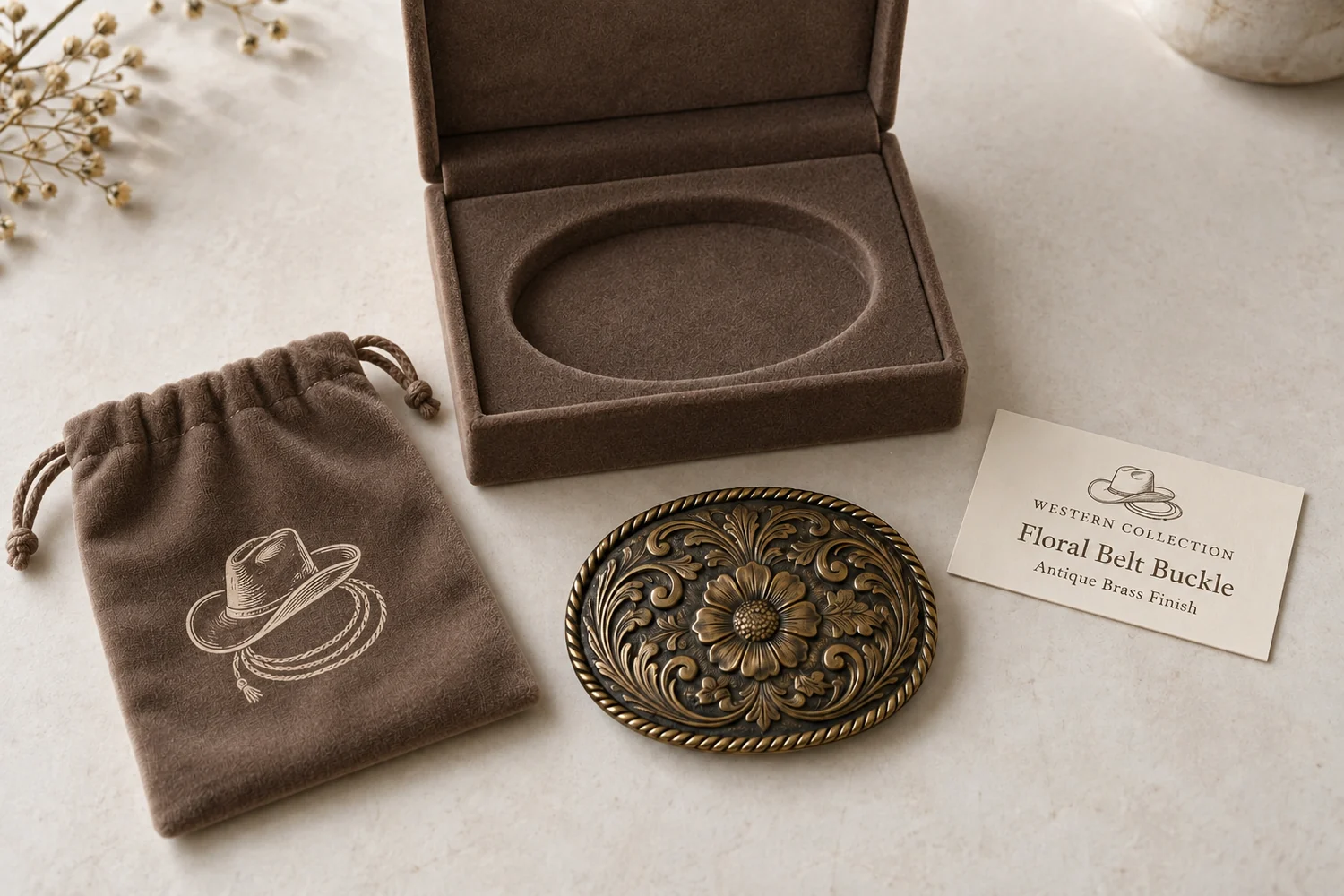
Choose packaging around how the product will reach the customer.
A buckle displayed in-store may need different presentation from one shipped directly to an online shopper. Individual protection, storage space, unpacking time and parcel size all deserve consideration.
Ask the supplier to quote the packaging you need rather than assuming a pouch, printed card or gift box is included. Confirm any barcode or stock-label requirements separately.
Your product information should distinguish the base material from the decorative finish. For example, “zinc alloy with an antique silver-tone finish” describes different attributes; it should not become “sterling silver” in a retail listing.
Include dimensions, belt compatibility, package contents and appropriate care information. Obtain care guidance for the confirmed finish instead of copying instructions from a different metal product.
Clear information also helps store staff explain whether a customer needs a compatible replacement strap.
7. Prepare for Reorders Before the First Order
Save a specification for every approved variant. Include the artwork file, dimensions, attachment details, finish reference, packaging instructions and photographs of the approved sample.
Keep a physical reference where practical. Photographs are useful records, but lighting and screens can change the apparent finish.
Before ordering, ask how tooling is retained, what changes could require new tooling and how repeat orders are identified. Confirm current pricing and timing when you reorder; the original quotation may no longer apply.
Work backward from the date you need stock ready to sell. Allow for artwork review, sampling, revisions, production, shipping and incoming inspection. Ask for these stages separately rather than treating a production estimate as a delivered date.
After launch, track sales and returns by variant. Reorder decisions become more useful when you know which design and finish sold—and whether fit or product information caused problems.
Frequently Asked Questions
How many designs should a first collection include?
There is no universal number. Start with designs that have distinct roles and quantities your budget can support. Request fewer variants if spreading the order leaves you unable to stock each one sensibly.
Can one buckle fit every women’s belt?
No. Compatibility depends on strap dimensions and the attachment construction, not the gender category. Test the intended combination and publish its requirements.
Will a repeat order look exactly like the first batch?
Do not assume absolute visual identity. Keep an approved reference and agree on how finish appearance will be reviewed. Flag any requested changes clearly.
Plan Your Custom Buckle Collection
Send Unique Pin your design ideas, intended belt specifications and estimated quantity for each style and finish. Add your packaging requirements, delivery country, ZIP code and required arrival date so we can review the details and prepare a quotation.