
In This Guide
Halloween Enamel Pins: Planning a Custom Retail Collection
 By Sunny Huang
A Halloween pin collection starts with a retail decision: what will your customer buy, and how will you present it? An individual ghost pin beside the checkout has different ordering requirements from a three-piece set sold online.
For gift shops, independent brands, and distributors, planning custom Halloween enamel pins means connecting the artwork to quantities, packaging, and an arrival date. Choosing more designs also means dividing the budget across more individual products.
Start with a small, coherent collection plan. Decide which designs belong together, how each will be sold, and what information the manufacturer needs before preparing a quotation.
Define the Collection and the Sales Channel
Write a short brief before commissioning artwork. Identify the intended customer, sales channel, price range, and planned launch date. A playful collection for a general gift shop may need a different visual style from merchandise for a horror-focused brand.
Also decide where customers will encounter the pins. A small counter display, a hanging retail fixture, and an online product page each present the collection differently. Review each design both close up and at the scale customers will first see.
Use previous sales, customer requests, or confirmed retailer interest where available. If this is your first seasonal collection, treat the initial quantities as a test with a defined budget. A popular theme alone does not establish demand for your particular designs.
Set an inventory budget for the collection as a whole, then decide how much belongs to each design. If you have no sales history, record why you chose the initial mix. That gives you something concrete to review after launch instead of treating every unsold piece as a design failure.
Choose a Coordinated Design Mix
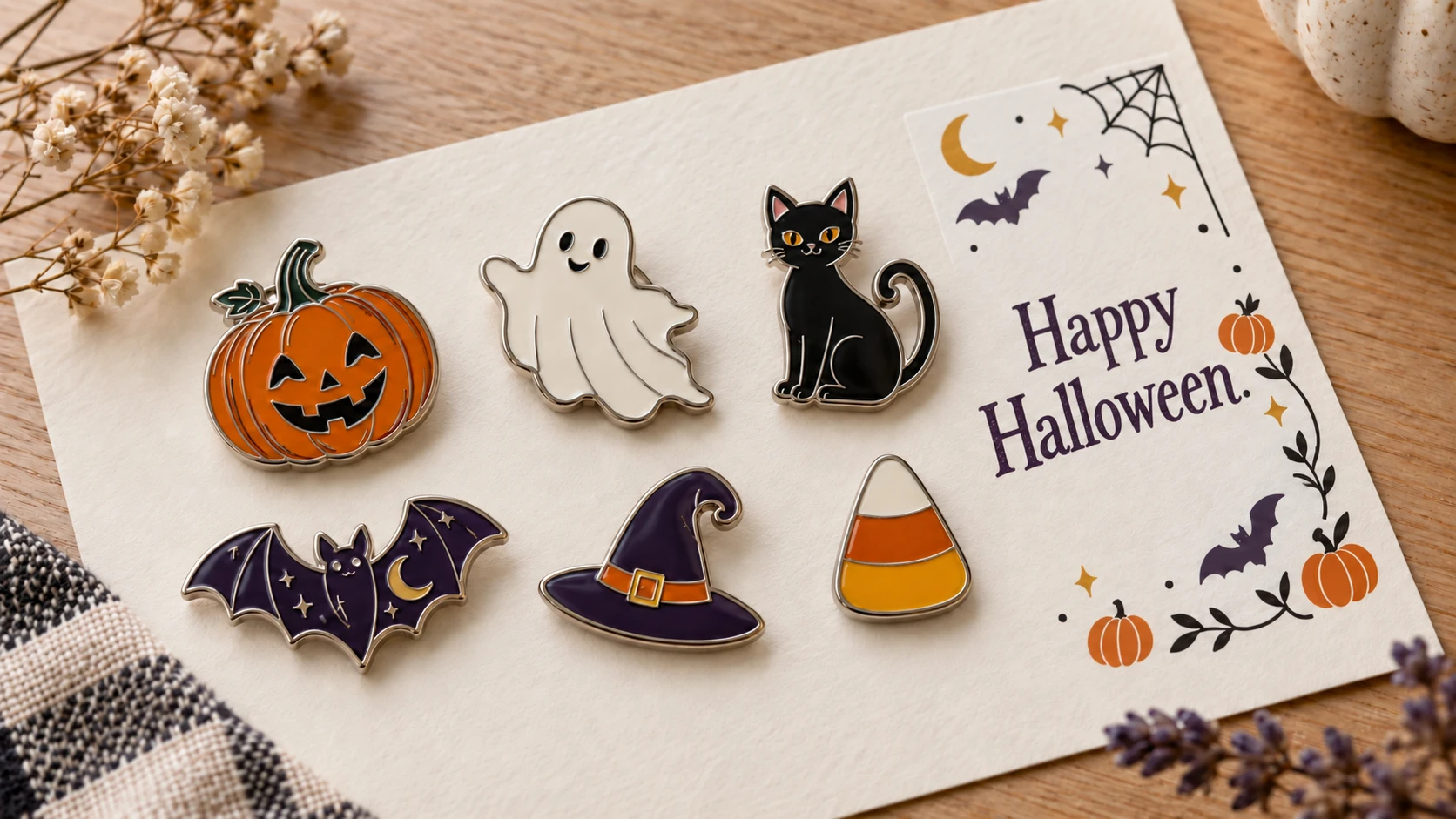
Give the collection a shared visual language. A pumpkin, ghost, and bat can look related through consistent outlines, a limited color palette, and a similar approach to detail. They do not need identical shapes.
Decide whether every design should be explicitly seasonal. A jack-o’-lantern has a clear Halloween connection, while a moon or black cat may fit a broader collection. Whether those pieces remain on sale after October should follow your brand and customer response.
Check each design at its intended finished size. A face that reads clearly on a large monitor may lose expression when reduced. Ask the manufacturer to review small gaps and fine details before approval.
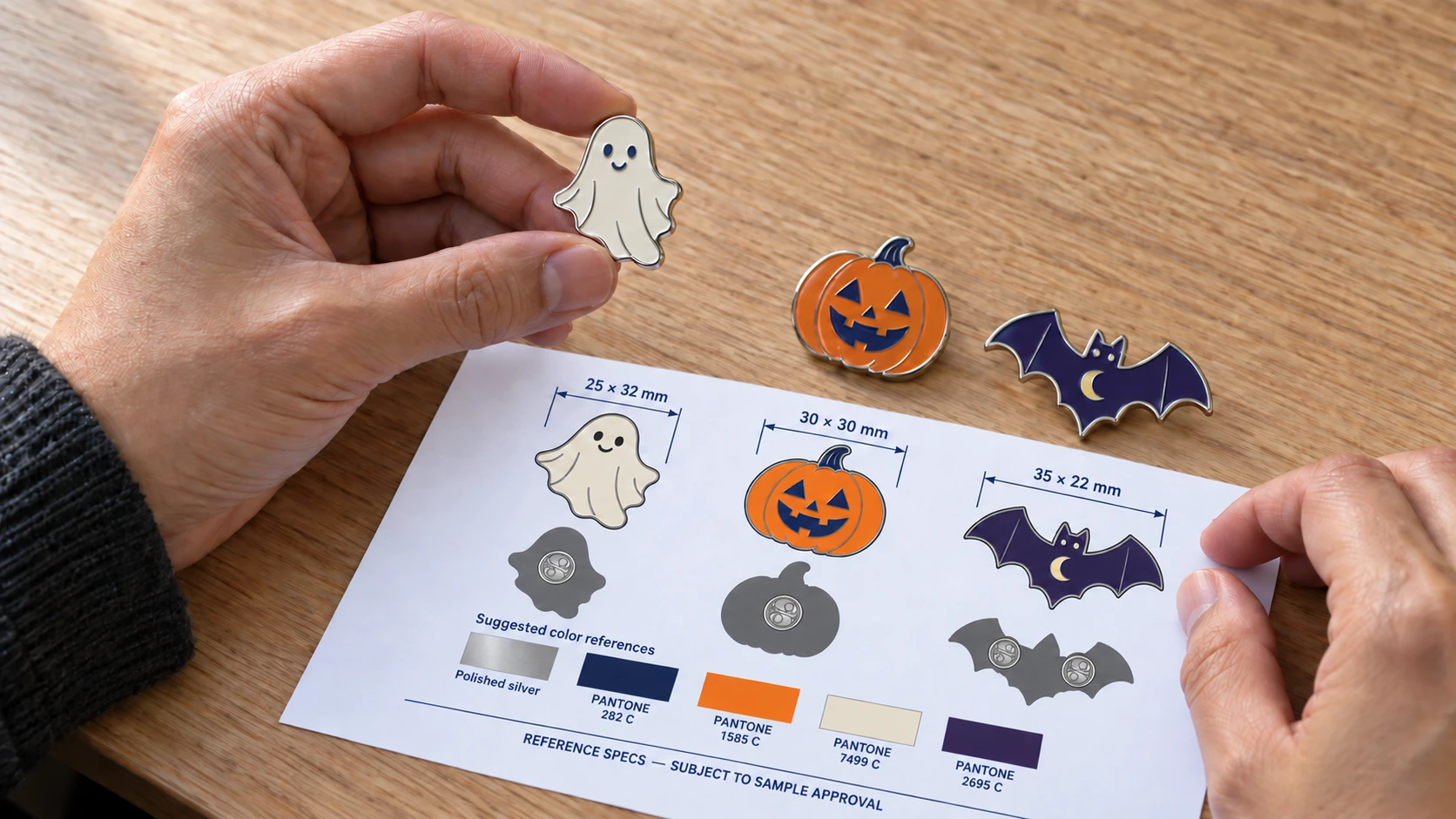
There is no universal number of designs for a first order. Request pricing by design so you can see what adding another style would mean for the budget.
Plan Quantities for Each Design
Separate the number of products you plan to sell from the number of individual pins required. If a design appears in both single-pin sales and sets, both uses must be included.
The following is a hypothetical planning example, not a recommended order size. Each set contains one pumpkin, one ghost, and one bat.
| Design | Pins for individual sales | Pins for 50 three-piece sets | Total pins |
|---|---|---|---|
| Pumpkin | 100 | 50 | 150 |
| Ghost | 60 | 50 | 110 |
| Bat | 40 | 50 | 90 |
| Total | 200 | 150 | 350 |
This plan creates 250 retail packages: 200 individual pins and 50 sets. It requires 350 pins before any separately agreed samples or reserve pieces.
Do not assume quantities can be pooled across different designs for pricing. Ask how tooling, colors, and packaging are quoted for each version. An order with several designs needs a clear breakdown, even when all pieces share a theme.
Review the design mix before increasing the total. Extra stock of one design cannot automatically replace a missing piece in a fixed set.
Compare Individual Pins and Sets
Individual pins let customers choose a favorite design. Sets present several pieces together, but they also commit inventory to a particular combination.
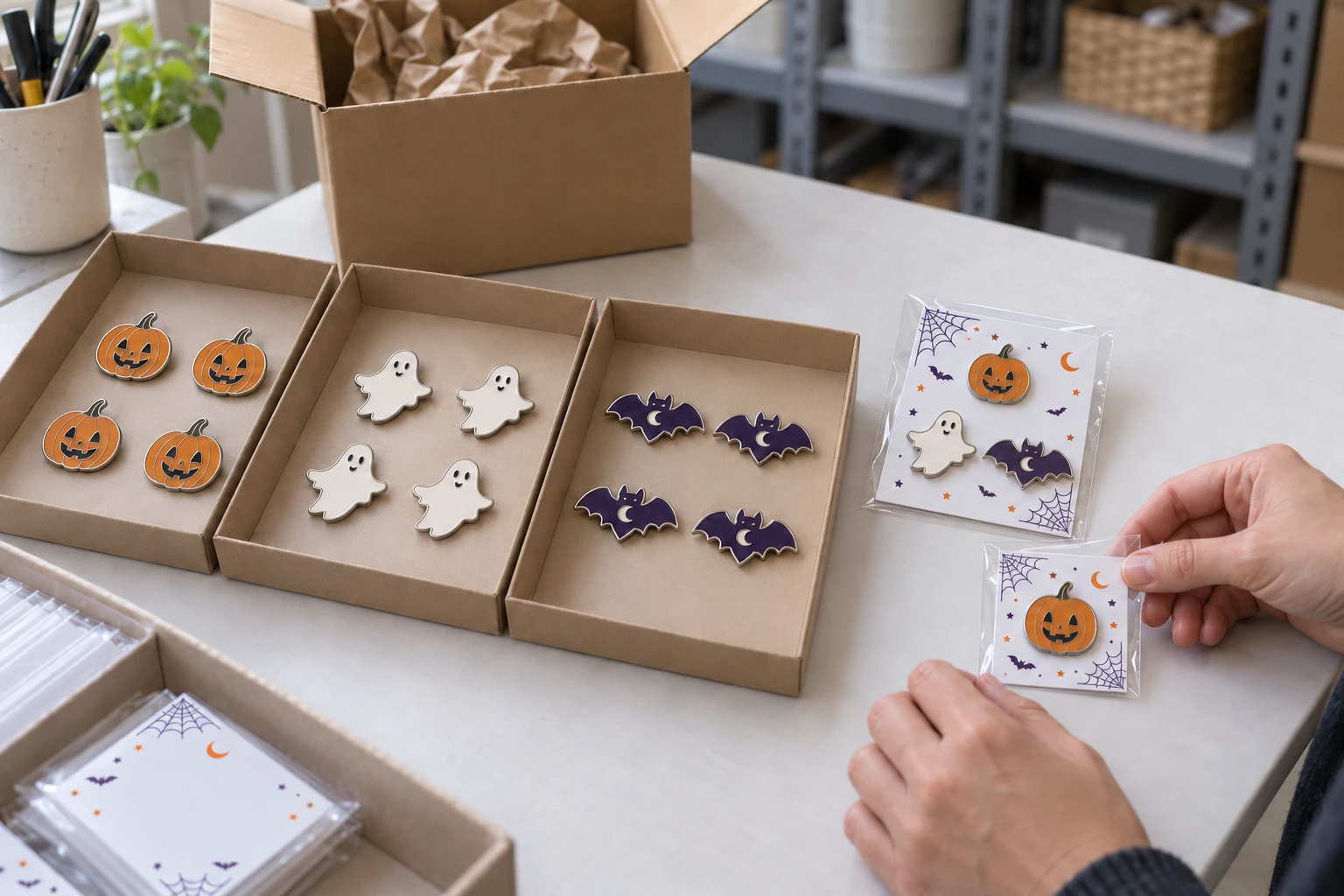
Decide whether sets will arrive assembled or be packed by your own team. Factory assembly needs an agreed layout and contents list. In-house assembly needs time, space, and someone responsible for checking every package.
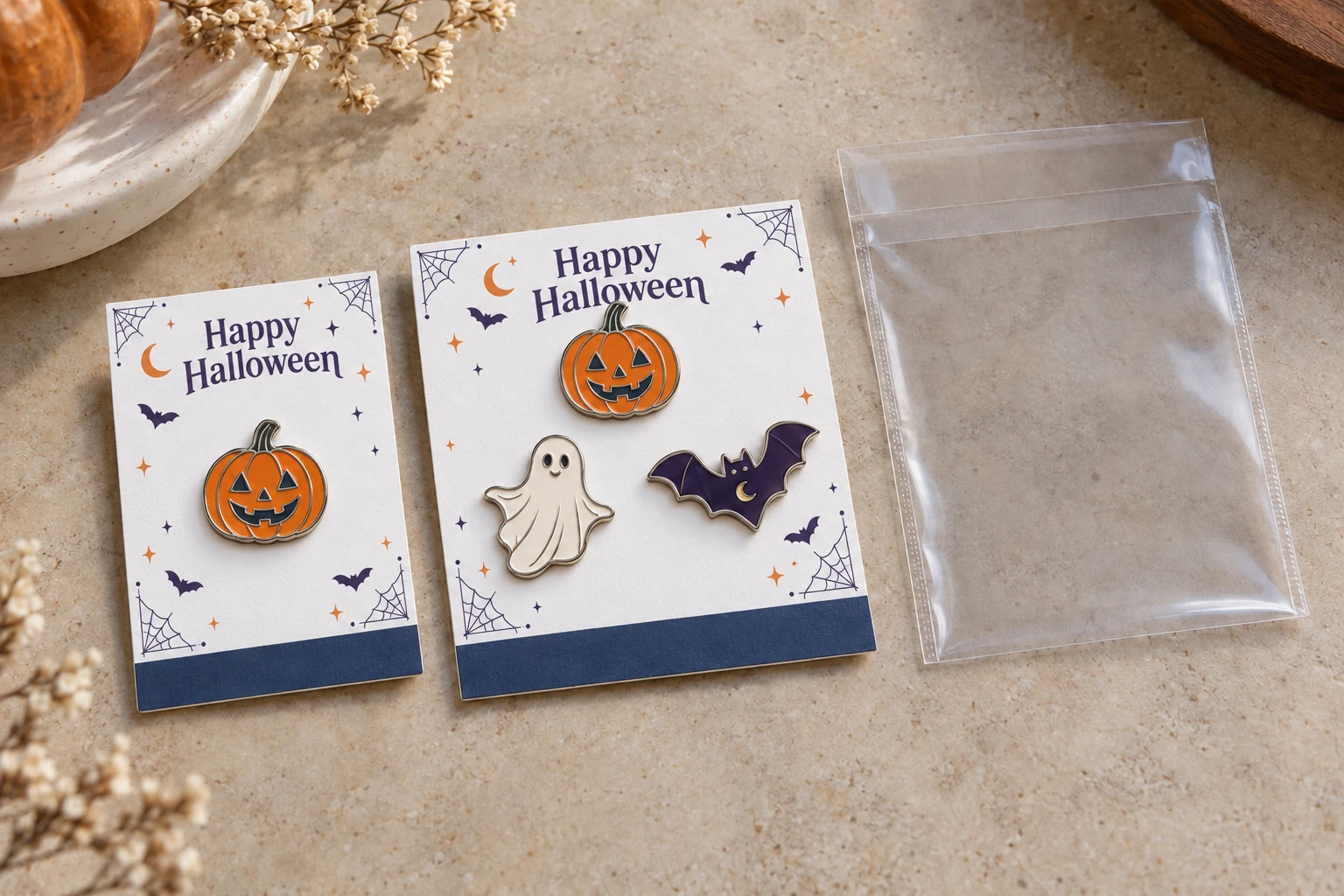
For this singles-and-sets configuration, individual sales and sets require different card layouts. They may also need different protective bags and product identifiers. Include those requirements when comparing quotations.
Create a separate item code for each sellable format in your records. A pumpkin sold alone and that same pumpkin inside a set draw from related stock, but they are different retail products. Share the final packing list with whoever handles fulfillment.
Compare the total cost of the complete order: pins, tooling, cards, assembly, protective packaging, and freight, with other inclusions or exclusions stated. A lower pin price alone does not show which finished retail option costs less.
Review Finishes, Backings, and Retail Packaging
Choose the enamel style for the pin face. Soft enamel leaves color below raised metal outlines, creating a textured face. Hard enamel produces a smoother surface with color and metal borders nearly level. The soft and hard enamel comparison explains those differences in more detail.
Evaluate the outline color, enamel colors, and finish together. Keep choices consistent where consistency helps the collection, but review any design that needs a different treatment.
The backing card is the printed display card. A pin post is attached to the pin, and a clutch is one type of pin back that fastens to the post. Check the card and pin back as part of the packed product. The pin attachment guide can help you compare fastening options.
Review the following:
- Does the card leave the artwork visible?
- Do the pin posts align with the intended mounting positions?
- Is there space behind the card for the clutches?
- Does the card fit the bag, box, or retail fixture?
- Are any product details or barcodes positioned where they can be used?
If packaging matters to the buying experience, review a physical sample of the assembled package rather than approving the card artwork in isolation.
Confirm the Proof and Delivery Plan
Compare each proof with the quotation and order breakdown. Check the design, dimensions, colors, selected finish, post arrangement, fastening, and packaging. Keep the base material agreed in the quotation consistent with the order; it need not be repeated on every drawing to remain part of the specification.
A digital proof communicates the intended design. It does not let you judge the actual weight, surface feel, or clutch fit. If those details affect approval, discuss physical sampling and its timing before committing to a launch.
Work backward from the date the goods must reach you. Allow time for approval, any sampling, production, transport, receiving checks, and retail setup. Ask which approval starts the quoted production period.
If a change is requested after approval, have the factory assess its effect on completed work, cost, and timing. Record the agreed change clearly so the order does not proceed with conflicting instructions.
On arrival, count each design against the order and check a selection of assembled packages. Look for the correct pin, card, clutch, and set contents. Identify who will contact the supplier about discrepancies before the stock is distributed to stores.
Prepare a Clear Quote Request
A useful inquiry describes the collection design by design. Include:
- Artwork, sketches, or reference ideas for each style.
- Intended dimensions and preferred finish.
- Quantity of each design and each retail package format, separating individual-pin packages from sets.
- Fastening and backing-card requirements.
- Who will assemble the retail packages.
- Delivery destination and required arrival date.
Mark anything still undecided. The supplier can then compare defined alternatives, such as two packaging formats, without guessing what the order includes.
Before authorizing production, make sure the quotation, approved artwork, and quantity breakdown describe the same collection.
Frequently Asked Questions
Can I start with a small order?
Unique Pin offers custom enamel pins without a minimum order quantity. For designs requiring tooling, compare the complete project cost: spreading a mold charge across fewer pieces can increase the effective cost per pin.
Do all designs need the same quantity?
Specify the quantity required for each design and ask the supplier to quote that breakdown. Do not assume equal quantities are necessary, or that a combined total automatically determines pricing for every style.
Can I reorder one design later?
Ask about tooling retention, reorder pricing, and scheduling before relying on a later order. Keep the approved specifications available. A repeat order still needs its quantity, finish, packaging, and delivery requirements confirmed.
Discuss Your Halloween Pin Collection
Send Unique Pin your artwork or ideas, quantities for each style, packaging requirements, destination, and required arrival date. Include whether the pins will be sold individually, in sets, or both, so the quotation can reflect the collection you intend to launch.
Ready to Plan Your Halloween Pins?
Share your designs, quantities and launch date through our contact form.