2D vs 3D Challenge Coins: Which Is Better for Your Design?
 By Sunny Huang
When buyers prepare a custom challenge coin, one of the most common questions is: should the artwork be made in 2D or 3D?
The choice is easy to misunderstand because both styles have raised and recessed metal. A 2D coin is not simply flat, and a 3D coin is not a freestanding sculpture. The practical difference is how the relief changes across the surface: 2D uses distinct, stepped levels, while 3D uses smooth, gradual contours.
The quick answer: choose 2D when the design depends on logos, small text, geometric shapes or several enamel colors. Choose 3D when the main subject is a portrait, animal, building or another object that needs rounded form. If the artwork needs both readable text and sculpted depth, a hybrid 2D and 3D layout may be the better choice.
This guide compares relief, detail, color, finish, artwork requirements and cost so you can choose the right structure before approving your coin design.
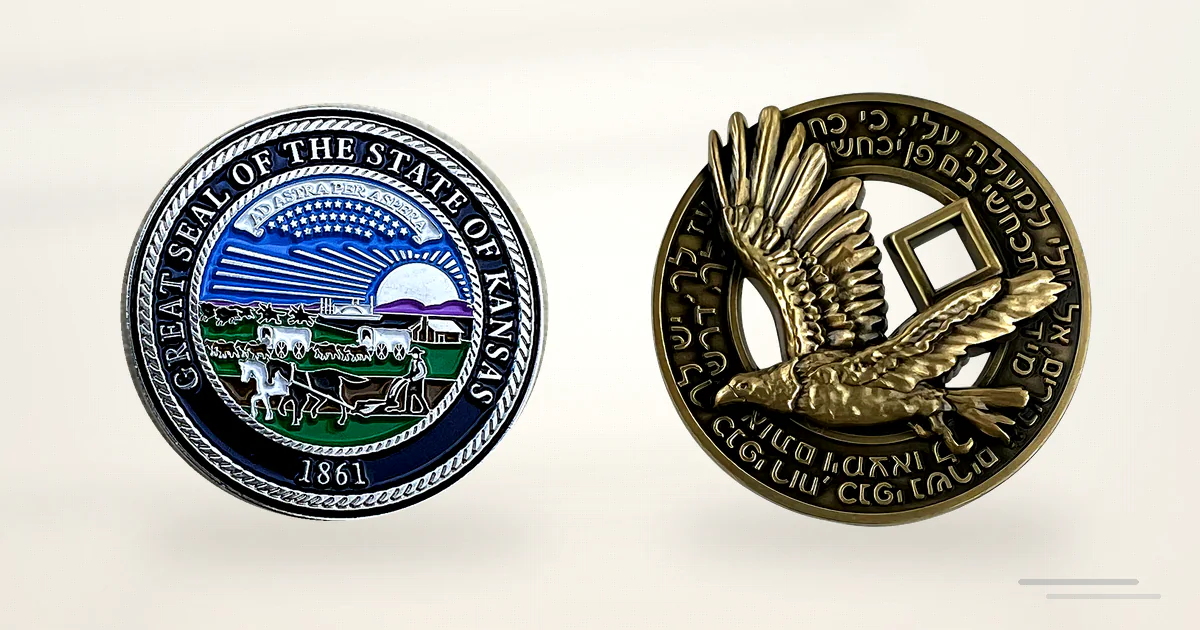
2D vs 3D Challenge Coins at a Glance
| Feature | 2D Challenge Coins | 3D Challenge Coins |
|---|---|---|
| Relief structure | Clearly separated metal levels | Gradual, sculpted relief |
| Surface transitions | Defined and stepped | Rounded and contoured |
| Best suited to | Logos, text, badges and graphic artwork | Portraits, animals, buildings and realistic subjects |
| Enamel application | Well suited to multiple color areas | Usually applied to defined recessed areas or surrounding 2D sections |
| Small text | Generally easier to preserve | May lose clarity on curved surfaces |
| Artwork preparation | Usually starts with vector artwork | Often requires relief interpretation or digital sculpting |
| Tooling | Usually simpler | Usually more complex |
| Relative cost | Usually lower under comparable specifications | Usually higher under comparable specifications |
| Common finish | Bright or antique plating with optional enamel | Antique finishes often emphasize depth |
These are general guidelines. Coin diameter, thickness, artwork, metal and required relief can all affect what is practical.
What Is a 2D Challenge Coin?
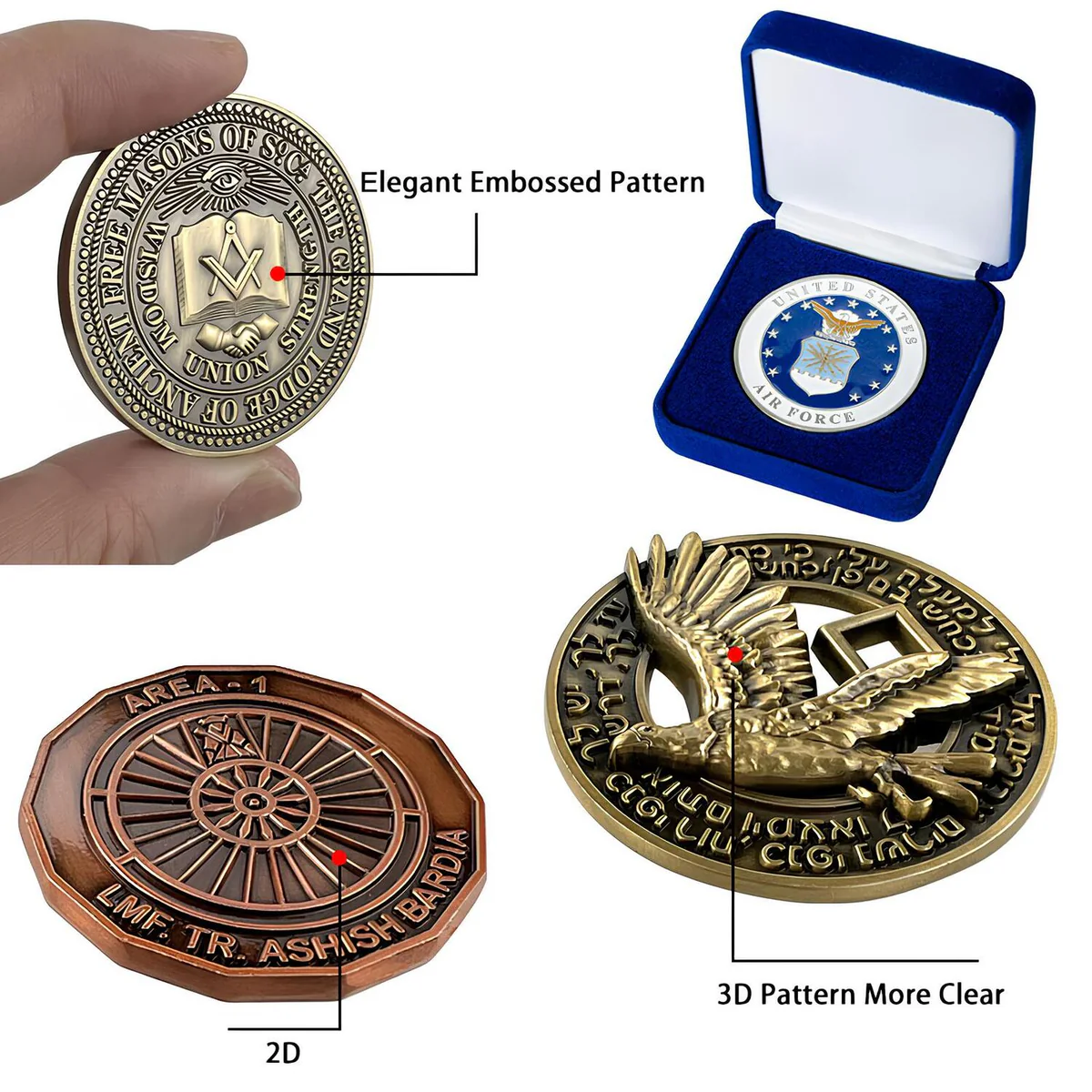
A 2D challenge coin is not completely flat. Its raised and recessed areas can still be seen and felt. The term "2D" refers to the way the artwork is divided into clearly separated height levels rather than smooth, sculpted contours.
Imagine a police shield with a raised outline, raised lettering and a recessed background. The elements have physical depth, but the top of each raised section remains relatively flat. The change from one level to another is clearly defined.
This structure is useful when the design depends on accuracy. A letter must keep its shape. A small date must remain open and readable. A brand color needs a defined area rather than a sloping surface.
A 2D challenge coin design is therefore a strong fit for:
- Corporate logos and wordmarks
- Military and public-service insignia
- School and university emblems
- Flags and geometric patterns
- Event names and anniversary dates
- Graphic mascots
- Designs with several enamel colors
If the artwork already works well as a flat logo or badge, 2D is usually the sensible place to begin.
What Is a 3D Challenge Coin?
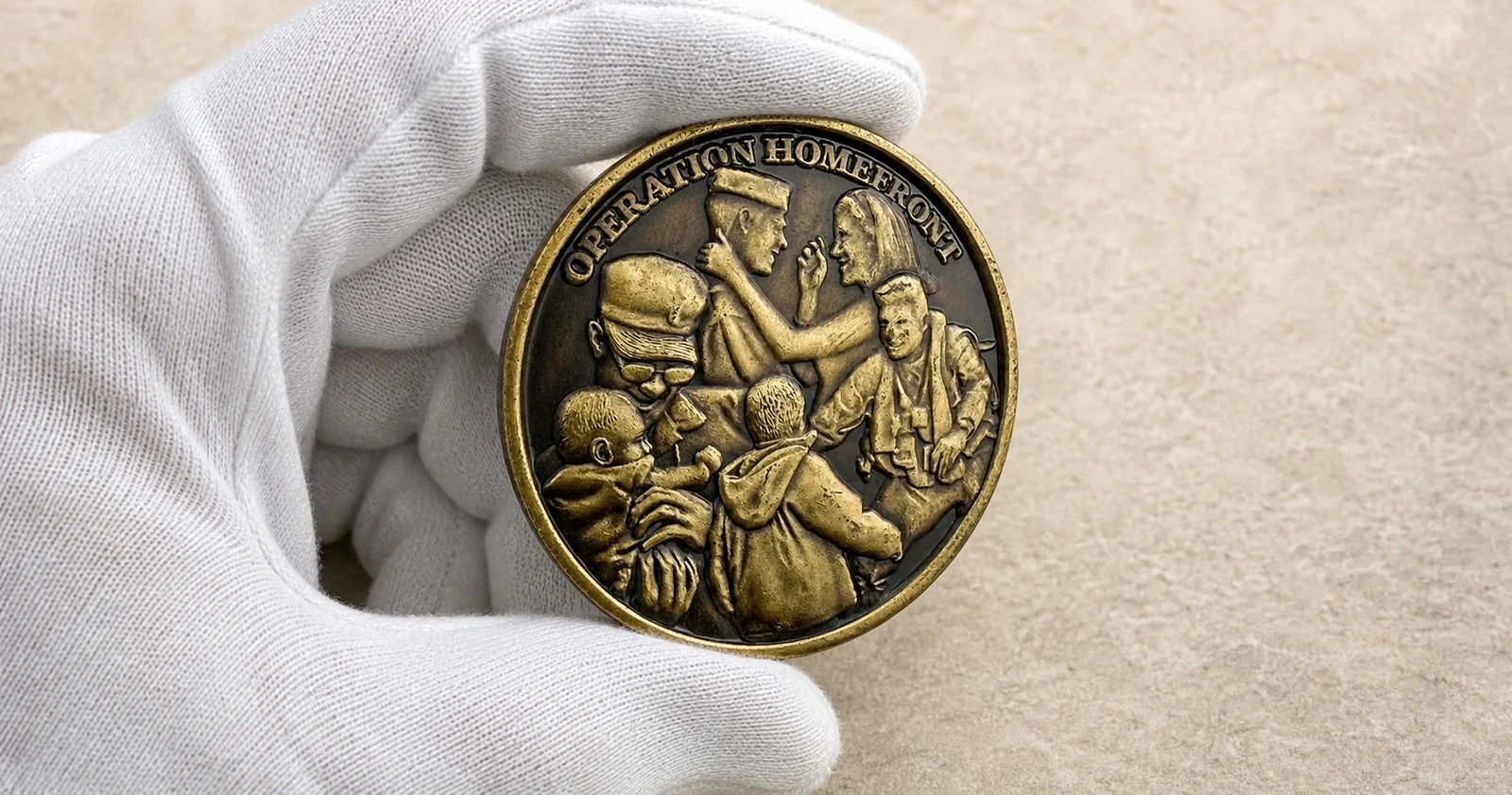
A 3D challenge coin uses gradual transitions between different heights. Its surface can include slopes, rounded edges and natural contours rather than moving directly from one flat level to another.
Consider a portrait. The forehead, eyes, nose and cheeks cannot be represented convincingly as a few flat blocks. The same applies to an eagle's feathers, the facade of a building or the body of an aircraft. These subjects need controlled changes in depth.
Commercial 3D challenge coin artwork is typically produced as bas-relief. The sculpted design rises from the background while remaining attached to the coin surface. It is not a freestanding sculpture that can be viewed from every angle.
The U.S. Mint's sculpting guide describes how line drawings may be developed into three-dimensional models using clay, plaster or digital software. Commercial challenge coins follow a different production workflow, but the design challenge is similar: a realistic subject must be converted into relief that works within a limited diameter and thickness.
Common subjects for 3D challenge coins include portraits, animals, buildings, monuments, landscapes, aircraft, ships and commemorative scenes.
Which Style Works Better for Logos and Text?
For most company logos, unit insignia and text-heavy designs, 2D is the safer choice.
Letters need sufficient line thickness, open internal spaces and separation from nearby artwork. A stepped structure helps them retain those qualities after coloring and finishing.
Small wording becomes harder to read when it crosses an uneven 3D surface. Sculpted relief also produces shadows, which may reduce contrast around dates, names or fine lettering.
That does not mean every logo must remain entirely 2D. A shield, crest or emblem can gain depth from partial sculpting. The important distinction is between decorative form and essential information. The emblem may be dimensional, while the organization name and date remain on a flatter border.
When a coin needs both depth and readable wording, a hybrid design is often more successful than forcing everything into one relief style.
Which Style Works Better with Enamel Color?
A 2D coin is usually easier to combine with several enamel colors.
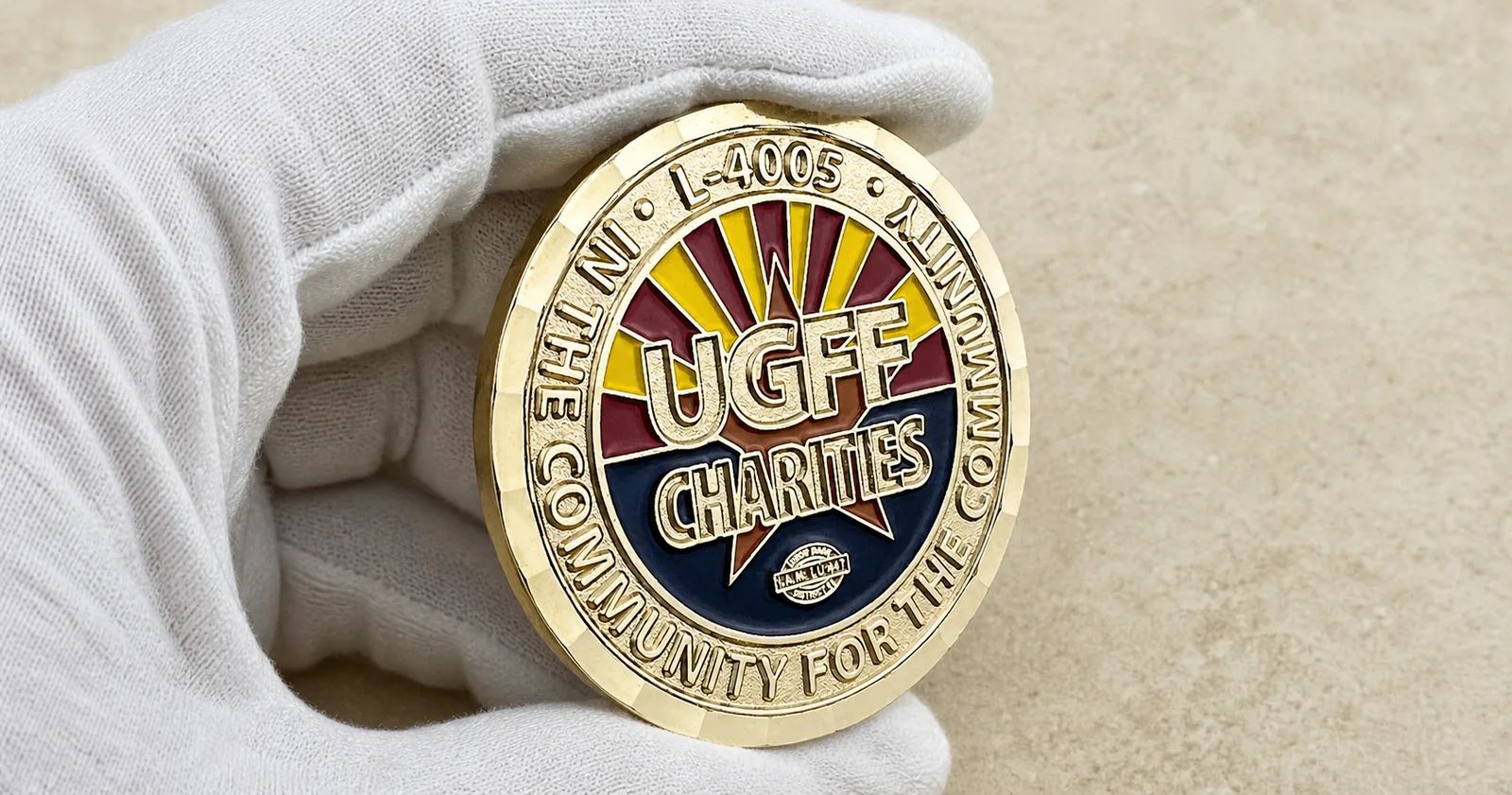
In color-filled 2D artwork, raised metal borders create clearly separated cells. Each enamel color can be placed within a defined area without merging visually with the next section.
Continuous 3D contours behave differently. A slope or rounded surface does not provide the same type of enclosed cell, and covering it with enamel can soften the relief that made the section worth sculpting in the first place.
Color can still play an important role in a 3D design. A coin might use a metal-only portrait in the center, enamel lettering around the edge and a colored 2D background. Printed details can also be added to selected flat areas when the artwork requires them.
The goal is not to remove color from a 3D coin. It is to place color where it supports the relief rather than hides it.
How Does Plating Change the Appearance?
Bright gold or silver plating and other polished finishes reflect more light. They can give a coin a clean, formal appearance, especially when the artwork uses crisp borders and open metal areas.
The same reflections can make subtle relief difficult to judge in photographs. A shallow curve that is visible in hand may disappear under direct studio lighting.
Antique gold, silver and bronze finishes create darker tones in recessed areas while leaving raised surfaces lighter. That contrast often makes sculpted contours easier to see. Historical portraits, monuments and detailed emblems frequently benefit from this treatment.
There is no rule that 2D coins must be bright or 3D coins must be antique. A modern 3D corporate emblem may look better with polished silver, while a traditional 2D badge may suit antique bronze. The subject and intended presentation should guide the finish.
Is 3D Always More Detailed Than 2D?
No. Three-dimensional relief creates more natural depth, but it does not guarantee better clarity.
The clarity of the finished coin depends on its diameter, thickness, available design area, line spacing, relief depth, finish and the amount of information competing for attention.
A small portrait that also contains a long motto, dates and background scenery can become crowded. Increasing the relief will not necessarily solve that problem. The better answer may be to enlarge the central subject, simplify the background or move the wording to the reverse.
A carefully prepared 2D design can reproduce small graphic details more clearly because its outlines are controlled and separated. Conversely, a larger 3D design can show natural forms that would feel stiff or unrecognizable in 2D.
The useful question is not which method can reproduce more detail in theory. It is which relief style can reproduce the required detail most clearly at the intended coin size.
Artwork Requirements for 2D Coins
Vector files such as AI, EPS, SVG or vector-based PDF are helpful for 2D artwork because they preserve scalable outlines and clean paths.
The proof should make the following information easy to identify:
- Raised and recessed metal areas
- Enamel color cells
- Borders and lettering
- Front and back layouts
- Plating finish
- Edge requirements
Pantone references can be supplied for enamel colors, although reasonable tolerance should be expected. Screen colors, printed charts, metal finishes and cured enamel do not reproduce color in exactly the same way.
A buyer reviewing a 2D proof should look beyond the overall appearance. Check that small letters remain open, narrow gaps are not closing up and each color area has a practical metal boundary. Our guide to how custom challenge coins are made explains where artwork approval fits into the wider production process.
Artwork Requirements for 3D Coins
A finished 3D model is helpful but not always necessary. Clear artwork, photographs and reference images may provide enough information to develop a 3D challenge coin design.
Portraits are easier to interpret when the reference has even lighting and visible facial features. Side or three-quarter views can help clarify the shape of a face, animal, vehicle or building. Strong shadows and low-resolution photographs leave more room for misinterpretation.
Useful notes should identify which details matter most. For a portrait, that may be facial recognition rather than every fold in the clothing. For a building, it may be the roofline and entrance rather than every individual window.
Before approving the relief, review proportions, feature recognition, text position and the relationship between high and low areas. A dramatic digital rendering is appealing, but it should still represent a design that makes sense at the finished coin size.
Do 3D Challenge Coins Cost More?
Under comparable specifications, 3D challenge coins often have a higher quoted price because artwork interpretation, digital sculpting and tooling tend to be more complex.
A fixed percentage would be misleading, though. The final quotation may also depend on:
- Diameter and thickness
- One-sided or double-sided relief
- Complexity of the sculpting
- Metal and production method
- Order quantity
- Plating and enamel
- Custom edges or numbering
- Packaging
- Shipping destination
A simple one-sided 3D emblem may cost less than a large double-sided 2D coin with numerous colors, special edges, sequential numbering and premium boxes.
The clearest comparison is to request 2D and 3D quotations using the same size, quantity, finish and packaging. That shows the cost of changing the relief without mixing in unrelated specifications.
Not Sure Which Option Fits Your Artwork?
Send your design, preferred size, quantity and delivery date. We can review whether a 2D, 3D or hybrid layout is the most practical starting point.
Can 2D and 3D Be Combined?
Yes. In many cases, combining them produces a clearer coin.
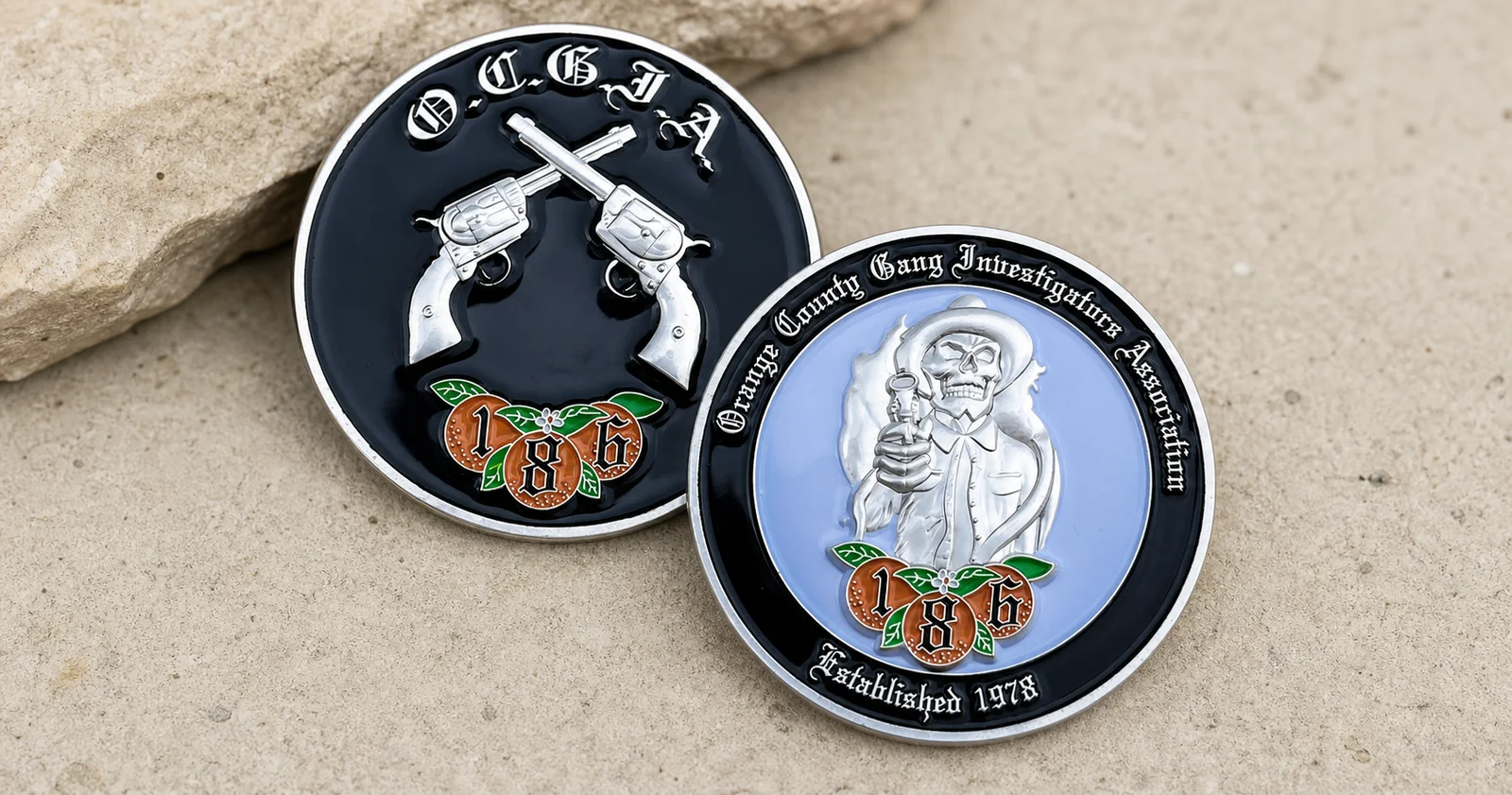
Consider a corporate anniversary design. The founder's portrait might use 3D relief in the center. The company name and anniversary dates can remain in 2D around the border, with enamel added to the brand mark on the reverse.
Each method then has a specific job:
- 3D relief gives the main subject depth.
- 2D relief keeps text and borders readable.
- Recessed cells contain enamel colors.
- Flatter areas provide space for printing or identification details.
The design does not need to be classified as entirely 2D or entirely 3D. What matters is whether each element uses the structure that communicates it best.
How to Choose Between 2D and 3D
Three typical projects illustrate the decision.
A company coin with a wordmark, short slogan and several brand colors will usually be clearer in 2D. The artwork depends more on accurate shapes and color separation than on natural contours.
A memorial coin centered on a recognizable portrait may justify 3D relief, particularly when paired with an antique finish. The face is the emotional focus, so dimensional modeling adds value.
A firefighter coin containing a sculpted helmet, department name and colored station emblem may benefit from a hybrid layout. The helmet can be 3D, while the wording and enamel areas remain 2D.
Before selecting a 2D or 3D challenge coin, ask:
- Is the main subject a graphic logo or a realistic object?
- Does the design depend on several enamel colors?
- Is small text essential?
- Would curved contours improve recognition?
- Is the planned coin large enough for the required detail?
- Would a hybrid structure solve competing design needs?
If the answers still point in different directions, request an artwork review before settling on the relief. Buyers who are also comparing product formats may find our custom medals vs challenge coins guide useful.
Frequently Asked Questions
What is the main difference between 2D and 3D challenge coins?
A 2D challenge coin uses clearly separated raised and recessed levels. A 3D challenge coin uses gradual, sculpted transitions that create rounded surfaces and more natural depth. Both have physical relief, but they interpret artwork differently.
Can 3D challenge coins include enamel color?
Yes. Enamel can be placed in defined recessed areas or surrounding 2D sections. It is less suitable for continuous sculpted contours because it may cover or reduce the visible relief.
Is 2D or 3D better for a company logo?
Most flat company logos work well in 2D because the 2D format preserves clean outlines, lettering and brand colors. A dimensional crest or emblem may benefit from partial 3D relief.
Can one side be 2D and the other side be 3D?
Yes. One side can feature sculpted artwork while the reverse uses 2D text, enamel colors or a secondary logo. This is a practical option when the two sides have different visual purposes.
Do I need to provide a finished 3D model?
Not always. Clear artwork and high-resolution reference images may be enough to prepare a relief rendering. Complex portraits, vehicles and buildings benefit from references showing more than one angle.
Conclusion
The best choice begins with the artwork, not with the assumption that 3D is automatically more valuable.
Use 2D when the design depends on logos, lettering, geometric shapes and enamel color. Use 3D when portraits, buildings, animals or other realistic subjects need gradual contours. Combine the two when depth and readability are equally important. The custom challenge coins page provides an overview of available formats and customization options.
Before approving the design, confirm the size, relief structure, text, finish, color areas and front-to-back layout. A clear proof at this stage is more useful than adding complexity that the artwork does not need.
Need Help Reviewing Your Coin Design?
Send your artwork, required quantity, preferred size, finish and delivery date. We can identify which elements should remain in 2D, which may benefit from 3D relief and whether a hybrid structure would produce a clearer result.