Custom Bottle Opener Keychains: Planning an Event Giveaway Order
 By Sunny Huang
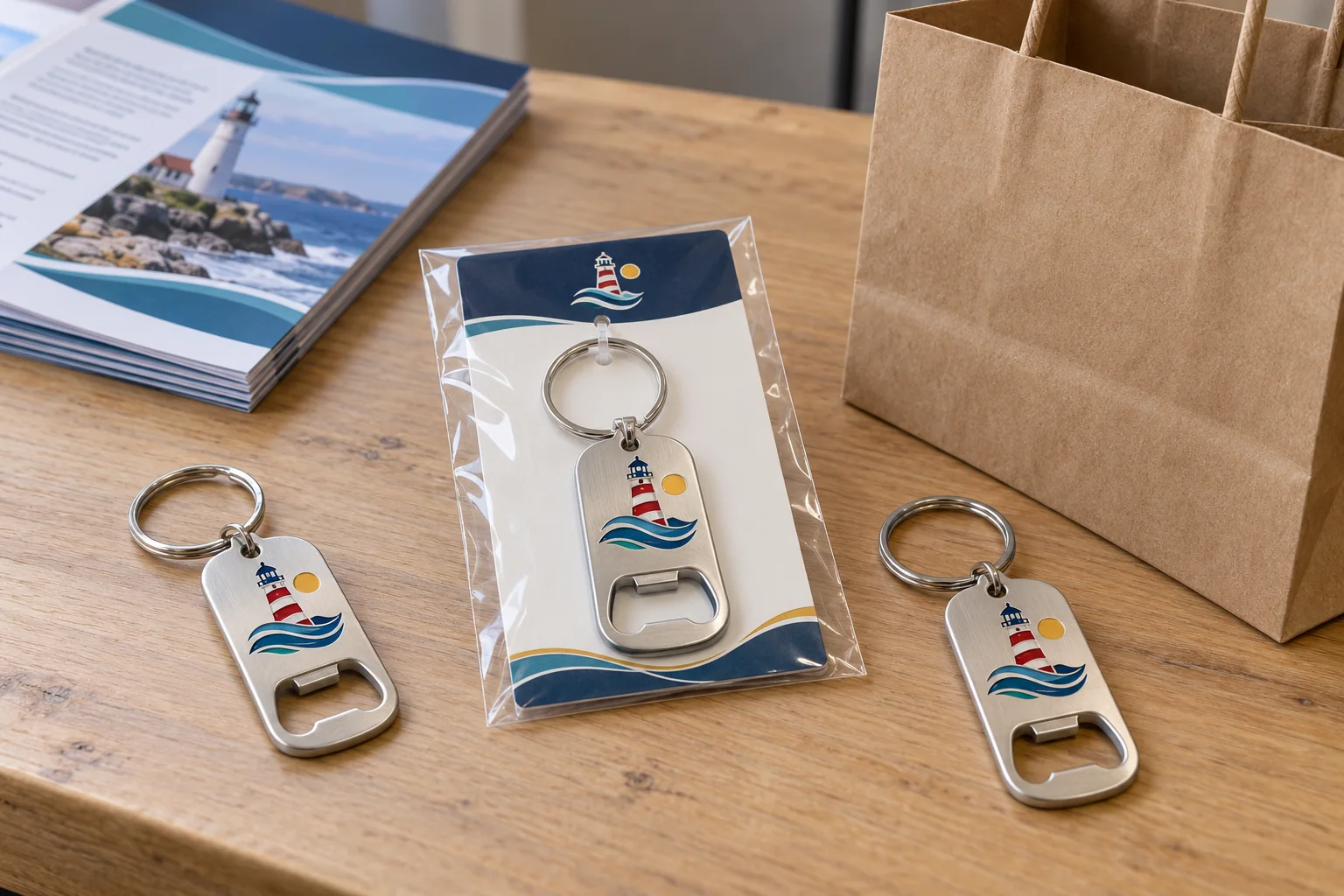
A trade show order for custom bottle opener keychains may cover welcome bags, booth handouts and regional events. If the plan is one keychain per person, counting gift bag recipients again in the booth allocation can overstate demand.
Record quantities by product version, packaging and destination. This gives the supplier a clearer basis for quoting and helps the receiving team prepare for the event.
Calculate Quantities Without Counting the Same Recipient Twice
Set the giveaway rule before calculating quantities: one keychain per attendee, one per gift bag, or additional pieces available at the booth. If gift bag recipients can also collect a booth giveaway, decide whether that second piece is intentional. Otherwise, adding both channel totals may overstate demand.
For a hypothetical trade show, suppose the team plans to distribute 600 pre-packed gift bags and serve 250 additional visitors who will not receive those bags. The buyer also sets aside 50 pieces for uncertain demand in this hypothetical project.
| Allocation | Quantity | Counting Basis |
|---|---|---|
| Pre-packed gift bags | 600 | One keychain in each gift bag |
| Additional visitors | 250 | Will not receive a gift bag |
| Contingency reserve | 50 | Uncertain demand for this example only |
| Total | 900 | 600 + 250 + 50 |
Keep confirmed staff and partner quantities separate from the contingency reserve. The 50 pieces in this example cover uncertain demand, not recipients already included elsewhere. Set the reserve according to the event plan and whether replenishment would be practical before the deadline.
Distinguish packing quantities from expected distribution. If all 600 bags must be assembled beforehand, they require 600 keychains even if attendance is uncertain. For booth handouts, use a realistic recipient estimate rather than total exhibition attendance. Where repeat collection is allowed, include it explicitly in the quantity plan.
Decide Which Event Details Belong on the Keychain or Packaging
Put information on the keychain when it should remain relevant after the event: a brand logo, an established slogan or a recognizable symbol. Dates, venues and campaign names can go on a backing card when they only need to identify the giveaway at distribution. If the item is intended as an event keepsake, including those details on the metal may be more appropriate.
For example, a brewery attending several trade shows could use one branded bottle opener keychain with a different card for each event. Unused keychains may then serve a later promotion, provided the branding remains current, sponsor permissions still apply and the products are in suitable condition. Leftover dated cards would need separate review or replacement.
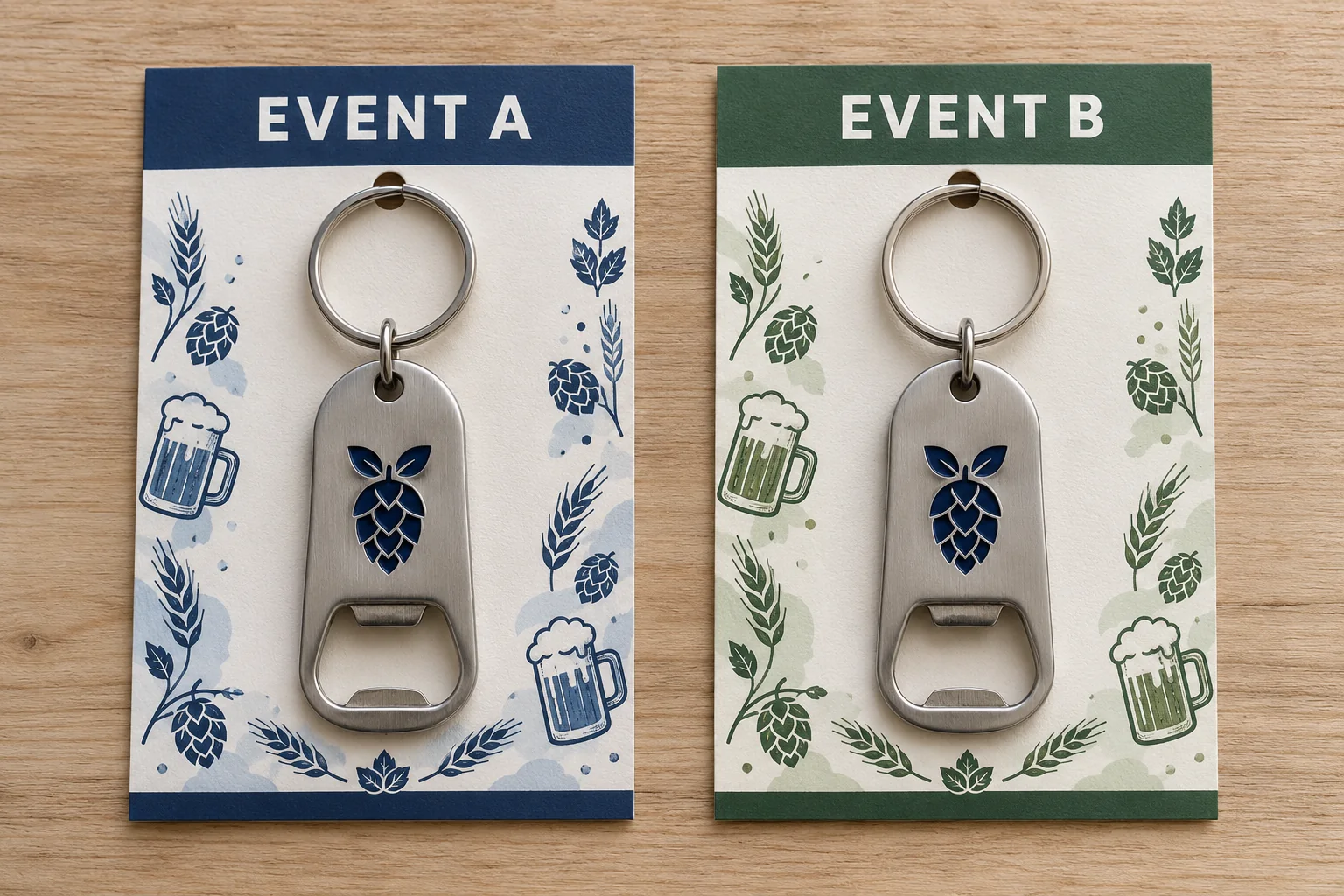
Compare an event-specific metal design with a shared branded keychain supplied on event-specific cards. Request quotes using the same quantities and delivery requirements; tooling, decoration, card printing and assembly may affect the total.
Build a Quantity Matrix for Each Logo Version
Give each product and packaging combination a separate order line. “Same keychain, different card” means the approved metal product stays unchanged while its packaging varies. Record changes to the outline, relief or logo decoration as a separate product version. Ask the supplier which tooling or decoration setup, if any, can be shared. Identify both the product artwork and card file so the supplier can distinguish production changes from packing changes.
Use a matrix like this to organize the order. These entries are an illustrative template, not a customer case.
| Product / Artwork Revision | Event / Client | Quantity for This Allocation | Packaging / Card Revision | Approver | Destination / ZIP | Required Arrival Date |
|---|---|---|---|---|---|---|
| K01 / Artwork Rev.02 | Trade Show A | To confirm | Individual bag | To confirm | To confirm | To confirm |
| K01 / Artwork Rev.02 | Trade Show B | To confirm | Card C02 Rev.01 + individual bag | To confirm | To confirm | To confirm |
| K02 / Artwork Rev.01 | Client campaign | To confirm | Card C03 Rev.01 + individual bag | To confirm | To confirm | To confirm |
Each row represents one product-and-packaging allocation for one destination. The quantity is for that row, not the product’s total across all events. Check totals by both product version and destination.
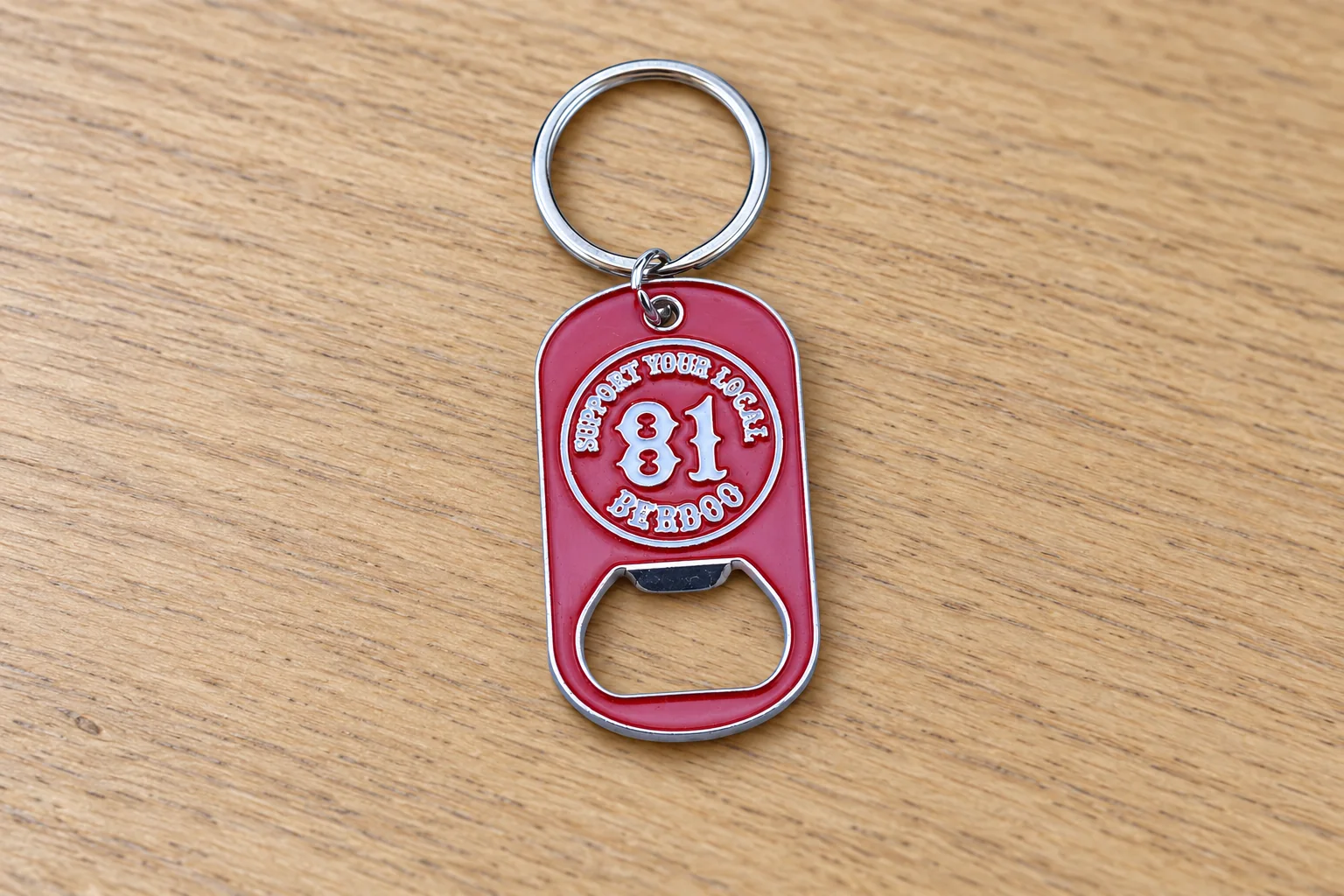
For distributors handling several clients, name the person authorized to approve each line. Include artwork revision numbers rather than relying on filenames such as “latest logo.” If a client changes one version, update that line and clearly identify which approval it replaces.
Check that all line quantities match the agreed order total, including any reserve allocation. Have the supplier confirm the same matrix in the quotation and order confirmation before production.
Confirm Who Will Pack and Assemble the Giveaways
Before approving packing, check a finished opener with the specified key ring attached. Try it on the bottle-cap type intended for the project, noting whether the ring gets in the way, the grip is usable, and exposed edges or attachment points need attention. A digital proof cannot confirm these details. Agree any sample changes before production approval; the packing instructions should match the approved assembly. See our bottle opener sample checks for a broader review framework.
Specify the delivery condition rather than writing “individual packaging” alone. Does each keychain arrive attached to a backing card, sealed in a bag, or packed separately from the cards? These arrangements leave different amounts of work for the receiving team. Assign each step—attaching cards, bagging products and inserting them into gift bags—to the factory, distributor or event team.
If a distributor combines the keychains with brochures and other merchandise, confirm where those items will meet and who will assemble the complete kit. Factory-packed keychains may still require local handling before they are ready for distribution. Ask the supplier to confirm which assembly services are available and show the agreed work and charges in the quotation.
For work after arrival, allow time to receive and count the products, organize the versions and complete assembly. Estimate labor using a small trial with the intended packaging, then plan the required staff and workspace. Set the receiving deadline around that workload, leaving time to resolve shortages or packing errors before the event opens.
Allocate Cartons and Deliveries by Event Location
Break the approved quantities into destination allocations before packing begins. Each carton label should identify the event or client, product version, quantity and carton number. If versions share a carton, label the inner packs separately and list their contents on the packing list. This helps receiving teams locate their allocation without opening every package.
Central delivery suits orders that need local assembly or redistribution through a distributor’s warehouse. It allows the team to check stock together, but requires onward freight, handling and time. Direct delivery can avoid that transfer, although separate shipments may involve different costs and receiving arrangements. Compare both routes using the same destination quantities and required arrival dates.
For each location, record the full address, ZIP code, receiving contact and telephone number. Confirm delivery hours, appointment requirements and any venue instructions, including an exhibitor name or booth reference where needed. Ask whether the venue accepts advance shipments or requires delivery through a designated receiving facility.
Use the date the goods must be available for preparation, rather than the event opening date alone. Have the supplier confirm the proposed shipping arrangements and charges for each batch. Assign a contact to track each shipment and handle delivery exceptions before the receiving deadline.
Send the Event Allocation Sheet With Your Quote Request
Send the completed allocation sheet with the matching logo files and product reference. Identify who supplies the backing cards, who assembles each pack, and which quantities go to each destination. Include required arrival dates and receiving instructions so the supplier can assess the complete order.
Ask the quotation to reference the sheet’s revision date and show the costs associated with each product version, packing arrangement and delivery batch. Mark undecided details as pending and ask the supplier to identify any assumptions in the quote. Confirm those details before final order approval.
Frequently Asked Questions
Is there a minimum order quantity for custom bottle opener keychains?
We accept small and bulk custom orders without a fixed minimum order quantity. Share the quantity for each logo version, packaging combination and attachment option. Tooling, decoration, packaging and assembly may change the requirements and price for a specific configuration, so these details should be confirmed before approval.
Can I order bottle opener keychains with different logos?
Different logos can be included in one project, but each version needs its own file reference, quantity and approver. Note whether the metal product, backing card or both change between versions. The supplier should confirm whether any tooling or decoration setup can be shared and how each version will be priced.
How far in advance should I order bottle opener keychains for an event?
Work backward from the date the keychains must arrive for preparation and distribution. Build the schedule around artwork approval, sampling when required, production, packing and shipping. Allow time for local assembly or onward delivery, and confirm the schedule for every destination before approving the order.
Browse our custom bottle opener keychains and other made-to-order opener examples to identify a reference for your project.
Request a Quote for Your Event Giveaway
Send your product reference, estimated quantities and event requirements through our inquiry form. If packaging or delivery allocations are still undecided, tell us what is known so far.
We’ll review the requirements and explain how to share artwork and allocation details for a project quote.